· Brown streak disease affects 33.7% of continent’s land area
· 56.6% of the continent at risk of disease spreading
· Nigeria grows 20% of world’s cassava
· SSA contributes 63%
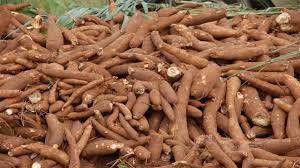
Nigeria alone produces more than 20 percent of the world’s cassava, while sub-Saharan Africa (SSA) accounts for over 63 percent of the world’s total cassava production. But soon, this bumper harvest of the tuberous root crop, which feeds over 800 million people worldwide, will be gravely blighted by a deadly virus, known as cassava brown streak disease that kills the plant. This disease which could spread between now and 2080, is due to the warming climate, according to a new study published by The Conversation.com.
Climate change continues to pound Africa’s environment, reshaping, in particular, the continent’s ecosystem. Crop yields and aquatic life have been witnessing historic adversities, with the attendant effects on food security, driving socioeconomic crises around the continent. The Sahel region, is the worst-hit, so far.
Cassava is a starchy root crop. It is Africa’s second most important staple food. It is grown in humid and semi-humid tropical regions, including Nigeria, the Democratic Republic of Congo, Ghana, Tanzania, Uganda, and Mozambique. The crop is so resilient that, it can produce a considerable harvest notwithstanding when the soil quality is poor, rainfall is low, or when there is little fertiliser applied.
The crop grows best in areas where temperatures are fairly stable and warm (about 25°C―35°C). Very high or very low temperatures can stop its growth. The new research says the current high temperatures will whittle down the crop via the brown streak disease.
Two factors cause the spread of the disease: cultivation practices, where farmers frequently reuse planting materials from previous seasons. If these are infected, the disease will spread to newly planted fields. The second factor is the way in which the whitefly, which spreads the disease, adapts to climate change. Warm conditions make it easier for the insect to survive, reproduce and spread into new areas.
Should cassava growth be adversely affected in Africa, agricultural experts warn of disastrous socioeconomic consequences on the continent’s 1.4 billion population, where already some 300 million people are affected by rising hunger, placing the continent at the centre of a global food crisis, according to the UN World Food Programme (WFP) in 2026.
Also, in Nigeria, with the largest population on the continent, the WFP said, as of early 2026, 35 million people are facing food insecurity, driven by years of conflict. Additionally, 6.4 million Nigerian children are expected to be acutely malnourished by the end of 2026.
Report by the researchers at the East African journal of science, technology and innovation (EAJSTI) proved that “a warming climate is both the strength and the weakness of cassava”. “Cassava will be able to thrive in more places, but so will a deadly virus that kills the plant”.
The results show that over half of Africa about 54.6 percent of the continent’s land area ― about 16.2 million square kilometres ― is currently suitable for cassava to grow, survive and extend, with further growth predicted to nearly two-thirds of the continent’s land area in future. This includes countries, such as South Sudan, Sudan, Somalia, Botswana and Zimbabwe, where there is not yet data on cassava.
However, the cassava brown streak disease has already affected 33.7 percent (or 10.2 million square kilometres) of the continent. East Africa is the hotspot, particularly Tanzania, Uganda and south-east Democratic Republic of Congo. About 56.6 percent of the continent is at risk of the disease spreading, according to the research.
Warming climate produces deadly whiteflies
As the weather heats up, it produces vast populations of whiteflies known as Bemisia tabaci, which expand across vast areas, spreading the disease (cassava brown streak) from plant to plant. This will be a threat to African food security, the researchers said.
Furthermore, if the climate continues to warm as it is doing, 55–57 percent of Africa’s land area will be vulnerable to the cassava brown streak disease by 2050. It is predicted that the disease will spread west into regions currently free of it, such as Côte d’Ivoire, Ghana, Benin, Nigeria and Cameroon. These zones are current cassava production powerhouses.
Alarm for Nigeria
Nigeria, Africa’s largest cassava producer, producing over 60 million tons annually, faces potential disease introduction through two entry points: the borders of DR Congo with Congo (Brazzaville) and the Central African Republic (CAR).
Also, as the climate warms, only the coastal areas of west African nations such as Nigeria, Benin (Republic), Guinea, Sierra Leone, Côte d’Ivoire, Ghana, Togo, Cameroon, and parts of central and east Africa, measuring 2.1 million square kilometres will become highly suitable for cassava growth and survival. This leaves the hinterlands highly vulnerable.
The research forecasted a 56–60 percent increase in cassava-suitable habitats in Africa by 2050. There are also minute chances of cassava being able to flourish for the first time from the east coast of South Africa through Mozambique and into northern Madagascar.
The above picture might seem positive for food security. And cassava’s resilience to global warming could help buffer African agriculture against climate shocks that threaten other staples like maize and beans. However, “this encouraging picture darkens considerably when considered alongside projections of future outbreaks of cassava brown streak disease”.