
Onome Amuge
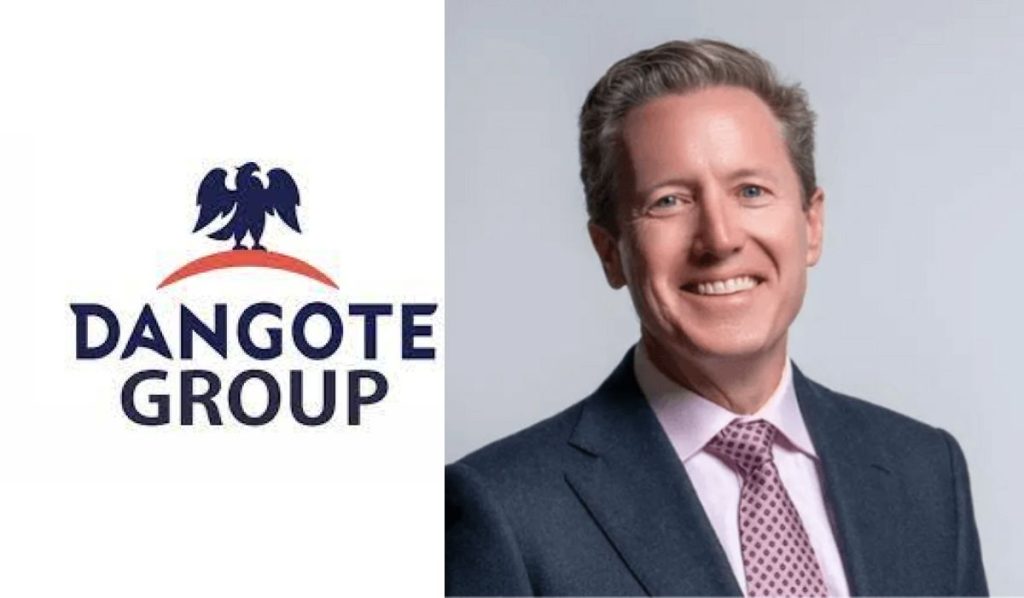
The Dangote Group has appointed David Bird, the former chief executive of Oman’s Duqm refinery, as the new chief executive of its petroleum and petrochemicals division. The strategic hire is seen as a decisive move by the Nigerian conglomerate to address operational challenges at its flagship refinery and propel its ambitious next phase of growth, including a push into continental African and global markets.
Bird officially assumed his role in July 2025, taking charge of Dangote’s fuels and petrochemicals business, which last year launched the world’s largest single-train refinery in Lagos. Aliko Dangote, the founder of the multi-sector conglomerate spanning cement, fertilizer, and sugar, retains his position as chairman of the refining arm and CEO of the overall group.
Bird’s appointment is widely interpreted as a strategic leverage of his extensive experience at OQ8, where he notably oversaw the Duqm refinery’s expansion and diversification of crude feedstock just prior to its 2023 test runs, as reported by S&P Global.
In written comments to Platts, part of S&P Global Commodity Insights, Bird outlined his immediate priorities at Dangote. He stated that his primary focus would be on advancing the group’s footprint beyond the Nigerian domestic market and extending its reach across the African continent. On LinkedIn, he further elaborated that his role involves ensuring maximum output and efficiency for the refinery while positioning the group as a global leader in the refining sector.
This leadership change comes at a critical juncture for the 650,000 barrels-per-day (b/d) Lagos refinery, which has encountered several operational setbacks and design issues that have hindered its much-anticipated ramp-up since its commissioning in January 2024. The business has also publicly cited an unfriendly regulatory environment as an impediment to its smooth operations.
Despite these initial hurdles, the refinery has already made a considerable impact on Nigeria’s energy market, notably by significantly slashing gasoline imports. However, Dangote has previously voiced strong criticisms of what he termed “rent-seeking” trade practices and the influx of low-quality fuel imports, both of which he contends have strained the plant’s progress and contributed to the operational complexities.
In an earlier interview with Platts, Bird had championed a strategic approach centered on strong trading performance, high plant utilisation, and flexible feedstock options. This aligns seamlessly with Dangote’s recent pivot to refining a broader mix of crude oils, a necessary adjustment given that supplies of the specific Nigerian-grade crude initially intended for the plant have become limited.
Despite its fast-rising global ambitions, the refinery remains bound by a naira-based agreement that requires it to supply a fixed volume of petroleum products to the domestic Nigerian market. This obligation is part of a broader arrangement with the Nigerian National Petroleum Company (NNPC), which holds a 7.2 per cent stake in the mega-project.








