
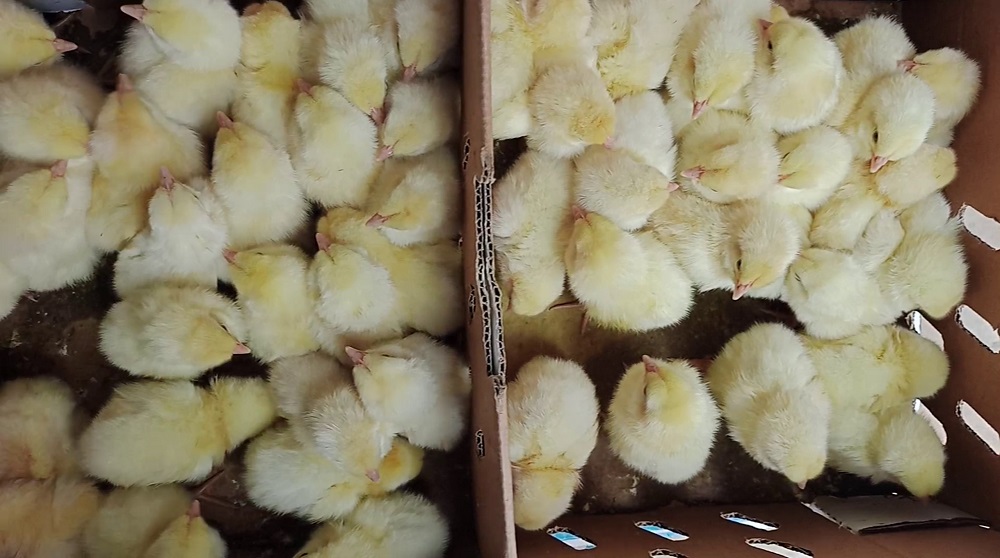
DOC shortages trigger industry momentum for homegrown breeder stock

Onome Amuge

When investors and analysts consider the indicators that reveal an economy’s underlying health, they typically focus on metrics such as inflation, interest rates, currency stability and industrial output. Increasingly, however, one of Africa’s largest economies is finding an unexpected stress test in the market for Day Old Chicks (DOCs), a sector far removed from the trading floors of Lagos or the policy corridors in Abuja.

The scarcity and soaring cost of day-old chicks, which appears at first glance to be a narrow agricultural challenge, is, according to farmers, economists and industry officials, evolving into a striking mirror of broader macroeconomic dysfunction. The movements in chick prices, the retreat of hatcheries, and the volatility in feed and vaccine costs are reflecting the same pressures that have strained Nigeria’s manufacturing, pharmaceutical and retail sectors.

The poultry industry, long seen as one of the country’s most organised agricultural value chains, is thus offering a revealing window into how monetary and trade policies reverberate far beyond boardrooms and into the food systems on which millions depend.

As farmers struggle with securing chicks and hatcheries wrestle with soaring operational costs, it is becoming increasingly clear that the factors disrupting the DOC market mirror the broader economic pressures shaping Nigeria today.

Farmers across the country describe a year marked by shortages, sudden price increases, reduced hatchery output and farm closures. Yet sector leaders insist these disruptions cannot be understood purely as agricultural failures.

The explanation lies in the structure of poultry production, which is capital-intensive, energy-reliant, and deeply dependent on imported genetics, veterinary inputs and incubation technology. Few agricultural industries reflect the cost of capital as directly as poultry.

Sunday Ezeobiora, national president of the Poultry Association of Nigeria (PAN), argues that the gap between Nigeria’s credit system and global financing standards has become unsustainable.

“Reducing the interest rate is fundamental. Farmers cannot remain competitive when financing costs reach 28 per cent. No serious poultry-producing country operates under those conditions,” he noted.

Hatchery operators, who sit at the heart of the chick supply chain, describe a year of relentless shocks. Their input costs (parent stock, vaccines, incubator equipment, spare parts), are largely dollar-denominated. Their energy bills depend on diesel, which has doubled in price repeatedly due to global fluctuations and domestic supply constraints.

This mismatch, where revenue is earned in a volatile naira, has pushed many hatcheries to adopt defensive production strategies.

“When the market is weak, hatcheries cut output to avoid losses. But when demand rises suddenly, they can’t scale up overnight. That is what creates shortages,”explains Dayo Gawati, managing director of Fdot Farms. “

The pattern is cyclical. Last year’s six-month egg glut forced many farmers to reduce flock sizes, leaving hatcheries with excess capacity and losses. When economic activity improved and demand returned, capacity had already shrunk.

The broader poultry value chain remains highly fragmented. Parent stock importers, hatcheries, feed mills, veterinary suppliers and farmers operate in isolation, each responding to market pressures without the benefit of coordinated planning.

This fragmentation becomes more pronounced when macroeconomic conditions tighten. Currency volatility disrupts parent stock imports. High interest rates restrict expansion. Meanwhile, informal cross-border poultry imports rise when local prices become unaffordable, destabilising domestic supply.

A senior researcher at a federal agricultural institute summarised the issue. In his words: “Poultry is not suffering from a technical problem. It is suffering from a governance problem.”

On the other hand, countries such as Brazil, India and South Africa have developed integrated poultry clusters where feed mills, hatcheries and processors operate in proximity, reducing costs and enhancing coordination. Nigeria’s system remains disjointed, a patchwork of efficient enterprises surrounded by structural inefficiencies.

Stakeholders reveal a growing consensus that Nigeria must rethink its approach to poultry, not through isolated subsidies or emergency imports but through strategic, institution-building reforms.

Yinka Lawal, head of PAN in Ogun State, stated that the long-term solution begins with domestic genetics.

“You cannot achieve self-sufficiency when your foundation depends on imported parent stock. We need sustained funding for local breeder development,” he argues.

Lawal proposes a national genetics programme led by Nigerian research institutes, supported by collaborations with private hatcheries to test locally adapted lines, long-term grants to advance breeder-stock development, and the creation of a breeder-stock bank to stabilise supply during foreign-exchange shocks, an approach similar to India’s model, where investment in indigenous breeder lines reduced reliance on imported genetics and lowered production costs.

Nigeria has dozens of hatcheries that once contributed meaningfully to national supply but have become idle due to capital shortages and outdated equipment, and Lawal argues that reviving them could help stabilise the market. He recommends establishing a Hatchery Support Fund offering low-interest financing, providing grants for solar-power installations, subsidising incubator upgrades, and expanding technical support through extension services.

While some stakeholders emphasise genetics and hatchery capacity, others argue that Nigeria must confront the affordability challenge head-on.

Kabir Ibrahim, president of the All Farmers Association of Nigeria (AFAN), believes that without affordable feed and vaccines, the sector will remain unstable regardless of structural reforms.

“You cannot stabilise chick production when farmers cannot afford inputs. Feed alone accounts for more than 70 per cent of production costs,” he noted.

Ibrahim proposes expanding domestic vaccine manufacturing, strengthening border controls to curb illegal poultry imports, and integrating eggs into the national school-feeding programme, a measure he says would boost demand, support local producers and improve national nutrition outcomes.

For many small and medium-scale farmers, the biggest barrier is capital. Interest rates above 25 per cent, coupled with limited access to structured credit, have created what some industry analysts describe as a “two-tier poultry economy.”

Godwin Egbebe, a prominent sector stakeholder, warns that without single-digit financing and access to grants, smaller producers will remain structurally disadvantaged, noting that while large integrated farms can absorb shocks, small operators cannot and the gap is widening. He recommends introducing special waivers for input imports when local supplies are inadequate, providing matching grants for hatchery expansion, and allocating targeted funding for breeder and hatchery upgrades.

Foluso Adams, deputy chairman of PAN in Lagos, argues that stabilising DOC supply requires investment across the entire value chain rather than at the hatchery level alone. He emphasises the need for local feed-mill development, expanded domestic vaccine manufacturing, the creation of buffer-stock systems for key inputs, and a selective easing of import restrictions during acute shortages, arguing that Nigeria must prioritise input industries that reduce the sector’s exposure to foreign-exchange volatility.

Industry veterans like Taiwo Adeoye, managing director of Rostal Resources Ltd., offer a reminder that Nigeria has previously achieved surplus DOC production.

“We have had periods where DOC supply exceeded national demand. The sector can thrive without heavy intervention when conditions are stable,” he said.

Adeoye traces today’s scarcity to last year’s egg glut and stresses that panic-driven policy decisions, such as DOC importation, risk destabilising long-term investment.

“Imported DOCs would land at more than 30 per cent above local prices. That is not a solution,” he notes.

He warns against interventions that benefit politically connected actors rather than real farmers, urging more transparent stakeholder engagement.

Hatcheries depend on uninterrupted electricity to maintain incubation temperatures. Nigeria’s grid, however, remains unreliable, forcing operators to rely heavily on diesel. With global oil price fluctuations, diesel prices have become a major destabilising force.

According to some stakeholders, a single power failure can wipe out thousands of embryos.

Several stakeholders argue that solar-powered hatcheries, supported by grants or tax incentives, could reduce operational volatility and lower DOC prices.

The poultry sector has traditionally operated with limited government coordination, but as volatility deepens, farmers and hatchery operators argue that self-regulation is no longer viable, calling for demand-forecasting systems, breeder-stock management frameworks, transparent price-benchmark mechanisms, early-warning systems for gluts or shortages, and localised cluster-based production planning, structures that are standard in high-performing poultry markets but largely absent in Nigeria.


A crisis that may yet become an opportunity

Despite the severity of today’s challenges, many stakeholders believe the sector is at an inflection point. For the first time, the government appears to recognise poultry as macroeconomically significant, a sector that influences food inflation, nutrition, employment and rural incomes.

The poultry sector has traditionally operated with limited government coordination, but as volatility deepens, farmers and hatchery operators argue that self-regulation is no longer viable, calling for demand-forecasting systems, breeder-stock management frameworks, transparent price-benchmark mechanisms, early-warning systems for gluts or shortages, and localised cluster-based production planning, structures that are standard in high-performing poultry markets but largely absent in Nigeria.

Leave a Comment

DOC shortages trigger industry momentum for homegrown breeder stock

Onome Amuge

When investors and analysts consider the indicators that reveal an economy’s underlying health, they typically focus on metrics such as inflation, interest rates, currency stability and industrial output. Increasingly, however, one of Africa’s largest economies is finding an unexpected stress test in the market for Day Old Chicks (DOCs), a sector far removed from the trading floors of Lagos or the policy corridors in Abuja.

The scarcity and soaring cost of day-old chicks, which appears at first glance to be a narrow agricultural challenge, is, according to farmers, economists and industry officials, evolving into a striking mirror of broader macroeconomic dysfunction. The movements in chick prices, the retreat of hatcheries, and the volatility in feed and vaccine costs are reflecting the same pressures that have strained Nigeria’s manufacturing, pharmaceutical and retail sectors.

The poultry industry, long seen as one of the country’s most organised agricultural value chains, is thus offering a revealing window into how monetary and trade policies reverberate far beyond boardrooms and into the food systems on which millions depend.

As farmers struggle with securing chicks and hatcheries wrestle with soaring operational costs, it is becoming increasingly clear that the factors disrupting the DOC market mirror the broader economic pressures shaping Nigeria today.

Farmers across the country describe a year marked by shortages, sudden price increases, reduced hatchery output and farm closures. Yet sector leaders insist these disruptions cannot be understood purely as agricultural failures.

The explanation lies in the structure of poultry production, which is capital-intensive, energy-reliant, and deeply dependent on imported genetics, veterinary inputs and incubation technology. Few agricultural industries reflect the cost of capital as directly as poultry.

Sunday Ezeobiora, national president of the Poultry Association of Nigeria (PAN), argues that the gap between Nigeria’s credit system and global financing standards has become unsustainable.

“Reducing the interest rate is fundamental. Farmers cannot remain competitive when financing costs reach 28 per cent. No serious poultry-producing country operates under those conditions,” he noted.

Hatchery operators, who sit at the heart of the chick supply chain, describe a year of relentless shocks. Their input costs (parent stock, vaccines, incubator equipment, spare parts), are largely dollar-denominated. Their energy bills depend on diesel, which has doubled in price repeatedly due to global fluctuations and domestic supply constraints.

This mismatch, where revenue is earned in a volatile naira, has pushed many hatcheries to adopt defensive production strategies.

“When the market is weak, hatcheries cut output to avoid losses. But when demand rises suddenly, they can’t scale up overnight. That is what creates shortages,”explains Dayo Gawati, managing director of Fdot Farms. “

The pattern is cyclical. Last year’s six-month egg glut forced many farmers to reduce flock sizes, leaving hatcheries with excess capacity and losses. When economic activity improved and demand returned, capacity had already shrunk.

The broader poultry value chain remains highly fragmented. Parent stock importers, hatcheries, feed mills, veterinary suppliers and farmers operate in isolation, each responding to market pressures without the benefit of coordinated planning.

This fragmentation becomes more pronounced when macroeconomic conditions tighten. Currency volatility disrupts parent stock imports. High interest rates restrict expansion. Meanwhile, informal cross-border poultry imports rise when local prices become unaffordable, destabilising domestic supply.

A senior researcher at a federal agricultural institute summarised the issue. In his words: “Poultry is not suffering from a technical problem. It is suffering from a governance problem.”

On the other hand, countries such as Brazil, India and South Africa have developed integrated poultry clusters where feed mills, hatcheries and processors operate in proximity, reducing costs and enhancing coordination. Nigeria’s system remains disjointed, a patchwork of efficient enterprises surrounded by structural inefficiencies.

Stakeholders reveal a growing consensus that Nigeria must rethink its approach to poultry, not through isolated subsidies or emergency imports but through strategic, institution-building reforms.

Yinka Lawal, head of PAN in Ogun State, stated that the long-term solution begins with domestic genetics.

“You cannot achieve self-sufficiency when your foundation depends on imported parent stock. We need sustained funding for local breeder development,” he argues.

Lawal proposes a national genetics programme led by Nigerian research institutes, supported by collaborations with private hatcheries to test locally adapted lines, long-term grants to advance breeder-stock development, and the creation of a breeder-stock bank to stabilise supply during foreign-exchange shocks, an approach similar to India’s model, where investment in indigenous breeder lines reduced reliance on imported genetics and lowered production costs.

Nigeria has dozens of hatcheries that once contributed meaningfully to national supply but have become idle due to capital shortages and outdated equipment, and Lawal argues that reviving them could help stabilise the market. He recommends establishing a Hatchery Support Fund offering low-interest financing, providing grants for solar-power installations, subsidising incubator upgrades, and expanding technical support through extension services.

While some stakeholders emphasise genetics and hatchery capacity, others argue that Nigeria must confront the affordability challenge head-on.

Kabir Ibrahim, president of the All Farmers Association of Nigeria (AFAN), believes that without affordable feed and vaccines, the sector will remain unstable regardless of structural reforms.

“You cannot stabilise chick production when farmers cannot afford inputs. Feed alone accounts for more than 70 per cent of production costs,” he noted.

Ibrahim proposes expanding domestic vaccine manufacturing, strengthening border controls to curb illegal poultry imports, and integrating eggs into the national school-feeding programme, a measure he says would boost demand, support local producers and improve national nutrition outcomes.

For many small and medium-scale farmers, the biggest barrier is capital. Interest rates above 25 per cent, coupled with limited access to structured credit, have created what some industry analysts describe as a “two-tier poultry economy.”

Godwin Egbebe, a prominent sector stakeholder, warns that without single-digit financing and access to grants, smaller producers will remain structurally disadvantaged, noting that while large integrated farms can absorb shocks, small operators cannot and the gap is widening. He recommends introducing special waivers for input imports when local supplies are inadequate, providing matching grants for hatchery expansion, and allocating targeted funding for breeder and hatchery upgrades.

Foluso Adams, deputy chairman of PAN in Lagos, argues that stabilising DOC supply requires investment across the entire value chain rather than at the hatchery level alone. He emphasises the need for local feed-mill development, expanded domestic vaccine manufacturing, the creation of buffer-stock systems for key inputs, and a selective easing of import restrictions during acute shortages, arguing that Nigeria must prioritise input industries that reduce the sector’s exposure to foreign-exchange volatility.

Industry veterans like Taiwo Adeoye, managing director of Rostal Resources Ltd., offer a reminder that Nigeria has previously achieved surplus DOC production.

“We have had periods where DOC supply exceeded national demand. The sector can thrive without heavy intervention when conditions are stable,” he said.

Adeoye traces today’s scarcity to last year’s egg glut and stresses that panic-driven policy decisions, such as DOC importation, risk destabilising long-term investment.

“Imported DOCs would land at more than 30 per cent above local prices. That is not a solution,” he notes.

He warns against interventions that benefit politically connected actors rather than real farmers, urging more transparent stakeholder engagement.

Hatcheries depend on uninterrupted electricity to maintain incubation temperatures. Nigeria’s grid, however, remains unreliable, forcing operators to rely heavily on diesel. With global oil price fluctuations, diesel prices have become a major destabilising force.

According to some stakeholders, a single power failure can wipe out thousands of embryos.

Several stakeholders argue that solar-powered hatcheries, supported by grants or tax incentives, could reduce operational volatility and lower DOC prices.

The poultry sector has traditionally operated with limited government coordination, but as volatility deepens, farmers and hatchery operators argue that self-regulation is no longer viable, calling for demand-forecasting systems, breeder-stock management frameworks, transparent price-benchmark mechanisms, early-warning systems for gluts or shortages, and localised cluster-based production planning, structures that are standard in high-performing poultry markets but largely absent in Nigeria.

A crisis that may yet become an opportunity

Despite the severity of today’s challenges, many stakeholders believe the sector is at an inflection point. For the first time, the government appears to recognise poultry as macroeconomically significant, a sector that influences food inflation, nutrition, employment and rural incomes.

The poultry sector has traditionally operated with limited government coordination, but as volatility deepens, farmers and hatchery operators argue that self-regulation is no longer viable, calling for demand-forecasting systems, breeder-stock management frameworks, transparent price-benchmark mechanisms, early-warning systems for gluts or shortages, and localised cluster-based production planning, structures that are standard in high-performing poultry markets but largely absent in Nigeria.

Leave a Comment


