– Aquaculture currently accounts for more than half of fish consumed globally
– Disease, stock mortality, land use and feed remain chief concerns
– Inland and deep sea aquaculture offer more sustainable models
– Aquaculture could help governments achieve blue economy objectives
With per capita fish consumption having doubled in the past six decades, aquaculture is becoming more important in combating food insecurity. Recent innovations seek to improve sustainability and productivity while assuaging quality concerns.
One such company, Vertical Oceans, collected $3.5 million in a seed round last year from US-based VC fund Khosla Ventures in what might be the first time a major Silicon Valley fund has invested in an aquaculture start-up.
Vertical Oceans is currently raising shrimp in tanks the size of school buses in a proof-of-concept facility in Singapore. These modular tanks could conceivably be stacked in urban settings and recirculate water, producing little waste and addressing both supply-chain and contamination concerns.
Similarly, a number of companies farming Atlantic salmon have taken the drastic step of moving inland to become more sustainable. From its land-based facility near Miami, Atlantic Sapphire hopes to eventually produce 20 percent of the salmon consumed in the US. Powered by renewable energy and sourcing water from the same aquifer that provides Miami’s drinking water, the company has also cut emissions by shipping fish to distributors by road.
Global aquaculture activity
Aquaculture provided 56 percent of the aquatic food available for human consumption worldwide in 2020. Asia accounted for 90 percent of global aquaculture production in 2018, thanks in part to China, which produced 66.1 million tonnes. Indonesia was the next-largest producer, with 14.7 million tonnes, followed by India (7 million tonnes) and Vietnam (4 million tonnes).
The key aquaculture products in Asia include seaweed and oysters, as well as freshwater carp. Known as low-trophic, these species mostly consume plankton, making them cheaper and more environmentally friendly to farm than carnivorous, or high-trophic, fish species.
Shrimp farming, which is worth an estimated $45 billion globally, is responsible for 30 percent of the deforestation of mangroves in South-east Asia, according to a 2020 report from Planet Tracker. The lack of mangroves, which act as a vital carbon sink, and the flow of waste, chemicals and antibiotics from farms increases the environmental risks associated with conventional shrimp aquaculture.
The Americas account for approximately three percent of global aquaculture production, with demand primarily focused on whiteleg shrimp and Atlantic salmon. These high-trophic species pose environmental risks when farmed at industrial scale because they produce more hazardous waste and are primarily fed small fish or fish by-products from capture fisheries.
Egypt dominates aquaculture in Africa, accounting for 73.8 percent of the continent’s aquaculture production as of 2018. While the continent is only responsible for some two percent of global output, the sector in sub-Saharan Africa has grown by 11 percent per year since 2000, nearly double the global rate of six percent.
OBG has previously noted that the high consumption of fish and the stress on local capture fisheries has made aquaculture an important tool for poverty reduction and fighting food insecurity in sub-Saharan Africa. Tilapia and catfish, both low-trophic species, account for 70 percent of the continent’s production, with the majority of aquaculture activity centred around lakes.
Addressing sustainability
As OBG noted last year, with climate change, overfishing and ocean acidification threatening wild fisheries, many governments have outlined blue economy strategies to protect marine resources and drive economic recovery following the Covid-19 pandemic.
Aquaculture is set to play a central role in many of these strategies, with its expansion providing for economic growth, poverty reduction and increased food security while also contributing to UN Sustainable Development Goal 14: “Conserve and sustainably use the oceans, seas, and marine resources for sustainable development”.
In emerging markets, government support remains essential to expanding aquaculture activity to keep pace with demand. Shifting subsidies from sea fishing to aquaculture could help encourage sustainable growth while discouraging overfishing.
In Norway, water leases are more expensive than land leases, encouraging salmon aquaculture enterprises to move to more sustainable inland facilities.
Efforts at disease prevention have focused on strains of fish such as genetically improved farmed tilapia, which boasts increased disease resistance and is responsible for an 18-58 percent jump in productivity in farms in Bangladesh and China. Ghana, Kenya, Malawi and Zambia have all begun breeding programmes to develop local fish strains that can withstand outbreaks.
Increased urbanisation and an expanding global middle class have driven demand for high-trophic species such as salmon and shrimp, although they produce more waste and are fed “trash fish” from capture fisheries, putting further stress on wild fish stocks.
Some farms are testing to see if salmon raised on a diet of insects still produce omega-3 fatty acids, while Atlantic Sapphire aims to remove fish from their feed by 2025.
In smaller-scale enterprises, both green water pond and nutritious pond models utilise food waste or underused ingredients to increase the carbon content of ponds, thereby increasing productivity, whereas companies like Vertical Oceans that operate recirculating tanks use macroalgae to help filter water.
Modular tanks such as those employed by Vertical Oceans could shorten supply routes and reduce the emissions associated with the transport of aquaculture products. Farms could conceivably be built close to or within cities, providing a sustainable food source to support growing urban populations.
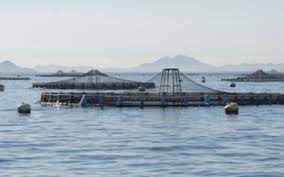
US-based Forever Oceans has constructed floating cages that allow fish farming further out in the ocean, preventing the potentially toxic accumulation of waste associated with shallow-water fish farms. Though the logistics of managing a farm far from the coast creates additional challenges, the company is planning to expand yellowtail production in Brazil and Hawaii, in addition to its existing farm off the coast of Panama.