

The landmark £746 million Nigeria-UK MoU presents a historic opportunity for port modernisation, but its success hinges on strategic deployment, inclusive industrial participation, legal compliance, and the adoption of a multimodal, regionally balanced logistics approach. Nigeria faces a critical juncture in infrastructure and industrial development with this export finance agreement aimed at modernising the Lagos Port Complex, Apapa Quays, and Tin Can Island Port Complex. The Tinubu administration, under its Renewed Hope Agenda, has demonstrated political will for major infrastructure projects; however, success depends on extending focus beyond Lagos to other strategic ports such as Onne, and inland waterways including the Burutu, Onitsha, Lokoja, and Niger corridor, which remain largely underutilised.
Nigeria possesses a vast network of approximately 10,000 kilometers of navigable waterways, of which around 3,800 kilometers are operational at varying periods throughout the year, according to the National Inland Waterways Authority. These waterways provide critical connectivity to 28 of the country’s 36 states and establish strategic trade links with five neighbouring nations: Equatorial Guinea, Cameroon, Chad, Niger Republic, and Benin Republic, specifically Port Novo. Beyond domestic significance, these routes position Nigeria as a potential hub in the West and Central African maritime landscape.
Globally, over 80 percent of trade is conducted via sea, with Africa relying on maritime transport for roughly 90 percent of its imports and exports. This underscores the immense untapped potential of Nigeria’s inland and coastal waterways to enhance trade efficiency, reduce logistics costs, and integrate domestic and regional markets. Effectively leveraging these corridors could stimulate industrial growth, improve supply chain resilience, and enable Nigeria and Africa more broadly to capture a larger share of the global maritime economy while advancing regional economic integration and sustainable transport solutions.
Nigeria’s ports have long suffered from congestion, inadequate infrastructure, and high operational inefficiencies. According to the Nigerian Ports Authority, turnaround delays at Apapa Ports average seven to 10 days, while container dwell times often exceed 14 days, inflating logistics costs by up to 40 percent. The MoU promises modernisation, but concentrating all investment in Lagos risks reinforcing geographic economic imbalances, while other strategic ports, including Onne, Calabar, and Onitsha, remain underutilised despite lower operational costs and potential to reduce logistics expenses for northern, south-southern and eastern states, improve trade flows, and stimulate regional economic activity. Prioritising investment in these alternative ports could immediately reduce logistics costs, relieve congestion in Lagos, and stimulate inclusive regional economic growth.
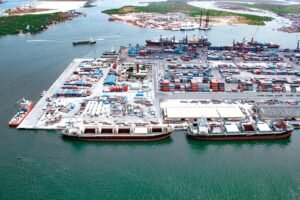
Port inefficiencies, including procedural bottlenecks, poor hinterland connections, and fragmented regulatory frameworks, drive logistics costs up to 40 percent of product prices, among the highest globally. This structural challenge has contributed to inflation and deterred investment across logistics value chains. Infrastructure investment is therefore a legitimate public policy goal, but success depends on strategic allocation, integrated logistics planning, and regulatory compliance. Export credit financing, like UKEF, primarily supports the exporting country’s industrial base. Procurement tied to foreign suppliers can weaken local economic impact and limit technology transfer. The Nigeria-UK MoU includes such clauses, raising questions about value retention and alignment with domestic industrial policy.
A significant portion of the financing, at least £236 million, is tied to British suppliers, including a £70 million contract with British Steel for steel billets. This raises potential tension between foreign industrial interests and Nigeria’s strategic goal of building domestic capacity. Beyond procurement concerns, concentrating resources in Lagos risks neglecting ports such as Onne, Calabar, and Onitsha, which could offer lower logistics costs, improved trade facilitation, and regional economic benefits if upgraded in tandem. The government must therefore ensure that financing aligns with domestic industrial policy, local content mandates, and capacity-building objectives so that infrastructure investment translates into tangible economic benefits for Nigerians rather than primarily supporting foreign suppliers.
Comparative experiences with tied export finance highlight that benefits often accrue disproportionately to lenders, emphasising the need for rigorous parliamentary scrutiny and integration into national fiscal planning. In other African contexts, such arrangements catalyse industrialisation only when linked with local capacity-building; conversely, weak governance and inadequate local content policies can suppress domestic participation. The MoU reflects asymmetric power dynamics favouring UKEF and British firms, while Nigeria assumes execution risk and debt obligations.
Tied financing channels funds back to UK suppliers, raising concerns about domestic industrial multipliers. Infrastructure improvements are necessary, but value retention in Nigeria’s economy is diluted, particularly in sectors like steel and construction, where domestic capacity could be leveraged. Past projects, such as Ajaokuta Steel, illustrate how foreign-tied financing can suppress domestic industrial participation, limit technology transfer, and constrain local capacity development. Without transparent procurement evaluations and explicit local content targets, the MoU risks undermining Nigeria’s industrialisation agenda.
Stakeholders, including federal ministries, politically connected contractors, and foreign suppliers, create potential for rent-seeking, elite capture, and opaque allocation of public resources. Lessons from prior projects, such as the Lekki Port concessions and Ajaokuta Steel, underscore the necessity of robust oversight mechanisms to mitigate governance and corruption risks. Identifying which Nigerian ministries and parastatals, including the Ministries of Transportation and Finance, Nigerian Ports Authority, and Federal Inland Waterways Authority, will benefit or be exposed is critical, alongside anticipating resistance from entrenched Lagos-based logistics interests if Onne Port is prioritised. Community and labour implications, including employment opportunities, skills development, and local content compliance, also require careful consideration. Civil society and academic advocacy for equitable port investment and transparency remain essential to accountability.
Inclusivity is a key determinant of success. Project execution that privileges foreign inputs without mechanisms for domestic participation risks concentrating socio-economic benefits in a narrow elite, undermining equitable development. Effective governance must align with public financial management principles, open government standards, and transparency mandates.
Geographic concentration of the £746 million in Lagos risks reinforcing regional imbalances and neglects strategic seaports, such as Onne in Rivers State, Calabar in Cross River State, and inland facilities like Onitsha. Empirical data underscores the potential gains from diversified investment. According to the Nigerian Ports Authority Operational Performance Report 2025, total cargo throughput rose 24.8 percent, from 103.6 million metric tonnes in 2024 to 129.3 million metric tonnes. While Apapa and Tin Can Island Ports remain significant, Lekki Deep Sea Port accounted for 40.6 percent of container throughput, Onne 19.1 percent, and Apapa 16.7 percent, highlighting the latent potential of eastern ports. Logistics cost comparisons further reinforce this: for a 30 MT shipment, costs outside Lagos can be 30 to 60 percent lower, demonstrating the economic suboptimality of Lagos concentration. Investment across multiple ports could reduce bottlenecks, lower consumer prices, and stimulate trade in under-served regions.
Operational metrics also favour Onne Port, which demonstrates lower ship turnaround and container dwell times than Apapa. International cases reinforce this: South Africa’s Durban port leveraged regional logistics planning to reduce congestion and promote industrial linkages; Kenya’s Mombasa port optimised hinterland corridors and inland container depots; and India’s Jawaharlal Nehru Port expanded via public-private partnerships while integrating local suppliers. These examples illustrate that strategic planning, multimodal integration, and inclusive financing can transform port performance.
The success of the Nigeria-UK financing agreement depends not merely on capital size, but on deployment effectiveness, adherence to project timelines, transparency, and accountability. UK funding can be quicker to disburse and ensure high-quality inputs, but it emphasises British contractors and technology exports, aligning with UK trade priorities. It focuses on project delivery and repayment guarantees, with moderate oversight and limited enforcement of anti-corruption measures.
In contrast, the European Union Global Gateway Initiative (EU GGI), offers bureaucratic and slower but more sustainable financing. It prioritises capacity-building, local ownership, long-term sustainability, and good governance, providing grants, concessional loans, and blended finance. It encourages public-private partnerships, ESG compliance, regional integration, and SDG alignment. Green port practices at Onne, including electrification, solar power, and ISO 14001/IFC compliance, could reduce CO₂ emissions by up to 25 percent compared with trucking-dependent Lagos operations, embedding climate resilience against sea-level rise, flooding, and storm impacts. EU GGI financing ensures domestic firms can participate, enhancing value retention and reducing tied procurement distortions.
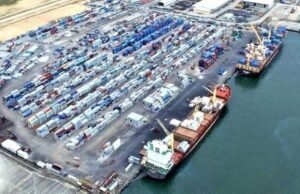
Onne Port offers a natural logistics bridge to North-Central and Northern regions via the Onitsha-Lokoja axis. Diverting 20 to 30 percent of cargo from Lagos to Onne could reduce national haulage costs by 15 to 25 percent, lowering consumer prices and inflationary pressures. Underutilisation reflects policy neglect and underinvestment in complementary infrastructure, including inland waterways, intermodal freight systems, and last-mile connectivity. The Burutu, Onitsha, Lokoja, and Niger inland waterway corridor could transform Nigeria’s logistics into a multimodal network for bulk goods, agricultural produce, and construction materials, requiring relatively modest investments in dredging, navigation aids, barges, and terminals. Strategic investment here represents an opportunity for the Tinubu administration to leave a lasting legacy.
A competitive port system requires hinterland connectivity. Integrated investment in ports, rail, and roads ensures seamless cargo evacuation and distribution. Rail links from Onne, Lagos, and Calabar to industrial and consumption centers in the South-East, North-Central, and Northern regions reduce reliance on road haulage, lower freight costs, and improve turnaround times. Upgraded road corridors supporting heavy-duty freight prevent infrastructure deterioration and congestion. A coordinated framework unlocks economies of scale, enhances supply chain reliability, and positions Nigeria competitively under frameworks such as the African Continental Free Trade Area.
Financing transformation need not rely exclusively on tied export credits. The EU GGI provides blended finance, grants, concessional loans, equity investments, and public-private partnership structures for sustainable port modernisation. Onne Port could become Africa’s first green port, with renewable energy operations, electrified cargo handling, low-emission logistics chains, and climate-resilient infrastructure. EU-backed technical assistance, regulatory reforms, and capacity-building ensure investment aligns with governance, climate resilience, and sustainability frameworks.
Integrating Onne Port with the Burutu, Onitsha, Lokoja, and Niger corridor aligns with EU priorities of sustainable transport, regional connectivity, and green infrastructure. Public-private partnerships with EU guarantees encourage private sector participation while ensuring fiscal prudence and compliance with the Fiscal Responsibility Act and Public Procurement Act. This approach rebalances investment away from Lagos, addresses regional inequities, and fosters inclusive growth, shifting from centralised, congestion-prone logistics to a distributed, efficiency-driven national network.
Prioritising Onne Port and its multimodal linkages, along with operationalisation of the Burutu, Onitsha, Lokoja, and Niger waterways, could deliver three outcomes: immediate reductions in logistics costs, medium-term stimulation of regional industrial and agricultural value chains, and long-term transformation of Nigeria’s trade infrastructure into a globally competitive, sustainable, and resilient system. Emerging port nodes, such as the Oguta-Orashi seaport, could further diversify logistics and provide additional gateways for trade.
Legal compliance and national benefit require tabling the MoU for National Assembly ratification, with clear reporting timelines, independent audits, and alignment with national logistics and port masterplans. Diversified port investment, including Onne, Calabar, and Onitsha, reduces congestion and stimulates regional economic activity. Procurement should enforce minimum Nigerian supplier participation, phased local content integration, technology transfer, and capacity-building programmes. Debt sustainability must be transparently assessed and disclosed to comply with FRA obligations. ESG integration, including environmental impact assessments and community engagement, is essential for long-term viability.
The Nigeria-UK MoU promises modernised infrastructure and improved trade efficiency, but Lagos-centric investment, tied procurement, limited local content, and incomplete legal compliance present governance, fiscal, and industrial risks. Comparative analysis of Lagos, Onne, Calabar, and Onitsha illustrates potential efficiency gains and cost savings foregone by neglecting other strategic nodes. Inclusive, sustainable, and legally compliant outcomes require legislative ratification, transparent procurement, diversified investment, robust oversight, local content enforcement, ESG integration, and multimodal connectivity. Without these measures, the MoU risks serving foreign industrial interests at Nigeria’s expense. Coordinated execution with EU GGI support could instead herald a new era of port modernisation, regional trade facilitation, and sustainable infrastructure development.
Scenario analysis highlights potential outcomes: under a best-case scenario, Lagos and Onne ports could operate with integrated multimodal corridors, reducing logistics costs by up to 25 percent nationally, boosting industrial competitiveness, and generating thousands of jobs. A worst-case scenario, with Lagos-centric investment and tied procurement, risks congestion, inflated costs, and suppressed domestic industrial participation. Policy alternatives include blending UKEF funding for rapid port modernisation with EU GGI financing to enhance local content, implement green port standards, and strengthen multimodal logistics. Recommendations extend to the National Assembly for ratification, the Ministries of Transportation and Finance for coordinated planning, and the Nigerian Ports Authority and National Inland Waterways Authority for operational oversight. PPP or blended finance structures could include private sector participation in inland waterways, electrified port operations, and rail cargo handling concessions.
Engaging narratives illustrate human impact: a trader moving goods from Onne to Aba experiences a 40 percent reduction in transport costs compared with Lagos routes, while northern smallholder farmers gain faster, cheaper access to coastal export markets. Such contrasts underscore the potential real-world benefits of strategic, regionally balanced, and sustainable port development.
- business a.m. commits to publishing a diversity of views, opinions and comments. It, therefore, welcomes your reaction to this and any of our articles via email: comment@businessamlive.com

Chiwuike Uba, Ph.D., CPA, FCMA, a professor of economics with a keen focus on public financial management and public sector reforms, serves as chairman of the board of the ACUF Initiative for Policy and Governance Ltd/Gte. He can be reached at chiwuike@gmail.com and via (SMS) at + 234 803 309 5266







The souls of our ancestors will now rest in peace!