ECONOMICS & FINANCE
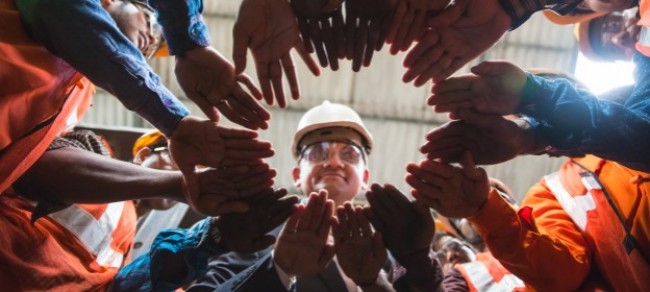
Germany’s unique, consensus-based system of corporate governance demonstrates how society’s demands shape business culture.
As the 21st century dawned, Germany was known as the “sick man of Europe”, with lower GDP growth and higher unemployment than peer nations such as France, Italy and the United Kingdom. Today, it is widely admired as one of the world’s strongest economies and the undisputed economic leader of the euro area. Experts may disagree on the chief cause of the turnaround, but most would concur that it was in the aftermath of the global financial crisis that it first became clear that Germany was on a different economic path from the rest of Europe.
After 2008, unemployment rates across the European Union soared, reaching nearly 11 percent in 2013 before commencing a gradual decline. German unemployment modestly increased in 2009, then sloped sharply downwards, remaining at approximately half the EU rate throughout 2013. Consequently, German companies were in an advantageous position to capitalise on rebounding demand post-2010. But how did they manage to retain such low unemployment in the face of collapsing economic activity?
In place of mass layoffs, German corporations participated in government-subsidised labour hoarding, retaining employees under reduced-hour work schemes. Management and workers thereby each agreed to absorb a share of the economic shock.
These agreements reflect the emphasis on democratic consensus and compromise that characterises German culture and society – which importantly extends to Germany’s post-WWII corporate governance code. Germany combines the two-tiered board model used by several other European nations – dividing directorial activity into a management board that handles strategy and day-to-day corporate affairs, and an independent supervisory board – with a unique commitment to employee representation and status.
Co-determination, in principle and practice
For most large public and private companies in Germany, i.e. those with more than 2,000 employees, half the seats on the supervisory board go to elected worker representatives, mainly drawn from the company’s work council as well as trade unions. The other half go to shareholder representatives. There is also a supervisory board chair, usually representing capital, who can cast a tie-breaking vote. In practice, the chair rarely exercises this power, preferring to allow the consensus-building process to play itself out.
Co-determination is intimately linked to the dual-board system. If employee representatives were tasked with debating management decisions alongside their bosses on a unified board, irresolvable conflicts of interest would be the likely result.
However, employee representatives and shareholders working on equal footing in an oversight capacity has been a beneficial set-up for labour relations and even for competitiveness, by some measures. German workers have historically been among the least strike-prone in Europe. As a rule, employee representatives feel secure enough in their authority to give a fair hearing to proposals from their fellow stakeholders.
Restructuring and outsourcing – practices which are essential for the largely manufacturing-based German economy – are subject to comprehensive co-stakeholder negotiation. Employees are routinely able to extract job guarantees that delay mass layoffs – at least those affecting the core, full-time employee base – for several years. For example, Volkswagen’s 2016 plan to cut 23,000 German jobs, billed as the most radical retrenchment in the company’s history, came with early retirement packages for older employees, a pledge not to close any domestic plants and a moratorium on forced layoffs until at least 2025.
With so much careful dialogue preceding strategic decisions, the actual supervisory board meetings often proceed in a highly formalised way, with little active engagement between the two equally matched camps. In some boards of German companies, employee representatives and shareholders literally sit on opposite sides of the table. Before the meeting, each group has often worked out a collective position on the issues at hand through detailed discussions.
Potential downsides
Co-determination, like any system of corporate governance, has its pitfalls as well. The system creates some obstacles to achieving true internationalisation, since the employees elected to the board are usually German and meetings are conducted in the German language.
Additionally, a system so heavily dependent on collaboration may present opportunities for collusion. Illicit sideline deals between labour and management have been known to occur. In perhaps the most infamous case, Volkswagen personnel chief Peter Hartz – architect of the “Hartz” labour market reforms in his capacity as adviser to chancellor Gerhard Schröder – resigned in 2005 amid allegations that he gave illegal bonuses and bribes to labour leaders. Klaus Volkert, head of Volkswagen’s work council, was later convicted in court for accepting illegal payments and benefits, and sentenced to two years and nine months in prison.
Balancing global and local
Volkswagen is quite special even in Germany since it has historically had one of the most extensive systems of co-determination at all levels, but the 2005 scandal demonstrates that the co-determination system can be exploited to favour one stakeholder over others or simply to satisfy personal greed. This points to one reason that German-style co-determination may not work in other nations, though some heads of state have suggested importing elements of it. Much of its success must be credited to cultural congruence in the German context. Without deeply rooted cultural beliefs underpinning it, co-determination could result in hopelessly deadlocked boards as labour and capital square off, or in transactional (rather than genuinely collaborative) relationships between stakeholders.
In a broader sense, co-determination demonstrates how social and national culture deeply influence how corporate boards function. The 21st-century German miracle shows that this can be a very positive thing. As we look towards formulating global best practices for corporate governance, we should also respect the important linkages between business culture and the local context.
This post is based upon a keynote address delivered at the INSEAD Directors Forum in Singapore.
Beatrice Weder di Mauro is a Distinguished Fellow-in-Residence at the Emerging Markets Institute of INSEAD in Singapore and a Professor of Economics holding the Chair of Economic Policy and International Macroeconomics at the University of Mainz in Germany.