
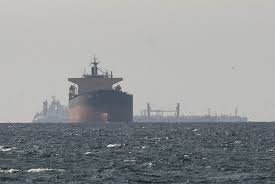
Rising geopolitical tensions in the Middle East are drawing renewed attention to the insurance industry’s exposure to marine risks, with analysts warning that prolonged instability could test parts of the global insurance market despite the sector’s currently strong financial footing.
According to a report by Insurance Business, analysts at Moody’s Ratings raised these concerns during a recent webinar where they examined the potential implications of the conflict for insurers and reinsurers worldwide.
While the insurance sector enters the current period with solid balance sheets and profitability, Moody’s analysts cautioned that escalating geopolitical tensions, particularly around strategic shipping routes, could expose insurers to large losses in marine coverage.
Marine insurance exposure in key shipping corridor
Benjamin Serra, senior vice president for financial institutions at Moody’s, noted that the conflict could create direct risks for the global insurance industry because of its potential impact on maritime trade in the Persian Gulf.
He explained that the Strait of Hormuz, alongside the wider Persian Gulf, serves as one of the world’s most critical corridors for the export of oil and gas.
Ships operating along these routes are typically covered by insurance policies provided by primary insurers and backed by reinsurance companies. Any disruption to shipping activities in the area could therefore trigger large claims across marine insurance portfolios.
Serra pointed out that the number of vessels currently stranded in the region underscores the scale of potential exposure.
Around 1,000 vessels are reportedly trapped in the Gulf, representing insured assets of considerable value. Estimates suggest that the total value of ships caught in the disruption could exceed $25 billion, with some insurers indicating that exposure may rise to as much as $40 billion or even higher.
Despite the large figures involved, Serra indicated that the global insurance sector would likely be capable of absorbing the losses if they materialised. However, he cautioned that the marine insurance market is relatively concentrated, meaning that a major event affecting the region could still represent a significant shock for that particular segment of the industry.
Strong capital buffers across global insurers
Analysts nevertheless emphasised that insurers and reinsurers are entering this period of uncertainty from a position of financial strength.
According to Serra, solvency ratios among major European insurers and reinsurers remain comfortably above regulatory requirements. In many cases, these ratios exceed 200 percent, reflecting strong capital buffers that have continued to improve between 2024 and 2025.
These strong solvency positions suggest that the largest insurance groups possess the financial capacity to withstand potential shocks arising from geopolitical disruptions.
Recent financial performance across the industry has also reinforced this resilience. Moody’s analysts noted that both primary insurers and reinsurers have recorded sustained growth in net income over the past four years.
This profitability has been supported by firmer pricing across several insurance lines and more disciplined underwriting practices adopted by insurers in response to earlier periods of market volatility.
Investment portfolios may face greater pressure
While underwriting exposure to the conflict may remain limited in some regions, analysts said the effects of geopolitical instability could emerge more clearly through insurers’ investment portfolios.
Mohammed Ali Londe, vice president and senior analyst at Moody’s, said insurers in the Gulf Cooperation Council region are unlikely to face large claims tied directly to war risks.
This is because most standard insurance policies exclude war-related coverage, limiting the likelihood of immediate underwriting losses tied to the conflict.
Instead, Londe explained that the most immediate channel of impact would likely be through investment holdings. Insurance companies in the GCC tend to allocate a significant portion of their portfolios to real estate and equity assets within the region.
Economic disruptions linked to the conflict, including potential declines in oil exports, tourism flows and broader regional economic activity, could therefore affect the value of these investments.
Even under a stress scenario, however, Moody’s analysts believe the sector could withstand moderate market declines. Londe noted that a hypothetical 20 percent drop in real estate and equity valuations would likely reduce insurers’ total equity by roughly seven percent.
Such a decline, while notable, would remain manageable given the existing capital buffers held by most insurers in the region.
European insurers face a more uncertain outlook
Beyond the Middle East, analysts said the wider global insurance sector is also entering a more uncertain operating environment.
Irina Metzler, an analyst covering financial institutions at Moody’s, said escalating geopolitical tensions are adding a fresh layer of complexity for insurers, particularly across Europe.
The heightened uncertainty could create more challenging operating conditions for both life insurers and property and casualty providers, especially as companies navigate volatile financial markets and shifting macroeconomic conditions.
Nevertheless, Metzler indicated that the strong capital positions currently held by many insurers should help the industry remain resilient in the near term.
Moody’s expects the sector to maintain stability over the next 12 to 18 months, even as geopolitical tensions continue to evolve and introduce new risks into the global operating landscape.
Overall, while the conflict in the Middle East underscores the vulnerability of key marine insurance exposures and highlights potential investment risks for regional insurers, analysts believe the global insurance industry remains sufficiently capitalised to absorb potential shocks,at least in the short term.








