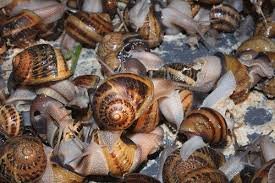
The search for scalable agribusiness opportunities in Nigeria is increasingly turning toward unconventional livestock, with heliculture (the commercial farming of edible land snails), drawing fresh attention from investors, agricultural economists and policymakers seeking diversified growth beyond traditional crop and livestock sectors. Advocates argue that the segment, long overlooked despite strong domestic consumption and export potential, could become a strategic niche in Nigeria’s agricultural transformation if production shifts from informal wild harvesting to structured commercial farming.
Snail farming is gaining renewed attention as a potential agribusiness investment opportunity, with Victor Iyama of the Federation of Agricultural Commodity Associations of Nigeria (FACAN), encouraging stakeholders to move beyond subsistence production. He cites strong global market expansion, from an estimated $2.46 billion currently to around $4.55 billion by 2033, fuelled by rising demand for alternative protein sources and value-added agricultural exports.
Nigeria already plays a significant role in global snail supply. The country produces an estimated 45,000 metric tonnes annually, making it Africa’s largest source of edible snails, ahead of producers such as Ghana. Yet most of this output comes from wild harvesting rather than organised farming, limiting traceability, export scalability and long-term sustainability.
This structural imbalance is increasingly viewed as both an economic opportunity and an environmental concern. Deforestation, climate variability and unregulated harvesting have reduced natural snail populations in some regions, while strong domestic demand continues to push prices upward. Analysts argue that transitioning to controlled commercial production could simultaneously protect biodiversity and unlock higher export revenues.
The investment case rests partly on accessibility. Compared with cattle, poultry or crop farming, heliculture requires relatively smaller capital expenditure, minimal land and comparatively simple infrastructure. Snails thrive in cool, humid environments, conditions prevalent across southern Nigeria, allowing production even in peri-urban residential compounds.
Export demand and current consumption patterns
Global demand for edible snails remains concentrated in Europe, particularly in France, Spain, Italy, Romania and Portugal, where culinary traditions incorporate escargots and similar dishes. Export shipments from Nigeria have increased steadily since 2020, with formal exports reaching about 164 tonnes in 2023, although industry insiders note that informal cross-border trade likely pushes total volumes higher.
Global consumption patterns continue to evolve, with the United States leading demand and emerging markets such as China and Germany reflecting a growing preference for healthier, alternative proteins. The United Kingdom remains a consistent destination for Nigerian exports.
Yet North Africa, particularly Morocco, has capitalised on more organised farming models to dominate formal export channels, showcasing how structured production can outweigh even strong natural resource advantages.
Another factor supporting industry growth is diversification into non-food applications. Snail mucin has gained global prominence in cosmetics and dermatological products, particularly in Asian skincare markets, where it is valued for hydration, anti-aging and skin-repair properties. Pharmaceutical uses are also under study, with researchers exploring potential antimicrobial and anti-inflammatory compounds derived from snail secretions.
This expansion beyond culinary consumption broadens the industry’s commercial appeal. Investors increasingly view snail farming as part of a wider bio-economy encompassing food processing, cosmetics ingredients and pharmaceutical research.
Despite export opportunities, Nigeria’s domestic market remains substantial. Snail meat is widely consumed across southern regions for its taste and perceived health benefits. Scarcity in northern areas often leads to higher retail prices, reinforcing the profitability of commercial farming.
Nutritionally, snails provide high protein content, low fat levels and significant iron and calcium, attributes that align with growing consumer awareness of healthy diets. Agricultural economists argue this positions heliculture well within the broader global shift towards alternative protein sources.
Industry participants caution that enthusiasm alone will not deliver commercial success. Caleb Ezeano Ike, a professor of Agricultural Extension and Rural Sociology, Nnamdi Azikiwe University notes that many prospective farmers underestimate the technical knowledge required. While entry barriers are low compared with other livestock sectors, consistent production requires understanding of breeding cycles, humidity control, disease management and feed optimisation.
Private sector operators echo similar concerns. Dunmola Sodeke, chief executive of Omodun Farms in Lagos, argues that inadequate training remains one of the biggest obstacles to scaling commercial operations. Prospective farmers often invest capital without acquiring sufficient technical expertise, leading to preventable losses.
Feed quality, predator control and proper housing design are also critical. Certain species, including large African land snails, require balanced calcium intake for shell development and carefully regulated humidity to maintain reproduction rates.
Financing and institutional support challenges
Access to finance remains another structural constraint. Adeboye Omole of Obafemi Awolowo University identifies weak capital bases, limited veterinary services and insufficient extension support as barriers preventing many small-scale farmers from expanding production.
Unlike poultry or crop farming, heliculture has historically received less policy attention, resulting in fewer specialised training programmes and research initiatives. Industry groups are increasingly advocating targeted government support, including credit facilities, technical extension services and export facilitation.
Experts also highlight the need for cold-chain infrastructure and internationally compliant processing facilities. Without such investments, Nigeria risks losing competitive advantage to countries with more organised value chains.
As it stands, environmental sustainability is emerging as a central argument for expanding commercial snail farming. Continued reliance on wild harvesting threatens natural ecosystems and reduces biodiversity. Structured farming, by contrast, offers controlled breeding, traceability and predictable supply.
Greenhouse snail farming, which allows year-round production through regulated temperature and humidity, has become the dominant commercial method in Europe. Similar approaches are gradually being adopted in Africa, although initial infrastructure costs can be higher than open-range methods.
Nevertheless, long-term productivity gains and export reliability often offset these costs, making greenhouse systems attractive for larger investors.
Investment outlook and cooperative models
Analysts increasingly suggest cooperative farming models as a pathway to scale. Aggregating production from multiple small farmers, they believe, can deliver the consistent volumes required for export contracts while distributing financial risk.
Contract farming arrangements with food processors, pharmaceutical companies or cosmetics manufacturers are also seen to stabilise demand and improve income predictability for farmers.
For institutional investors, the sector offers exposure to alternative protein markets with relatively low entry costs compared with industrial livestock operations. However, risks include market fragmentation, regulatory uncertainty and limited infrastructure.
Policy implications for agricultural diversification
Nigeria’s agricultural strategy emphasises diversification away from oil dependence, export expansion and rural employment generation. Heliculture aligns with these goals due to its labour-intensive nature, export potential and environmental sustainability.
Policymakers are increasingly exploring how micro-livestock sectors can complement traditional agriculture. If properly supported, snail farming could contribute to food security, job creation and foreign exchange earnings.
Industry stakeholders are calling for clearer regulatory frameworks, quality certification systems and export promotion initiatives. They also advocate stronger collaboration between research institutions, agricultural extension services and private investors.
Despite persistent challenges, momentum appears to be building. Rising global demand, favourable climatic conditions and increasing investor interest suggest the industry may be approaching a tipping point.
For Nigeria, the key question is whether it can transition from being primarily a wild harvester to a structured commercial producer. Success, according to analysts, would likely depend on coordinated investment in training, infrastructure, financing and export compliance. They project further that if those elements align, heliculture could evolve from a niche rural activity into a significant agribusiness segment, one capable of supporting livelihoods, diversifying exports and reinforcing Nigeria’s position in the global alternative protein market.
As agricultural diversification becomes central to economic resilience strategies across Africa, snail farming may prove an unlikely but potent contributor to future growth. The sector’s low barriers to entry, combined with expanding global demand, serve as indications it could become an increasingly visible component of Nigeria’s agricultural economy in the coming decade.