Nigeria’s leaders speak of growth, stability, and recovery, yet millions of citizens confront daily hunger and shrinking livelihoods. The contradiction is stark: revenue politics and elite pay reviews dominate the agenda, while food insecurity and inflation erode public trust. True stability will not come from statistics or spin; it must be felt in households and markets across the country.
When the government insists the economy is “growing” and official voices trumpet stabilisation, Nigerians can be forgiven for asking: growing for whom? The spin around Dr. Ngozi Okonjo-Iweala’s recent comment that the economy is “stabilising” was eagerly amplified as proof of progress. As director-general of the World Trade Organisation and a former Nigerian finance minister, her words naturally carry weight at home and abroad. Yet what was meant as cautious optimism quickly became political fodder. In markets and homes, citizens face soaring prices, food shortages, and collapsing purchasing power. The paradox is deepened by reports that the Revenue Mobilisation, Allocation and Fiscal Commission (RMAFC) is considering upward reviews of political office holders’ salaries while revisiting the revenue allocation formula.
This moment requires interrogation to make sense of the contradictions between official narratives, elite decisions, and citizens’ lived realities. Politics, at its core, is about the distribution of power and resources. The political elite have mastered the art of narrative framing: every hint of macroeconomic stabilisation is spun into victory. Yet politics is not only about storytelling; it is also about choices. And choices, especially in moments of crisis, reveal priorities. When leaders choose luxury over austerity, or elite comfort over mass welfare, they unmask the true function of politics in Nigeria: preserving privilege while deferring justice.
The RMAFC’s contemplation of higher salaries for political appointees at a time of mass hunger betrays the deep disconnect between rulers and the ruled. At a moment when inflation erodes household incomes and millions face food insecurity; the symbolism of such a move is devastating. Instead of austerity at the top and relief for the bottom, the reverse is considered: luxury for the few, sacrifice for the many. This reveals how state institutions, rather than being neutral arbiters of equity, often serve as instruments of elite reproduction. Similarly, the proposed review of the revenue-sharing formula appears less about correcting structural imbalances in fiscal federalism than about reinforcing bargaining positions among federal, state, and local elites. The citizen, who ought to be the ultimate beneficiary, is sidelined. What emerges is not distributive justice but distributive capture, a system where fiscal debates serve power games rather than developmental outcomes.
In political economy terms, Nigeria’s leaders continue to “internalize benefits and externalize costs,” prioritising their welfare over collective resilience. Perks of office are secured as private gains, while inflation, unemployment, and insecurity are offloaded onto ordinary citizens. The removal of fuel subsidies in 2023, for instance, forced millions into deeper hardship, yet debates on higher allowances for legislators and appointees proceeded almost simultaneously. By contrast, Ghana, during its 2022 fiscal crisis, announced a freeze on new government vehicle purchases and cuts to ministerial budgets as a show of solidarity. Such measures, though imperfect, signaled shared sacrifice. Nigeria’s failure to embrace restraint erodes trust in governance, deepens disillusionment, and undermines reform legitimacy. Without redistributive justice, and credible symbolism of leadership sacrifice, no narrative spin or technical fix will restore confidence, and the gulf between rulers and ruled will only continue to widen.
The economic story is equally stark. Yes, Nigeria may record modest GDP growth figures, according to the National Bureau of Statistics, but this growth remains “non-inclusive.” It is driven largely by oil receipts, marginal upticks in services, and external inflows. The fundamentals tell a different story: over 133 million Nigerians live in multidimensional poverty, according to the National Bureau of Statistics (2022), while youth unemployment exceeds 40 percent. Power supply remains erratic, with less than 5,000 MW reliably available to serve a population of over 200 million. Meanwhile, agricultural productivity lags behind population growth, forcing increased dependence on food imports.
Development economists have long warned against conflating aggregate GDP with human progress. The structuralist school emphasizes transforming economies away from primary commodities toward diversified production, a shift Nigeria has yet to achieve. The neoliberal school argues for market efficiency and macro-stability, but even where stabilisation has been attempted, citizens remain worse off. More recently, the capability approach advanced by Amartya Sen insists that development must be measured by freedoms, freedom from hunger, want, and vulnerability. On this count, Nigeria is regressing. Growth without food security or inclusive opportunity is not development, it is fragility disguised as progress.
To reconcile these tensions, Nigeria must pivot decisively in three directions.
- Moral economy: Growth must be judged by distributive outcomes, not statistical optics. Hunger in the land is not just an economic problem, it is a moral crisis. A moral economy requires policies that deliberately redistribute opportunity and protect the most vulnerable. For instance, targeted food security interventions, social safety nets, and subsidies for smallholder farmers would embody growth that values human dignity over headline numbers. Beyond short-term relief, embedding equity into fiscal and monetary policies ensures that development addresses structural inequality, not just temporary hardship.
- Political restraint: Leaders must show solidarity with citizens through restraint, not indulgence. Any salary review for political elites amidst hardship is not only tone-deaf but ethically indefensible. Political restraint also means curbing waste, reducing the cost of governance, and channeling savings into public goods such as education, healthcare, and infrastructure. Leadership by example is critical for rebuilding trust in state institutions. Genuine restraint requires transparency and accountability mechanisms that hold public officials answerable for fiscal excesses.
- Inclusive economics: Policies should prioritise broad-based productivity, agriculture, manufacturing, and SMEs, over rent-seeking. This requires investment in infrastructure, credit access, and technology adoption that empowers millions of small producers. Inclusive growth also demands federal and state collaboration to create enabling environments for innovation and job creation. Growth must be people-centered, not elite-centered, ensuring that prosperity is widely shared and resilience strengthened. A diversified, inclusive economy not only drives employment but also insulates citizens from external shocks, laying the foundation for sustainable progress.
In the end, the battle over Nigeria’s economic narratives is not merely about who controls the microphone; it is about who benefits from the system. A society where leaders prosper while citizens hunger is not only economically unstable but politically unsustainable. History shows that no nation can sustain growth when the majority feel excluded from its benefits. Stability, in the truest sense, cannot be declared from conference podiums; it must be felt in the kitchens, farms, markets, and workplaces of ordinary Nigerians.
The real measure of progress is whether citizens can eat, learn, and live with dignity. Until policy is redirected toward that end, Nigeria’s “growth” will remain rhetorical rather than real. As long as Nigerians wake up to empty plates while their leaders debate new allowances, talk of growth will remain what it has sadly become: a slogan in Abuja, but a mirage in the streets.
- business a.m. commits to publishing a diversity of views, opinions and comments. It, therefore, welcomes your reaction to this and any of our articles via email: comment@businessamlive.com

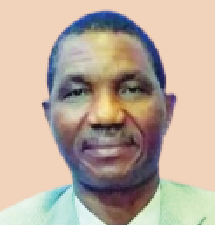
John Onyeukwu, is a lawyer and public policy analyst with interdisciplinary expertise in law, governance, and institutional reform. He holds an LL.B (Hons) from Obafemi Awolowo University, an LL.M from the University of Lagos, and dual master’s degrees in Public Policy from the University of York and Central European University. He also earned a Mini-MBA. John has managed development projects on governance, public finance, civic engagement, and service delivery. He can be reached on john@apexlegal.com.ng