The world faces complex challenges – from grave wealth inequality, to rapid digital changes, to gradual cultural appropriation and extinction, and to biting climate change and global warming. Savvy investors know a sustainable investment approach is key in times like this. When it comes to the income gap, it is not about different pay for the same job. Some of it is about people being slotted into different kinds of jobs and careers and having different job conditions due to differential education qualifications and their level of connections. To some extent, differential education level is a choice. But that is more for the people who have the luxury of choice. These are typically middle-, and high-, income workers and above. Low-income people have no choice; they are just trying to make a living – get a job and accommodation and feed. In America, for the wealth gap, the median net worth for a white family is around $190,000.00. The Hispanic and Black families are getting one seventh of that!
It is an enormous difference. And of course, that matters for all kinds of reasons, one of which might be buffering against the vicissitudes of economic life. Despite progress in some regions like Europe, global income and wealth are increasingly concentrated at the top. An Oxfam report in January, 2025, shows that in the 10 years since the financial crisis, the number of billionaires has nearly doubled, and the fortunes of the world’s super-rich have reached record levels. In 2018, the 26 richest people in the world held as much wealth as half of the global population (the 3.8 billion poorest people, down from 43 people the year before). It has been forewarned that as things are going, as of September 2025, the three richest men in the world, Ellon Musk of Tesla, Larry Ellison of Oracle and Jeff Bezos of Amazon, will be richer than 50 percent of the world population as soon as 2035. This will not be due to their industry but due to the ease of making money when you have money. Governments must control how rich people make money or else few of them will be richer than the rest of the world!
This issue matters because rapid rises in incomes at the top are driving and exacerbating within countries’ income inequality. From 1990 to 2015, the share of income going to the top one percent of the global population increased in 46 out of 57 countries with data.
Meanwhile, in more than half of the 92 countries with data, the bottom 40 percent receive less than 25 per cent of overall income. If more countries are surveyed, the rate will be higher. For example, in Africa, while the billionaire list is growing, the poor list is at the same time swelling. As the number of Africans who can afford private aircrafts is increasing, so is the number of citizens who can only afford squalid settlements as their home! We are seeing increasing interest in people who want to go to the moon for pleasure, while an increasing number of people are living on waste dumps! The most interesting issue in these statistics is that the number of new billionaires is growing arithmetically, while the number of poor people is growing geometrically. Billionaire influence, which is a rampant phenomenon in Africa, is now being felt in America and other developed capitalist countries. Thousands of Americans skipped the Labour Day (May 1) celebration to protest the situation in 2025.
Indeed in 2014, in the aftermath of the global economic meltdown, the growth of protest groups such as the “Occupy Movement” increased as the widening gap between rich and poor progressed! The book by Kate Pickett, professor of epidemiology at York and Richard Wilkinson, honorary visiting professor at York’s Department of Health Sciences, has even more resonance. It sold over 250,000 copies around the world, was translated into 23 different languages but, in summary, the authors say evidence to support arguments for greater equality is now even more convincing and credible. New studies confirmed that inequality has psychosocial effects causing insecurities about social status, with knock-on effects for stress levels, cognitive performance and emotional stability. In a 2025 research by O. A. Oyedele titled “How the billionaires make their money”, findings show that the majority of the rich enjoyed their “god-fathers’ leverage” more than “hard-work”. Since everyone cannot have a godfather, the government must control godfathers’ influence on businesses.
The government has a lot of work to do in discouraging ‘billionaire influence’ in order to provide a level playing ground for all and reduce oppression of the poor by the rich. Billionaire influence develops from the vast financial resources of wealthy people which allow them to impact the society through political donations, lobbying ‘power-that-be’, media ownership, philanthropic foundations, and the creation of influential think-tanks who reform the opinions of the masses against ‘toxic’ rich people. There is convincing evidence that concentrated power of wealthy people shapes public policy, controls people’s narratives through media and academia, and even directly influences government agencies. Critics argue this disproportionate influence exacerbates wealth inequality and threatens democratic process. It also affects future wealth distribution! To reduce income inequality and billionaire influence in society, the government must be ready to embrace impact investment strategy.
Impact investment strategy is an investment strategy that targets companies or industries that produce social or environmental benefits. Impact investment advocates who want to invest in agriculture, renewable energy, people-friendly microfinance, education and affordable housing must be supported by governments. Impact investing allows for a more direct and measurable impact on specific issues like food security, housing, transportation, poverty alleviation or health and safety. They are embarked upon to improve social and environmental benefits of investments derived by the people. For example, the government can ask the ten richest people or more in the country to invest in social housing or sustainable transport. Poor people need social housing more than court judges who are collectively above average in society. Unless governments influence or embark on policymaking to encourage impact investing and increase minimum wage, especially to ensure the lowest paid worker gets a living wage, citizens will not be able to cope with the emerging challenges in the world. Only good governance can ensure they cope!
- business a.m. commits to publishing a diversity of views, opinions and comments. It, therefore, welcomes your reaction to this and any of our articles via email: comment@businessamlive.com

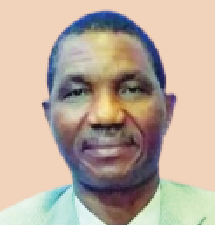
Olufemi Adedamola Oyedele, MPhil. in Construction Management, managing director/CEO, Fame Oyster & Co. Nigeria, is an expert in real estate investment, a registered estate surveyor and valuer, and an experienced construction project manager. He can be reached on +2348137564200 (text only) or femoyede@gmail.com