The Impact Investors Foundation (IIF), Nigeria’s leading platform for unlocking impact capital, is set to reposition gender-smart investing from a development talking point to a mainstream capital allocation strategy within the country’s financial markets.
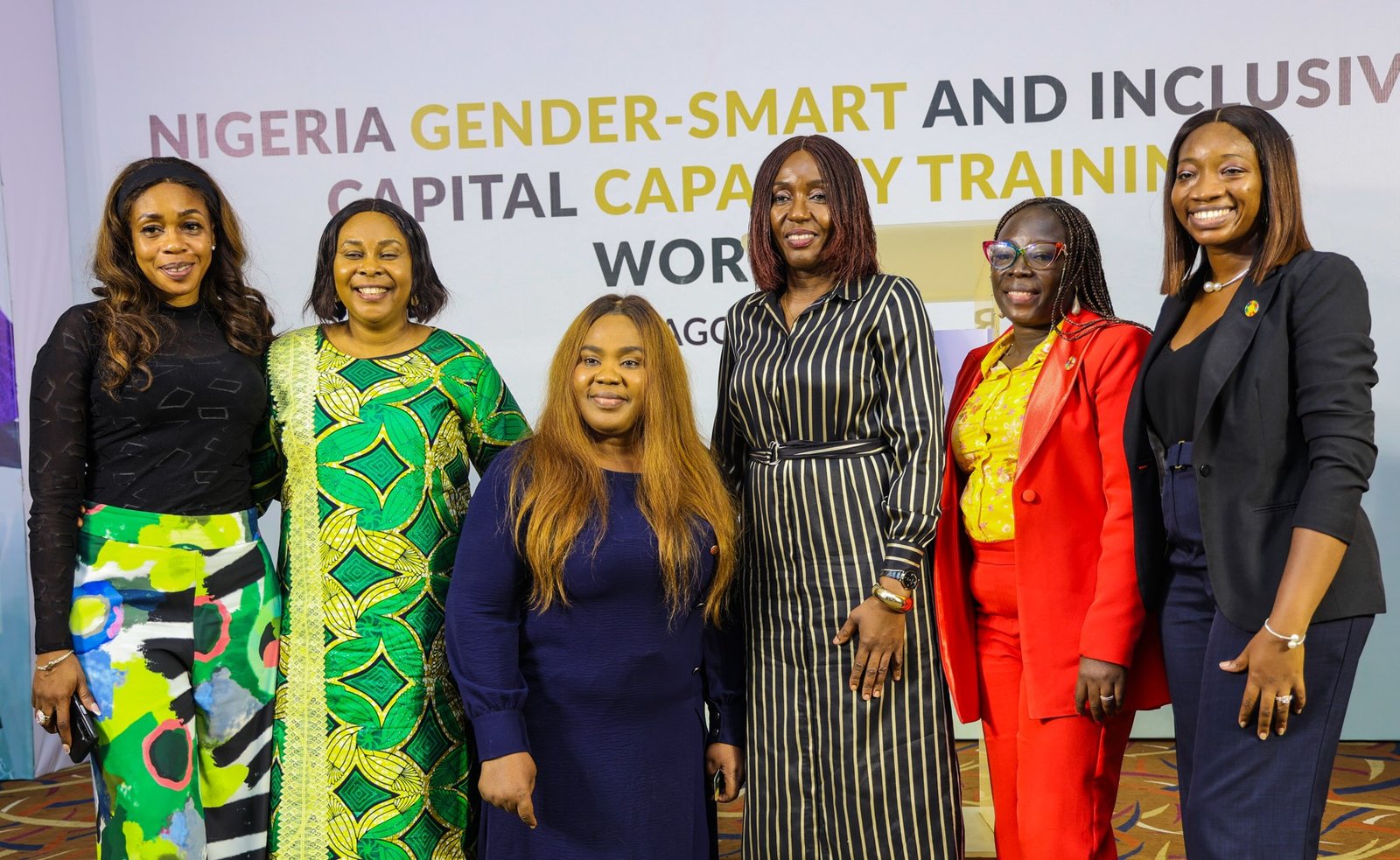
As Nigeria confronts constrained liquidity, elevated risk perception and widening inequality gaps, the foundation argues that gender equity and social inclusion must sit at the core of long-term value creation rather than on the margins of strategy. It used this position to shape discussions at the Nigeria Gender-Smart and Inclusive Capital workshop in Lagos, convened at the Four Points by Sheraton Lagos, where fund managers, policymakers, development partners and private sector executives worked to convert Nigeria’s Gender and GESI Roadmap into practical, system-level implementation frameworks
The workshop marks a notable implementation step following the 2025 Gender Impact Investment Summit, where the roadmap was formally unveiled.
In her opening remarks, Etemore Glover, chief executive of IIF, described the moment as pivotal for the Nigerian investment ecosystem. She noted that while the roadmap sets out the vision for an inclusive financial architecture, its credibility will ultimately be measured by how thoroughly it is embedded in institutional processes.
According to Glover, operationalisation requires more than policy alignment. She noted that it demands institutional redesign including revisiting governance templates, investment committee mandates, risk assessment models and reporting standards to ensure that gender and social inclusion are treated as material investment considerations rather than optional add-ons.
“Following the landmark launch of Nigeria’s Gender/GESI Roadmap in 2025, this workshop represents the essential next strategic step in our journey towards a truly inclusive financial ecosystem.
“It is not enough to have a roadmap; we must now begin to operationalise it through institutional transformation that goes beyond mere policy alignment. This phase is critical because it moves us past advocacy and into the rigorous work of implementation, ensuring that organisations begin to intentionally deploy strategies to bridge the gaps that have historically sidelined women and marginalised groups,” Glover stated.
Panellists emphasised that global markets now treat gender-lens investing as a source of competitive edge rather than a niche strategy. Investors increasingly channel capital towards businesses that showcase diverse leadership, stronger governance frameworks, higher innovation capacity and more resilient risk management structures.
Goodwill remarks from Elizabeth Boggs Davidsen, chief executive of GSG Impact, reinforced the global momentum behind inclusive capital strategies. She highlighted the growing alignment between development finance institutions and private investors around measurable impact frameworks. N. A. Esuabana, permanent secretary, Federal Ministry of Women Affairs, represented by Abia Udeme Nsikak stressed that mobilising private capital towards inclusive growth is integral to achieving national economic priorities.

A technical deep dive into the Gender/GESI Roadmap, delivered by a partner from PwC, provided the operational backbone of the workshop. Rather than a conceptual guide, the roadmap was presented as a systems manual structured across the investment lifecycle.
At the deal-sourcing stage, institutions are encouraged to intentionally expand pipelines to include women-led and gender-diverse enterprises. In due diligence, investors are expected to integrate GESI-related risk and opportunity assessments into financial and operational analysis. Portfolio management frameworks should incorporate inclusive governance metrics, while exit strategies are designed to ensure that social impact is sustained beyond capital withdrawal.
International benchmarks were contextualised for Nigeria’s market realities. Experts from 2X Global and Moremi Capital unpacked the 2X Criteria and explored how global standards can be adapted to local investment mandates. The discussions focused on measurable thresholds, women in leadership, quality employment for women, access to products and services for underserved populations — and how these indicators can be embedded into term sheets and portfolio dashboards.
Using IIF’s GESI Diagnostic Tool, participating institutions conducted internal assessments of their governance structures, pipeline diversity, data collection practices and screening mechanisms. The exercise exposed structural blind spots, particularly in the availability of sex-disaggregated and disability-disaggregated investment data.
To address this data gap, IIF presented findings from Nigeria’s Inclusive Capital Baseline Survey. The survey establishes a benchmark for tracking capital flows to women, youth and marginalised groups, providing the ecosystem with a reference point for future measurement. In a market where anecdotal narratives often substitute for data, the survey is positioned as a foundational instrument for accountability.
The afternoon sessions focused on institutional integration, led by investment and sustainability professionals from Verod Capital. They shared practical strategies for embedding GESI metrics into governance systems. Additionally, a case study from Alitheia Capital illustrated how gender-lens investing drives both financial performance and measurable social impact.
A case study from Alitheia Capital provided empirical reinforcement. The firm’s experience illustrated how a gender-lens strategy can yield both measurable social outcomes and competitive financial performance, particularly when inclusive practices are integrated from origination through exit.
The workshop concluded with a renewed commitment from stakeholders to translate the roadmap into measurable outcomes. Organisations were charged with embedding gender-smart principles into their core operations to unlock Nigeria’s full economic potential, effectively turning the roadmap into the standard for investment in the nation’s future.
“With growing evidence that diverse and inclusive enterprises outperform their peers in risk management, innovation, and long-term value creation, Nigeria’s push to operationalise gender-smart investing reflects both a moral imperative and a significant market opportunity,” concluded Glover.