Ikom is a fast-growing hub of the cocoa business. It is designated “cocoa city of Nigeria”, a position it received through its exceptionally fertile land which supports large-scale cocoa production that feeds both the Nigerian and international cocoa markets. It produces most of Cross River State’s 58,000 tonnes of cocoa.
As a border town with the Republic of Cameroon, Ikom has become highly cosmopolitan (with the presence of foreigners: Cameroonians, Equatorial Guineans, Nigeriens, Gabonese, Béninois, Ghanaians and even Ivoiriens), who reside in and do mainly cross-border business—cocoa warehousing and exporting. As a result of this, it has been witnessing the proliferation of cocoa warehouses, playing host to exporters, with over 20 of them locally based. More are being added since the 2023 global cocoa boom.
The other foreigners engage in ceaseless smuggling of perceived cheaper Nigerian goods (fuel, wears, shoes, handbags, household goods, building materials, among others. These products are ferried through Cameroon (by water and roads) to the other countries, especially Equatorial Guinea.
Ikom has been developing and is spreading towards the precincts. It has become a ready market for most agricultural produce from English-speaking southern Cameroon, which has been in turmoil from self-determination agitations since December 2016. Many business outlets have sprung up in Lasmoto, Ajassor, on the Ikom-Cameroon border road.
The town is becoming a significant economic center due to the increasing global demand for cocoa and a growing focus on processing raw cocoa beans into higher-value products within Nigeria, rather than exporting them. This has led to increased investment in local infrastructure, such as processing plants and warehouses, and has attracted young people to the cocoa farming sector, further solidifying its role as a key player in Nigeria’s cocoa industry. Ikom’s land is ideal for cocoa cultivation, resulting in abundant harvests that are shipped across Nigeria and exported internationally. Ikom, as one of the major towns in Cross River, serves as a crucial gateway, connecting farmers to major markets within Nigeria and to export terminals.
Flora Takim-Ndifon, president of Ikom Chamber of Commerce, Industry, Mines and Agriculture (IKOMCCIMA), told Business A.M. that “Ikom is uniquely situated on the corridor between the Economic Community of West African States (ECOWAS) and ECAS – Central African economic bloc. Outside of (Calabar) the state capital, Ikom can be described as the commercial nerve center of the state”.
Takim-Ndifon said, “Ikom is most popular for cocoa but the truth is that Ikom is rich in other agricultural produce like cassava, palm, yams, plantain, different vegetables and even timber”.
A new focus on value addition with efforts to process cocoa beans locally, rather than solely exporting raw beans, to capture more economic value within Nigeria, has been strictly private initiatives, with little or no measurable results. There is increased farmer engagement who are drawn in by high cocoa prices and a desire for better income, with many families now engaged in cocoa farming.
Self-driven – no infrastructure development
Despite the above overwhelming positives, Ikom still dwells in a rural deportment.
Infrastructure development is a forlorn in a town posting as Cross River’s commercial nerve centre. Roads, healthcare, water, and other public facilities (court buildings, library, post office, and recreational centres) are outdated, fewer or absent.
Ikom and its environs have the worst ever electricity supply than anywhere in Nigeria. Nights are darker, eerie and drab. Businesses and households go for several months without a blink from the Port Harcourt Electricity Distribution Company (PHED) or Enugu Electricity Distribution Company (EEDC) public mains. Internet connectivity and telephone networks are greatly distressed. Service providers depend heavily on generator powered base stations.
Daily, residents and business owners sweat it out to secure consistent connectivity.
Users go through hell to participate in webinars and online meetings. So far, there is no urban taxi or bus systems in Ikom. The major mode of transportation in Ikom is motorbikes (okada) which mercilessly trot people from and around the sprawling border town to other locations. It is common sight to find three-to-four persons perched precariously on a speeding motorcycle, running from Ikom to Boki, Obudu, or Ogoja. The results: frequent deadly road accidents with severely broken bones, maimed limbs, skull or head injuries, and deaths. Sadly, these are daily sights.
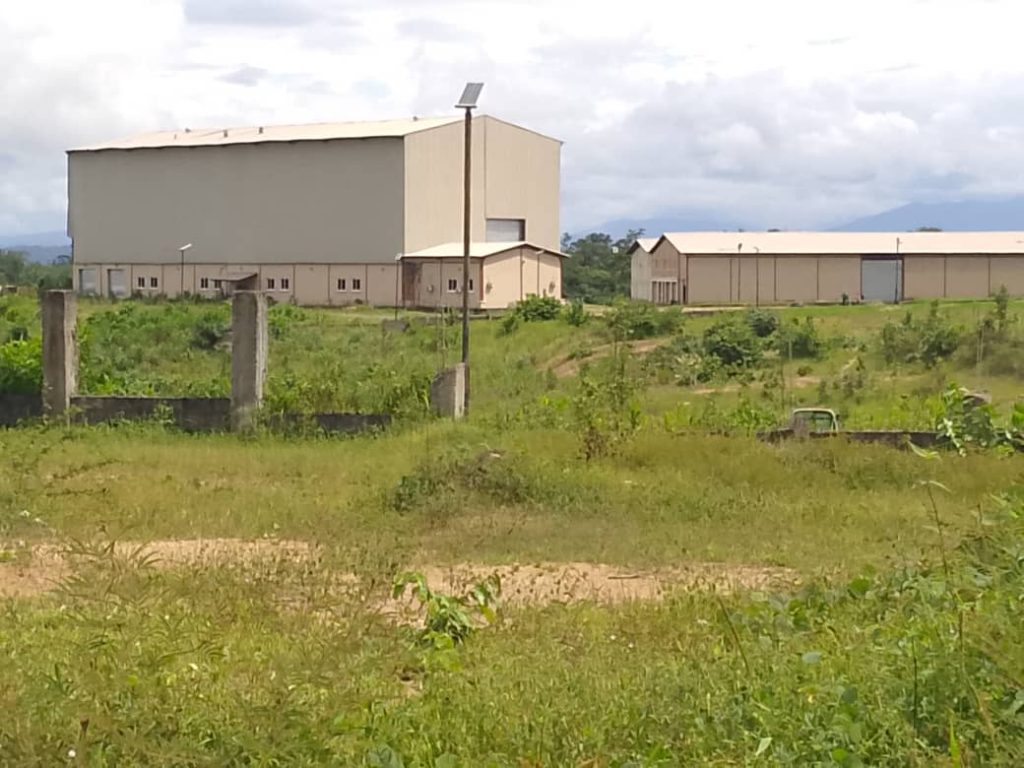
There is a sad tale on the much-desired Ikom cocoa value addition. The Cross River Cocoa Processing plant built at a cost of N7 billion in 2017 by former governor Ben Ayade, has been inactive, left to rot, despite huge capital pumped into it. Till date, and like most Ayade’s projects, not a single cocoa powder, chocolate or any product has come out of the massive facility located at Atimaka area on the Ikom-Ogoja end of the Trans-African Highway (TAH).
The factory was expected to generate some $6.8 million annually for the Nigerian economy, as well as provide 5,000 direct and indirect jobs for the locals. All of this has remained a pipedream.
Major roads and access roads in Ikom are dilapidated or crumbled. The Ikom-Boki-Obudu highway linking tourists to the effervescent Obudu Cattle Ranch resort, is broken down. Also decrepit are the Ikom-Etomi road, linking the enchanting Agbokim Waterfalls with 7-channels; the Ikom-Ogoja highway linking visitors to the historic 2000-year dated Ikom Monoliths at Nkarasi and Alok.
There is no access again to the alluring Buanchor Game Reserve with drill
monkeys and chimpanzees, Wula tropical rainforests, Okwangwo division of the Cross River National Park, with mountain gorillas. Ikom’s internal roads are all broken down, leaving their users with sad stories.
For Takim-Ndifon the IKOMCCIMA boss said in a note to Business A.M. inquiries: “Ikom is self-driven, because there is poor or lack of infrastructure. However, the economic activities are quite interesting. At the moment there’s been no electricity light in Ikom for more than four months. Not even a blink since April. The road network urgently needs repairs. A little attention (by the government) to the needs of Ikom will be beneficial to the community and government.”