…Reveal key opportunities in $98tn global impact assets
Onome Amuge
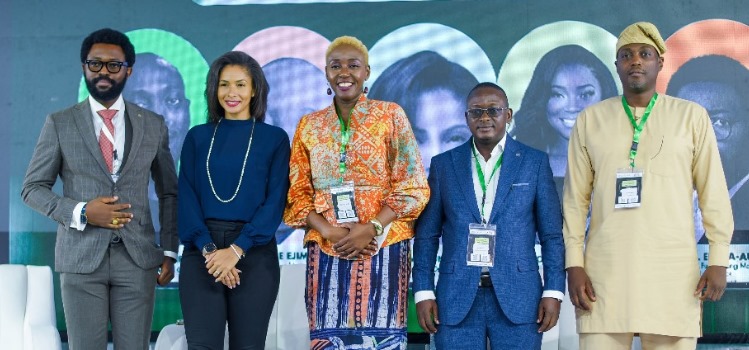
Nigeria’s expanding network of impact investors is urging stronger coordination between investment flows and government policy to drive a more inclusive model of economic growth in the face of persistent headwinds. This renewed emphasis on systemic collaboration set the tone at the 8th Annual Convening on Impact Investing (ACII), organised by the Impact Investors Foundation (IIF) at the Civic Center in Victoria Island, Lagos.
The two-day event, themed “Strengthening and Scaling the Nigeria Impact Economy,” brought together a cross-section of policymakers, investors, entrepreneurs, and development finance experts who agreed that without policy coherence, the country’s impact economy risks stalling despite growing enthusiasm among investors.
A major highlight of the convening was the unveiling of the 2025 Nigeria Impact Investing Ecosystem Mapping and Market Sizing Report, an updated edition of the 2019 baseline study. The report offers a comprehensive analysis of Nigeria’s dynamic impact investing landscape, presenting fresh insights into emerging trends, capital flows, and existing market gaps. It also spotlights priority sectors where investments can deliver both financial returns and measurable social outcomes, including renewable energy, agriculture, the creative economy, and healthcare.
Etemore Glover, chief executive officer of IIF, said the new report serves as a data-driven guide for policymakers and investors who are determined to direct capital to areas of greatest need. “The report provides the evidence that helps shape decisions. We need to ensure that available capital is directed to enterprises that generate both profit and positive impact. It is not enough to have money in the system; it must translate into measurable outcomes,”she explained.
The discussions throughout the convening reflected a growing consensus that impact investing is emerging as a viable strategy for addressing Nigeria’s most pressing socio-economic challenges, from unemployment and inequality to climate resilience. Yet, participants also stressed that without deliberate policy support, fragmented incentives, and weak institutional coordination could limit progress.
Several speakers urged government agencies to adopt impact investing frameworks within public spending and national development plans. The idea is to create an enabling environment where private capital complements state-led initiatives, especially in sectors that align with the United Nations Sustainable Development Goals (SDGs).
According to IIF, the country’s impact economy can only scale if policymakers create incentives for blended finance structures that attract private investors while mitigating risks. Blended finance, which combines concessional and commercial capital, is increasingly viewed as the key to unlocking long-term, patient capital needed for infrastructure, green energy, and social enterprises.
Dedicated “deal rooms” during the event allowed small and medium-sized enterprises (SMEs) to connect directly with investors, reflecting IIF’s emphasis on pipeline development. Many of the businesses showcased were supported by Enterprise Support Organizations (ESOs) that help prepare entrepreneurs to meet impact measurement and reporting standards demanded by investors.

The convening also explored the potential of the creative economy and climate-focused enterprises to anchor Nigeria’s transition toward inclusive growth. Participants noted that the creative industries, already one of the fastest-growing sectors in Africa, offer a pathway for youth employment and innovation. Similarly, climate-aligned enterprises were highlighted as essential for building resilience in communities most vulnerable to environmental shocks.
Nigeria’s economic challenges, including inflation and foreign exchange pressures, have heightened investor caution. Yet, as Glover noted, these same pressures are creating an opportunity for innovation in how capital is deployed.
Global trends also point to a significant opportunity for Nigeria. An estimated $98 trillion in assets under management globally is now being directed toward investments that incorporate social and environmental objectives. Experts at the convening argued that with the right mix of policy reforms, regulatory clarity, and data transparency, Nigeria could position itself to attract a meaningful portion of that capital.
The event concluded with the Annual Dinner and Awards Ceremony, which recognised outstanding organisations that have demonstrated measurable impact. Among the honorees was the recipient of the Innocent Chukwuma Award for Social Impact, which celebrates contributions from civil society and non-profit organisations advancing social transformation.
More than just an annual gathering, the ACII has evolved into a platform where strategy meets execution. The 2025 edition reinforced the view that Nigeria’s path to sustainable development must be anchored in collaboration among government, investors, and enterprises.