
Entrepreneurs are carrying the cost of economic transition. Unless public and development institutions align, they will not share in the gains their sacrifices are creating.
The deeper I go into the world of development finance and private sector investment in Africa, layered on top of decades spent navigating humanitarian and development systems, the more I recognise patterns that feel uncomfortably familiar. Systems that look busy. Strategies that sound ambitious. Institutions that speak the language of transformation. Yet the lived reality for most Africans barely shifts. And I have sat in too many senior leadership meetings where the conversation drifted far from the people it was meant to serve.
The disconnect is not theoretical. It is written into the daily struggles of people who are supposedly at the centre of all this effort.
Amina, a leatherworker in Kano, has kept her father’s business alive through recessions, currency crises, and the collapse of Nigeria’s once vibrant tanneries. She employs fourteen young people, each one a reminder that employment is a lifeline, not a statistic. Yet every time she approaches a bank or a development programme, she is told she is not ready. Not ready because her books are handwritten. Not ready because she lacks audited accounts. Not ready because she cannot produce collateral worth three times the loan. Amina keeps her ledger in a blue notebook her father used before her with the ink fading but the discipline intact.
Meanwhile, MSMEs like hers account for as much as 90 percent of jobs and more than half of GDP in many African economies. Yet fewer than seven percent can access formal credit. The system is not designed for Amina. It is designed to admire her resilience while denying her capital.
Across the continent, fragility tells a similar story. Jean Pierre in Goma runs a solar mini‑grid that powers 300 households. His business is a quiet miracle in a place where the state’s presence flickers like the electricity it fails to provide. But every time conflict flares, his technicians cannot travel. Every time a new administrator arrives, licensing rules shift. Investors admire his courage but fear the volatility around him. When they can travel, Jean Pierre’s technicians move around with spare fuses in their pockets because they never know when the grid will collapse.
These individual struggles sit against a backdrop of national reforms that are reshaping economic landscapes across the continent.
Countries like Nigeria, Kenya, Ghana, and others are undertaking reforms that are painful in the short term but essential for long‑term stability. Exchange rate adjustments, subsidy rationalisation, revenue reforms, and efforts to clean up regulatory environments have created real hardship for citizens. But they are also laying the groundwork for a more predictable economic future. Reforms move like tectonic plates: slow and grinding, but capable of reshaping everything. The shifts are often invisible day to day, yet their impact becomes undeniable over time. Reforms demand sacrifice, but those with the least margin for error are asked to give the most. In Nairobi, I meet entrepreneurs who can build a digital payments platform in a week but wait several months for a single regulatory approval.
Reforms alone will not deliver prosperity. They must be matched by alignment across the ecosystem. Governments cannot carry the burden alone. Civil society, INGOs, and development finance institutions must contribute to the success of these reforms by ensuring that the people who bear the short‑term pain are also positioned to benefit from the long‑term gains.
Infrastructure failures remain a major obstacle. The women’s cashew cooperative in rural Mozambique has a European buyer ready to pay a premium. They have the skills, the labour, the determination. What they do not have is a road that can reliably carry their produce to port. Trucks break down. Cashews spoil. Africa loses an estimated $4.2 billion every year in agricultural value because of poor rural roads. That is not a development challenge. It is the result of decisions we keep choosing not to make.
Kenya tells a similar story. The country loses an estimated 30–40 percent of its agricultural produce post‑harvest every year because farmers cannot access reliable storage, transport, or market infrastructure. That is more than KSh 150–200 billion in value wiped out annually, not just because of a lack of productivity, but because the system fails to move what farmers produce.
Manufacturing is another casualty of systemic neglect. Africa imports more than 70 percent of its medicines despite carrying 25 percent of the global disease burden. During COVID‑19, the continent imported 99 percent of its vaccines. Local manufacturing is not just weak. It is structurally discouraged.
Kwesi, a young pharmacist in Accra, tried to produce antiseptics during the pandemic. He had the expertise but not the equipment. Importing machinery required navigating a maze of approvals. Standards agencies were under‑resourced. Banks refused to lend. Kwesi was not defeated by competition. He was defeated by the system.
This is where alignment becomes urgent. Governments must create regulatory stability and invest in the infrastructure that allows businesses to grow. Civil society must track delivery, expose leakages, and ensure that reforms do not become abstractions. INGOs must shift from charity to system‑building, supporting firms to meet standards and strengthening supply chains. Development finance institutions must design instruments that reflect African realities and invest in the long, patient work of building markets.
Reforms will only succeed if they translate into real opportunities for people like Amina, Jean Pierre, and Kwesi. They are the ones carrying the cost today. They must be the ones who benefit tomorrow.
Africa’s development story has always been narrated through the language of potential. We keep calling it potential. But potential does not build roads, finance businesses, or move goods. It must be organised, supported, and protected. The continent does not lack entrepreneurs, ideas, or ambition. It lacks the connective tissue that binds these elements into investable, scalable, transformative opportunities.
That connective tissue can be built. And when it is done, the stories of Amina, Jean Pierre, the Mozambican cooperative, and Kwesi will no longer be stories of struggle. They will be stories of what becomes possible when Africa’s institutions finally align with the aspirations of its people.
This moment will not last forever. If our institutions fail to align now, the sacrifices millions are making will harden into yet another chapter of wasted potential. Reforms test the patience of citizens. And they should. Because the stakes are generational. Africa will be judged not by the difficulty of the transition, but by whether ordinary people emerge from it with more opportunity than they had before. And if we get this right, Africa’s next chapter will not be written in the language of potential, but in the evidence of progress.
- business a.m. commits to publishing a diversity of views, opinions and comments. It, therefore, welcomes your reaction to this and any of our articles via email: comment@businessamlive.com

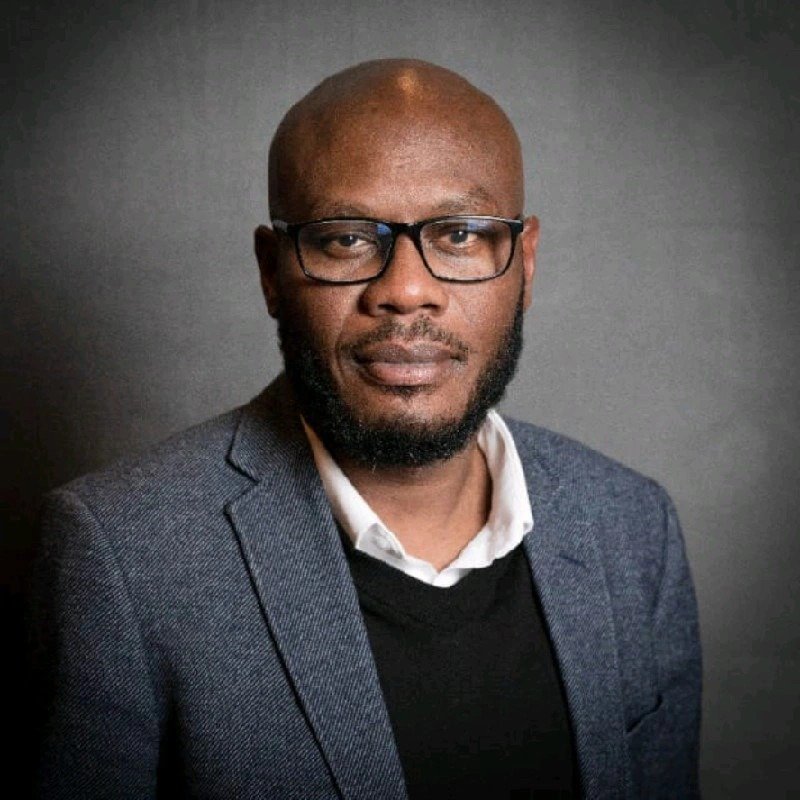
Dr. Wale Osofisan, PhD, is a seasoned governance strategist and policy analyst with over 23 years of experience advancing African-led, evidence-based solutions to political transitions, humanitarian crises and development challenges.








Agric meets algorithms: Using generative AI to improve food security in Nigeria