IOCs divestment forces NLNG to turn to 3rd party feedgas suppliers as last resort

Pipeline disruptions, vandalism, sabotage affect upstream gas availability

Ben Eguzozie, Port Harcourt 

The recent considerable divestment by the international oil companies (IOCs) from Nigeria’s hydrocarbon ecosystem has forced NLNG, the country’s multi-billion-dollar gas company to turn to third-party, non-shareholder feedgas suppliers as a last resort. 

Currently, the Nigeria Liquefied Natural Gas company squarely needs 1,290 million standard cubic feet per day or 13.3 billion cubic metre (bcm) per year of feedgas for its trains at Bonny Island, off Port Harcourt, Rivers State. 

This much was confirmed by Phillip Mshelbila, managing director and chief executive officer of the gas company, who said the recent divestment of onshore assets by several IOCs forced the NLNG to resort to “non-shareholder entities, procuring feedgas from diverse third-party suppliers to meet (our) growing needs for both liquefied natural gas (LNG) and natural gas liquids (NGLs) production”.

All this is happening ahead of the expected coming on stream of the company’s $7 billion Train 7 project, which is Nigeria’s boldest effort in gas production business in more than three decades, to increase the country’s gas production capacity by 35 percent to 30 million tonnes per annum (mtpa), from the present 22 mtpa.

By far, NLNG is owned by four shareholders: the Nigerian National Petroleum Company Limited (NNPCL) with 49 percent, Shell Gas B.V.  (25.6 percent), TotalEnergies Gaz & Electricité Holdings (15 percent), and Eni International N.A. N. V. S.àr.l (10.4 percent).

Energy watchers say the new gas supply agreements mark a historic shift for NLNG, which since its inception had relied primarily on legacy shareholder joint venture affiliates for gas supply. Some say the GSAs could become a game-changer for Nigeria’s gas industry, enhancing local production capacity and improving supply, which are critical to the country’s energy security, industrialisation, and economic growth.

Since 2006, there have been continuous divestment of onshore assets by global oil majors, totaling around £17 billion, according to valuations by international energy experts, among them NJ Ayuk, chairman of Africa Energy Chamber. At the time being, three IOCs — Shell, Eni, and ExxonMobil — hare selling off Nigeria in-country assets valued at £1.8 billion, £4 billion, and £11.9 billion, respectively. Shell, with the largest footprint in Nigeria’s petroleum sector, is divesting its entire 30 percent stake. It has resolved to rely on third party gas supply into the NLNG (where it holds 25.6 percent stake). The Anglo Dutch giant also resolved to meet most of its Train 7 supply from OML 144, which is outside the Nigerian JV.  Global energy Perhaps, another reason for Shell’s departing Nigeria could be that Nigeria’s domestic gas market continues to be extremely challenged as evidenced by the federal government’s recently announced 13 percent cut in gas-to-power prices. 
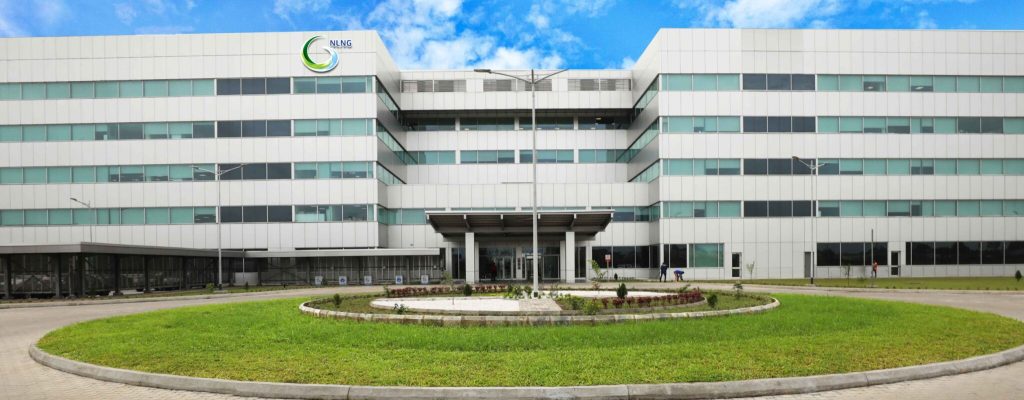
Not willing to welcome more frustrations on existential threat to its commercial commitments, NLNG recently signed long-term gas supply agreements (GSAs) with six third-party feedgas suppliers: SNEPCO-SUNLINK HI project, TEPNG AMNI JV IMA project, NNPCL-First E&P JV, SNG NGML, OANDO-NNPC E&P, and TEPNG JV Ubeta. All of the above are non-shareholder entities. The long-term agreements have options for extension. All the six suppliers are expected to deliver 1,290 mmscf/d or 13.3 bcm/yr of feedgas to NLNG, which volumes will be gradually scaled up over a period of time.

NLNG is uptick about the new GSAs to represent a significant boost to feedgas availability, enhancing its capacity to meet its commercial commitments, laying the groundwork for expansion and sustainable gas supply for the future. The company says, it and remains “grateful for the continuing support of its buyers and other stakeholders, and looks forward to a successful future together”. 

Mshelbila, said these agreements are a turning point in NLNG’s journey, restoring reliability of supply and ensuring we remain firmly on the path of growth and expansion”.  He described the new GSAs as a milestone and the culmination of sustained efforts by NLNG’s shareholders and stakeholders to address long-standing gas supply constraints.

In recent years, NLNG’s operations had been significantly impacted by pipeline disruptions, including vandalism and sabotage, affecting upstream gas availability. The consequent insufficiency of gas supply has impacted its long-term buyers, customers, shareholders and more widely to the Nigerian economy.

Leave a Comment

IOCs divestment forces NLNG to turn to 3rd party feedgas suppliers as last resort

Ben Eguzozie, Port Harcourt 

The recent considerable divestment by the international oil companies (IOCs) from Nigeria’s hydrocarbon ecosystem has forced NLNG, the country’s multi-billion-dollar gas company to turn to third-party, non-shareholder feedgas suppliers as a last resort. 

Currently, the Nigeria Liquefied Natural Gas company squarely needs 1,290 million standard cubic feet per day or 13.3 billion cubic metre (bcm) per year of feedgas for its trains at Bonny Island, off Port Harcourt, Rivers State. 

This much was confirmed by Phillip Mshelbila, managing director and chief executive officer of the gas company, who said the recent divestment of onshore assets by several IOCs forced the NLNG to resort to “non-shareholder entities, procuring feedgas from diverse third-party suppliers to meet (our) growing needs for both liquefied natural gas (LNG) and natural gas liquids (NGLs) production”.

All this is happening ahead of the expected coming on stream of the company’s $7 billion Train 7 project, which is Nigeria’s boldest effort in gas production business in more than three decades, to increase the country’s gas production capacity by 35 percent to 30 million tonnes per annum (mtpa), from the present 22 mtpa.

By far, NLNG is owned by four shareholders: the Nigerian National Petroleum Company Limited (NNPCL) with 49 percent, Shell Gas B.V.  (25.6 percent), TotalEnergies Gaz & Electricité Holdings (15 percent), and Eni International N.A. N. V. S.àr.l (10.4 percent).

Energy watchers say the new gas supply agreements mark a historic shift for NLNG, which since its inception had relied primarily on legacy shareholder joint venture affiliates for gas supply. Some say the GSAs could become a game-changer for Nigeria’s gas industry, enhancing local production capacity and improving supply, which are critical to the country’s energy security, industrialisation, and economic growth.

Since 2006, there have been continuous divestment of onshore assets by global oil majors, totaling around £17 billion, according to valuations by international energy experts, among them NJ Ayuk, chairman of Africa Energy Chamber. At the time being, three IOCs — Shell, Eni, and ExxonMobil — hare selling off Nigeria in-country assets valued at £1.8 billion, £4 billion, and £11.9 billion, respectively. Shell, with the largest footprint in Nigeria’s petroleum sector, is divesting its entire 30 percent stake. It has resolved to rely on third party gas supply into the NLNG (where it holds 25.6 percent stake). The Anglo Dutch giant also resolved to meet most of its Train 7 supply from OML 144, which is outside the Nigerian JV.  Global energy Perhaps, another reason for Shell’s departing Nigeria could be that Nigeria’s domestic gas market continues to be extremely challenged as evidenced by the federal government’s recently announced 13 percent cut in gas-to-power prices. 

Not willing to welcome more frustrations on existential threat to its commercial commitments, NLNG recently signed long-term gas supply agreements (GSAs) with six third-party feedgas suppliers: SNEPCO-SUNLINK HI project, TEPNG AMNI JV IMA project, NNPCL-First E&P JV, SNG NGML, OANDO-NNPC E&P, and TEPNG JV Ubeta. All of the above are non-shareholder entities. The long-term agreements have options for extension. All the six suppliers are expected to deliver 1,290 mmscf/d or 13.3 bcm/yr of feedgas to NLNG, which volumes will be gradually scaled up over a period of time.

NLNG is uptick about the new GSAs to represent a significant boost to feedgas availability, enhancing its capacity to meet its commercial commitments, laying the groundwork for expansion and sustainable gas supply for the future. The company says, it and remains “grateful for the continuing support of its buyers and other stakeholders, and looks forward to a successful future together”. 

Mshelbila, said these agreements are a turning point in NLNG’s journey, restoring reliability of supply and ensuring we remain firmly on the path of growth and expansion”.  He described the new GSAs as a milestone and the culmination of sustained efforts by NLNG’s shareholders and stakeholders to address long-standing gas supply constraints.

In recent years, NLNG’s operations had been significantly impacted by pipeline disruptions, including vandalism and sabotage, affecting upstream gas availability. The consequent insufficiency of gas supply has impacted its long-term buyers, customers, shareholders and more widely to the Nigerian economy.

[quads id=1]

Get Copy

Leave a Comment