
Florida’s economy has long thrived on one import above all: People.
Until Irma struck this month, the state was adding nearly 1,000 residents a day – 333,471 in the past year, akin to absorbing a city the size of St. Louis or Pittsburgh. Every job seeker, retiree or new birth, along with billions spent by tourists, helped fuel Florida’s propulsive growth and economic gains.
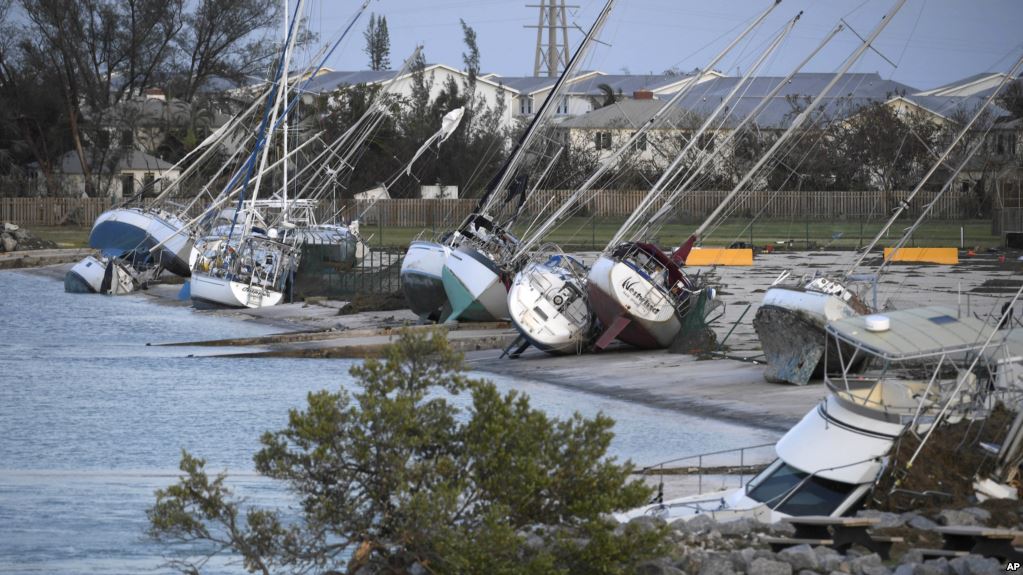
Yet Hurricane Irma’s destructive floodwaters renewed fears about how to manage the state’s population boom as the risks of climate change intensify. Rising sea levels and spreading floodplains have magnified the vulnerabilities for the legions of people who continue to move to Florida and the state economy they have sustained.
Florida faces an urgent need to adapt to the environmental changes, said Jesse Keenan, a lecturer at Harvard University who researches the effects of rising sea levels on cities.
“A lot is going to change in the next 30 years – this is just the beginning,” Keenan said.
People might need to live further inland, Keenan said, and employers might have to relocate to higher ground, with the resulting competition between offices and housing driving up land prices. It would become harder to adequately insure houses built along canals. Traffic delays could worsen across parts of Florida as more roads flood. Developers might shift away from sprawling suburban tracts toward denser urban pockets that are better equipped to manage floods.
At the same time, the belief remains firm among some developers and economists that for all the threats from rising water levels, the state’s population influx will continue with scarcely any interruption. The allure of lower taxes and easier living, the thinking goes, should keep drawing a flow of residents and vacationers.
“Irma doesn’t change the fact that there is no state income tax,” said Sean Snaith, director of the University of Central Florida’s Institute for
Economic competitiveness
“In a few months, when the first Alberta Clipper starts blowing down cold weather across the United States and it’s 80 degrees and sunny down here, the memories of Irma will be blown away.”
Certainly, the influx of people has been a testament to that appeal. After slowing when the housing bubble burst in 2007, the population has marched steadily upward. The number of Floridians, now above 20 million, is projected to hit 24 million by 2030, with more than half the increase coming from retiring baby boomers. Many of them first experienced Florida as tourists. More than 112 million people visited the state last year – a 33 percent increase over the past decade.
All of which means that compared with Hurricane Andrew 25 years ago, Irma struck a far more densely packed state. It is also one marked by greater extremes of wealth and poverty. Luxury condo towers populated by the global elite now crowd the Miami skyline. But the metro area is also cursed by the worst rental housing affordability in the United States, according to Harvard University’s Joint Center for Housing Studies.
Flooding washed away mobile home parks in the Florida Keys where lower-income workers live. As a magnet for jobs at restaurants, hotels and other parts of the services sector, the state attracts workers with relatively low incomes who can’t pay higher rents if flooding eliminates a chunk of the housing stock.
Still, Citigroup estimated that damages were just $50 billion – well below initial estimates – in part because some homes were better equipped to weather the wind and rain than during Andrew.
Storms can cause population loss in the near term. A year after Andrew hit in 1992, Miami-Dade County lost 31,000 residents. Many appear to have moved to Broward and Palm Beach counties, where the risks of flooding were lower, a pattern that could be repeated after Irma.
Given the brisk pace of construction and population growth, Florida could endure a heavy economic blow in coming decades if it fails to reduce the risks from climate change. Homes that were too close to eroding beaches could become effectively worthless. Those along canals that flood could become too costly to rebuild. The state’s economic fuel – tourism and residential development – could dissipate.
Sean Becketti, chief economist at Freddie Mac, the mortgage giant, warned in an analysis last year that rising sea levels and widening flood plains “appear likely to destroy billions of dollars in property and to displace millions of people.”
“The economic losses and social disruption,” Becketti added, “may happen gradually, but they are likely to be greater in total than those experienced in the housing crisis and Great Recession.”
Federal taxpayers might oppose bailing out these homeowners, Becketti said, mortgage lenders could absorb heavy losses and employers might choose to move to safer parts of the country – and take their jobs with them.
Still, for now at least, the heads of several major Florida real estate companies say they expect people to keep flocking to Florida despite the increasing risks.
Budge Huskey, president of Premier Sotheby’s International Realty, drove around Naples, Florida, and said he observed “very little damage” to homes constructed under new building codes after Hurricane Andrew. These houses had wind-resistant hurricane windows and stronger roofs.
“Let’s face it, people work their whole lives to retire to Florida – that’s where they want to be,” Huskey said.
Jay Parker, CEO of Douglas Elliman’s Florida brokerage, monitored Irma from an Atlanta hotel. He was gratified that Florida escaped much of the expected destruction. And he said would-be buyers, sniffing out potential bargains, were approaching him at the hotel about cut-rate deals on condos in the storm’s wake.
“If anything,” Parker said, “this might create some short-term buying sprees.”
Couirtesy lowellsun







