Onome Amuge
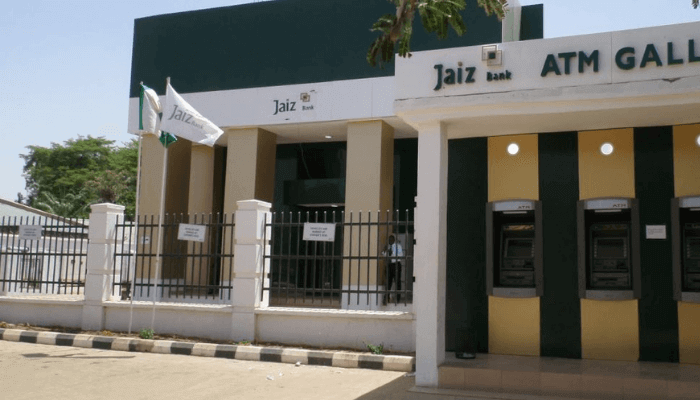
Jaiz Bank Plc, Nigeria’s flagship non-interest financial institution, has reported its strongest annual performance since inception, crossing the N1 trillion asset threshold for the first time and cementing its position as a leading player in the country’s fast-growing Islamic banking market.
Total assets rose 86 per cent to N1.08 trillion as of December 31, 2024, compared with N580 billion a year earlier. Gross earnings climbed 75 per cent to N82.87 billion, while profit before tax more than doubled to N24.44 billion, up 121 per cent from N11.05 billion in 2023.
Speaking at the bank’s annual general meeting recently, Haruna Musa, the bank’s managing director described the results as a landmark moment for the institution and for Islamic finance in Nigeria.
“Our results reflect not only the resilience of our business model but also the trust and confidence reposed in us by our shareholders, customers, and stakeholders,” Musa told investors.
Beyond topline growth, Jaiz Bank also reported improvements in operational efficiency. Its cost-to-income ratio fell to 60.42 per cent from 65.26 per cent in 2023, while customer deposits rose 94 per cent to N904 billion.
Capital buffers also strengthened. The bank’s capital adequacy ratio rose to 23.87 per cent from 17.96 per cent, well above regulatory minimums, while statutory liquidity climbed to 47.35 per cent from 37.24 per cent. Net risk assets and investments expanded 88 per cent to N671 billion, reflecting a growing loan book and portfolio diversification.
“These achievements underscore our unwavering commitment to delivering sustainable value, promoting ethical banking, and supporting Nigeria’s economic development,” Musa said.
Jaiz Bank, which began operations in 2012 as Nigeria’s first Islamic lender, has steadily grown from a niche operator into a systemic player in the country’s financial sector. Its expansion reflects broader momentum in non-interest finance globally, with the industry’s assets projected by the Islamic Financial Services Board to exceed $4 trillion by 2026.
In Nigeria, demand has been driven by a combination of demographics, financial inclusion efforts and investors seeking alternatives amid volatile interest rate cycles. Analysts note that Jaiz’s performance indicates that Islamic finance, once seen as peripheral, is becoming mainstream in sub-Saharan Africa’s largest economy.
Looking ahead, Jaiz Bank has set its sights on consolidating its leadership in Islamic finance across Africa. Management said it will deepen financial inclusion by expanding into underserved regions, leveraging digital platforms and partnerships to broaden access to Shariah-compliant products.
The bank is also expected to benefit from rising interest in sukuk (Islamic bonds), which Nigeria has used to finance infrastructure projects in recent years. With customer deposits approaching the N1 trillion mark, Jaiz Bank said it is positioned to intermediate more capital into sectors such as agriculture, manufacturing and small business finance, all seen as priorities under President Bola Tinubu’s reform agenda.
Musa pledged that Jaiz would build on this momentum to achieve even greater success, adding that the lender’s growth strategy was anchored on ethical principles and long-term value creation rather than short-term gains.
Industry observers caution, however, that Nigeria’s challenging macroeconomic environment , marked by currency volatility, high inflation and tight liquidity, could test the resilience of even well-capitalised lenders.