Just as sailing ships improved and managed to briefly compete in the face of steam power, the fall in oil prices may allow fossil fuels to continue to dominate temporarily, according to an IMF paper, Riding the Energy Transition: Oil Beyond 2040, seen by businessamlive.
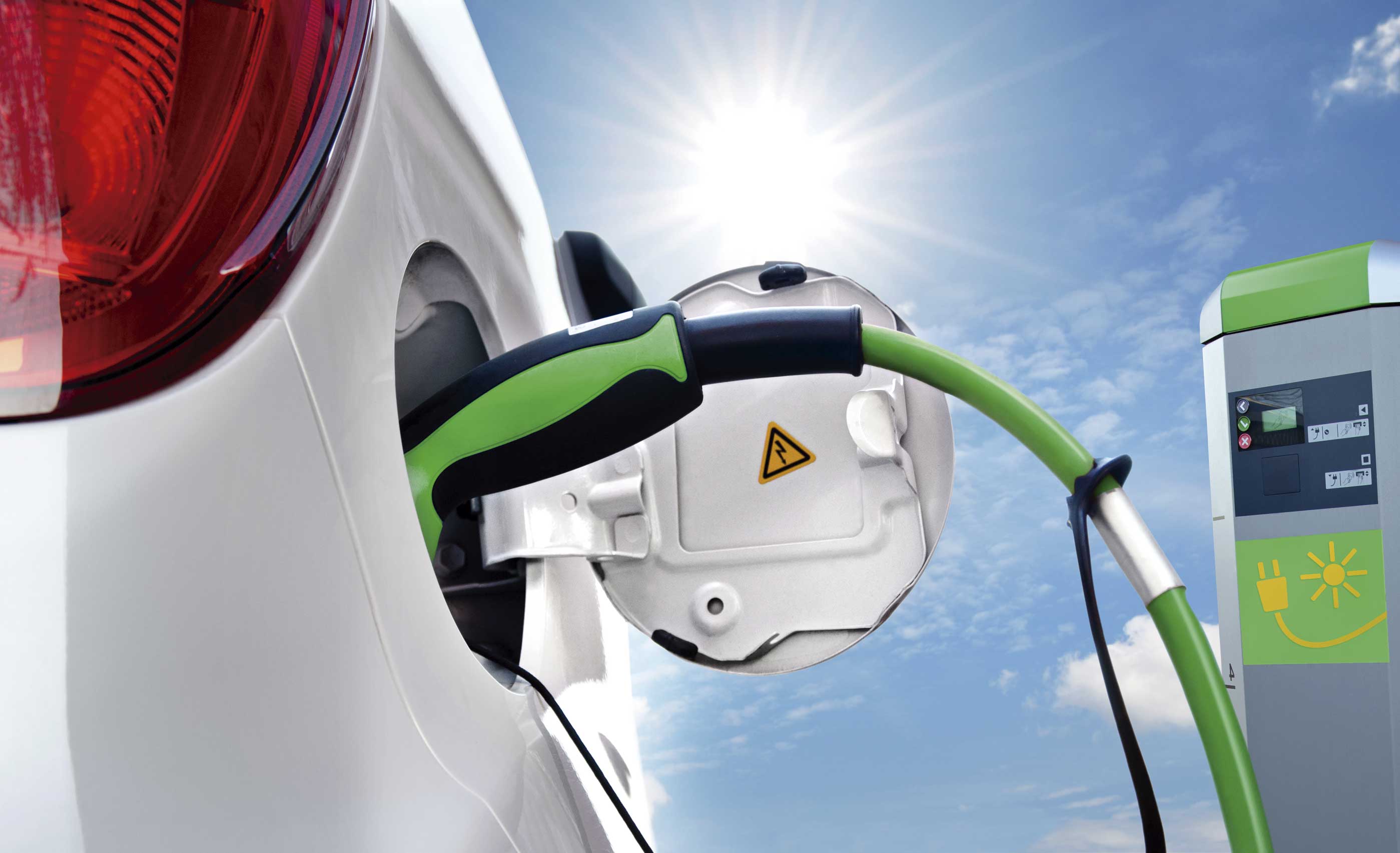
The paper noted that the return of the electric car and its adoption, like that of the motor vehicle in place of horses in early 20th century, could cut oil consumption substantially in the coming decades and shorten its life span as the main fuel for transportation, adding that lower oil prices—even around $50-60 for the next decade or two—due to, for instance, increased shale production, might delay the energy transition mainly by depressing alternative fuel transportation penetration.
It equally stated that electric vehicles (EV) sales indeed declined slightly with the 2014-2016 fall in oil price.
“With comparable prices of electric and motor vehicles and much lower cost to charge and maintain an electric car compared to a motor vehicle, the oil price would have to fall substantially to keep motor vehicles economically competitive,” the paper stated.
The paper equally noted that EV producers are cutting their costs even faster than expected, adding that the car industry is about to reach a turning point in terms of cost of EVs relative to average income, similar to that of the Ford Model T, a century ago.
The authors, while considering the electric vehicle fast adoption scenario said oil prices could converge to the level of coal prices to be relevant in the energy mix.
“Our analysis suggests that oil as the main fuel for transportation could have a much shorter life span left than commonly assumed. In the fast adoption scenario, oil prices could converge to the level of coal prices, about $15 per barrel in 2015 prices, by the early 2040s. In this possible future, oil could become the new coal,” the authors said.
They also noted that cost is not the only factor determining technological adoptions, that coal was cheaper and more easily available than oil throughout the 1920s-1940s, and yet this did not prevent coal’s swift displacement.
“Lastly, although our scenarios are based on the adoption of EVs displacing motor vehicles, other alternative technologies such as hydrogen cars could take over transportation. However, this should not alter our conclusions,” they pointed out.
The paper stated that the transition away from oil has deep implications for both exporting and importing countries.
“The economic model of many oil- exporting nations would not be sustainable in such a world. Even if one believes that the probability of such a future is low, the decline in oil revenues for many oil exporters would be so large that the expected loss would nevertheless be sizable.”
Low oil prices would obviously have major implications on the macroeconomic stability, including fiscal sustainability, of exporting countries.
The authors say for exporting countries to prepare for such a future, diversification away from oil should be the most crucial policy item on their policymakers’ agenda.
“Investment in sectors such as renewables and alternatives to motor vehicles would be natural hedges against the fall in oil prices. For oil-importing countries, low oil prices would reduce the pressure on current accounts but would lead to a shift in tax policy for countries that rely heavily on fuel taxes toward other forms of taxation,” they advised.
A transition to EVs is also seen disrupting the auto industry, both in production and maintenance, with much shorter value chains and more reliable vehicles.
“The production of EVs requires a much smaller number of parts and much less maintenance in comparison to motor vehicles, and the possibility of on-shoring into advanced economies would be likely.
“Eventually tens of thousands of jobs in advanced and emerging markets could see a transition into new sectors: power charging networks, battery production, and autonomous driving, just to name a few.”
The authors said the most important implication of their fast adoption scenario is that the pace at which EVs would replace motor vehicles would meet the conditions to keep global temperature rise below 2°C.
“There is a strong rationale for coordinated government intervention to make this transition in transportation even swifter to combat the effects of climate change,” they noted