- MAN’s D-G laments manufacturers’ woes
- FAO, AFAN worry over farmers’ costs
- CBN in policy balance dilemma
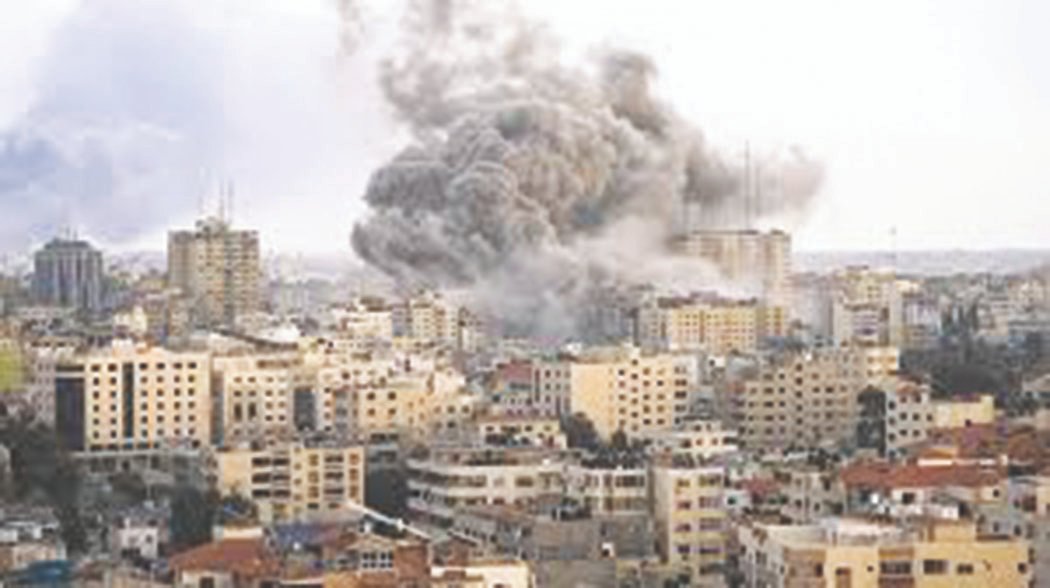
Nigeria’s disinflation streak may be on the verge of collapse as the escalating war in the Middle East ignites a global energy crisis with immediate and severe implications for the domestic economy. The conflict, involving the United States and Israel’s airstrikes on Iran, has effectively closed the Strait of Hormuz, a critical transit point for 20 percent of the world’s oil and liquefied natural gas (LNG), triggering an unprecedented supply shock that analysts warn could destabilise prices across the globe, including within Nigeria’s borders.
According to global energy analysts, ongoing strikes targeting oil and gas infrastructure across Iran and Israel have destroyed refineries, gas fields, and terminals, many of which could take years to repair. The International Energy Agency (IEA) has described the situation as the “worst global energy disruption in history,” surpassing even the 1973 Arab oil embargo in scale and potential economic damage.
Oil and gas are the lifeblood of the modern global economy, powering transport, industry, electricity generation, and the production of essential commodities such as plastics, fertilizers, and pharmaceuticals. The effective removal of about 400 million barrels (equivalent to roughly four days of global supply), has sent crude prices skyrocketing. Global benchmark oil prices have risen more than 50 percent since the conflict began, with Middle East crudes, critical to Asian markets, reaching record highs near $164 per barrel.
Dan Pickering, chief investment officer at Pickering Energy Partners, warns that the supply shock cannot be solved by conservation alone. “You’re not going to conserve your way around this. What it’s going to translate to is price rises high enough that people stop consuming,” he said, highlighting the economic consequences that ripple far beyond the Middle East.
Already, 400 million barrels (about four days of global supply) have been removed from international markets, triggering crude oil price increases of 50 percent. Middle East crude, which fuels key Asian economies, has reached record highs near $164 per barrel, while global benchmarks have surged above $110.
For Nigeria, Africa’s largest oil producer and a major importer of refined products, the fallout has been immediate and severe. Domestic fuel prices, already sensitive to global crude trends, have risen, triggering a domino effect on transportation, logistics, manufacturing, and household consumption.
Barely three weeks into March, Dangote Petroleum Refinery has adjusted its ex-depot petrol price five times, pushing the petrol gantry price from N774 per litre at the start of the month to N1,275 per litre, a 64.7 percent increase. Coastal prices similarly rose from N1.45 million per metric tonne to N1.646 million, reflecting an 8.9 per cent jump.
In a statement to marketers and stakeholders, the refinery emphasised that “the prices contained in our previous correspondence are no longer applicable” and urged immediate adoption of the new price regime.
The rapid succession of adjustments showcases the market’s vulnerability to global oil price volatility and underscores that Nigeria’s downstream sector remains closely linked to international crude movements despite the coming onstream of domestic refining capacity.
The impact of the fuel price spike has been felt across all segments of the economy. Transport fares have risen, consumer goods costs are accelerating, and the cost of doing business has intensified, particularly for sectors reliant on diesel-powered electricity generation and road-based logistics.
Manufacturing sector at risk
The manufacturing industry, a cornerstone of Nigeria’s economic diversification agenda, faces severe cost pressures. Segun Ajayi-Kadir, director-general of the Manufacturers Association of Nigeria (MAN), highlighted that “fuel is central to production, transportation, and energy supply. The recent surge in prices, driven by developments in the Middle East, has negative implications not just for manufacturers but for the entire economy.”
Most Nigerian manufacturers rely on diesel-powered generators to supplement unreliable grid electricity. Rising fuel prices have therefore escalated both energy and logistics costs, squeezing profit margins. Road transport, the primary mode for moving raw materials and finished goods, has become significantly more expensive, creating bottlenecks and delays in supply chains.
The knock-on effect is likely to be passed to consumers, adding to inflationary pressures. Industry stakeholders warn that small and medium-sized enterprises (SMEs) are particularly vulnerable. With limited access to credit and thin financial buffers, many may be forced to scale back production or suspend operations, leading to job losses and slower GDP growth.
The Lagos Chamber of Commerce and Industry (LCCI) echoed these concerns, highlighting Nigeria’s continued exposure to global crude volatility. Adetunji Oyebanji, speaking for the chamber’s oil producers group, warned: “Despite gains in domestic refining capacity, local fuel prices remain closely tied to international crude benchmarks, limiting our ability to insulate the economy from external shocks. Any sustained spike in oil prices could have severe macroeconomic consequences.”
Inflation pressures mount
The energy shock is feeding directly into consumer prices. Bismarck Rewane, chief executive of Financial Derivatives Company (FDC), projects that inflation could climb from around 15 percent to as high as 19 percent by May 2026, effectively ending Nigeria’s 11-month period of easing price pressures.
According to Rewane, “every one percent increase in the price of petrol leads to a 0.079 percent increase in transportation costs and inflation.” With petrol already up by about 42 percent, the resulting pressure could add three to four percentage points to headline inflation.
Persistent food price inflation compounds the issue. The National Bureau of Statistics (NBS) reports food inflation at slightly above 12 percent year-on-year, rising month-on-month. High transport costs, elevated energy prices, and global supply chain disruptions are further tightening household budgets, reducing real incomes, and weakening consumer purchasing power.
The Central Bank of Nigeria (CBN) now faces a policy balance dilemma. With the Monetary Policy Rate (MPR) recently trimmed by 50 basis points to 26.5 percent, the bank must decide whether to maintain accommodative measures to support growth or tighten policy to contain inflation. Analysts opine that a renewed spike in fuel-driven inflation would make further rate cuts unlikely, aligning the CBN with the cautious stance of the U.S. Federal Reserve.
Agricultural sector under pressure
The agricultural sector, crucial to Nigeria’s food security and employment, is also under strain. Rising petrol and diesel prices increase the cost of transporting farm produce to markets. Farmers rely heavily on fuel-powered irrigation systems, which have become more expensive to operate.
John Wuyep, Plateau State chairman of All Farmers Association of Nigeria (AFAN), lamented the rising costs, particularly during the dry-season farming period.
The war in the Middle East has disrupted fertilizer markets, as about a third of global fertilizer trade passes through the Strait of Hormuz. Prices for nitrogen-based products like urea have risen 30 to 40 percent globally since the conflict began. Fertilizer factories in India, Bangladesh, and Malaysia are halting orders, cutting production, or shutting down due to feedstock shortages.
Maximo Torero, chief economist at the UN’s Food and Agriculture Organisation (FAO), warned: “If the conflict lasts just a few more weeks, global food supplies will be significantly disrupted. This will affect planting and lower the supply of staple cereals, feed, dairy, and meat.”
About half of the world’s food production depends on fertilizers, and in some countries, fertilizer costs account for up to 50 percent of grain production expenses. Nigeria, reliant on imported fertilizer for its commercial farms, faces the dual challenge of soaring input costs and potential domestic food price spikes.
Analysts warn of more economic risks
The energy shock poses structural risks beyond immediate inflationary pressures. Rising production expenses could undermine the competitiveness of locally manufactured goods, making imports relatively cheaper. Ajayi-Kadir warned: “When production costs rise locally, our goods become more expensive compared to imports. This reduces competitiveness and can lead to a shift in consumer preference toward foreign products.”
Small and medium-scale manufacturers are expected to bear the brunt. Limited financial buffers and reduced access to credit may force production cuts or outright shutdowns. Economic consequences include job losses, decreased industrial output, and slower GDP growth.
Femi Egbesola, president of the Association of Small Business Owners of Nigeria, emphasised the need for strategic adaptation: “Looking inward and utilising locally sourced raw materials can help reduce exposure to foreign exchange volatility. At the same time, businesses should position themselves to take advantage of export opportunities, where a weaker domestic currency can enhance competitiveness.”
Egbesola also highlighted energy diversification: “Energy costs can account for as much as 40 percent of operating expenses for some businesses. Exploring alternative sources (solar, natural gas, and renewables) could provide a critical buffer against fuel price shocks,” he added.
As it stands, the government faces growing pressure to intervene. Business groups, labour organisations, and industry associations are advocating targeted support, including access to low-interest financing and mechanisms to stabilise energy costs. Experts also call for accelerated operation of local refineries, improved grid electricity to reduce dependence on fuel-powered generators, and investment in domestic fertiliser production to buffer the agricultural sector.
Dangote Petroleum Refinery, despite being designed to stabilise domestic fuel supply, remains exposed to international crude prices. African governments, including South Africa, Ghana, and Kenya, have begun outreach to secure allocations from the refinery amid global supply disruptions. The facility has seen an increase in inquiries, highlighting the interconnectedness of Nigeria’s domestic market with regional energy demand.
Despite these headwinds, Nigeria’s economy is projected to remain moderately positive. FDC projects GDP growth of 3.08 per cent in Q1 2026, supported by resilient sectors.
The naira is expected to trade within N1,400 to N1,450 per dollar in the near term, aided by ongoing CBN interventions. However, persistent inflation and external shocks could weaken the currency over time, intensifying the cost of imports and compounding inflationary pressures.
Meanwhile, other countries are responding to the energy shock with a combination of demand reduction, rationing, and regulatory interventions. Thailand has suspended overseas travel for civil servants, Bangladesh has closed universities, Sri Lanka has imposed fuel rationing, and the UK has reduced speed limits to conserve fuel. The IEA released 400 million barrels from emergency stockpiles, underscoring that structural adjustments, rather than short-term measures, are needed to control prolonged energy disruptions.
The Middle East conflict represents a structural shock to Nigeria’s economy, demonstrating the country’s exposure to global energy markets. Rising fuel costs, manufacturing vulnerabilities, food inflation, and agricultural input shortages collectively threaten inflationary pressures, industrial competitiveness, and economic growth.
According to analysts, policy interventions, including energy diversification, fiscal support for vulnerable sectors, and targeted subsidies, will be critical to mitigating the shock. The private sector has also been advised to adapt through supply chain resilience, increased use of local inputs, and exploration of alternative energy sources.
Analysts warn that failure to act decisively could see inflation accelerate, industrial output decline, and consumer purchasing power plunge, leaving the Nigerian economy increasingly exposed to global instability.