
Joy Agwunobi
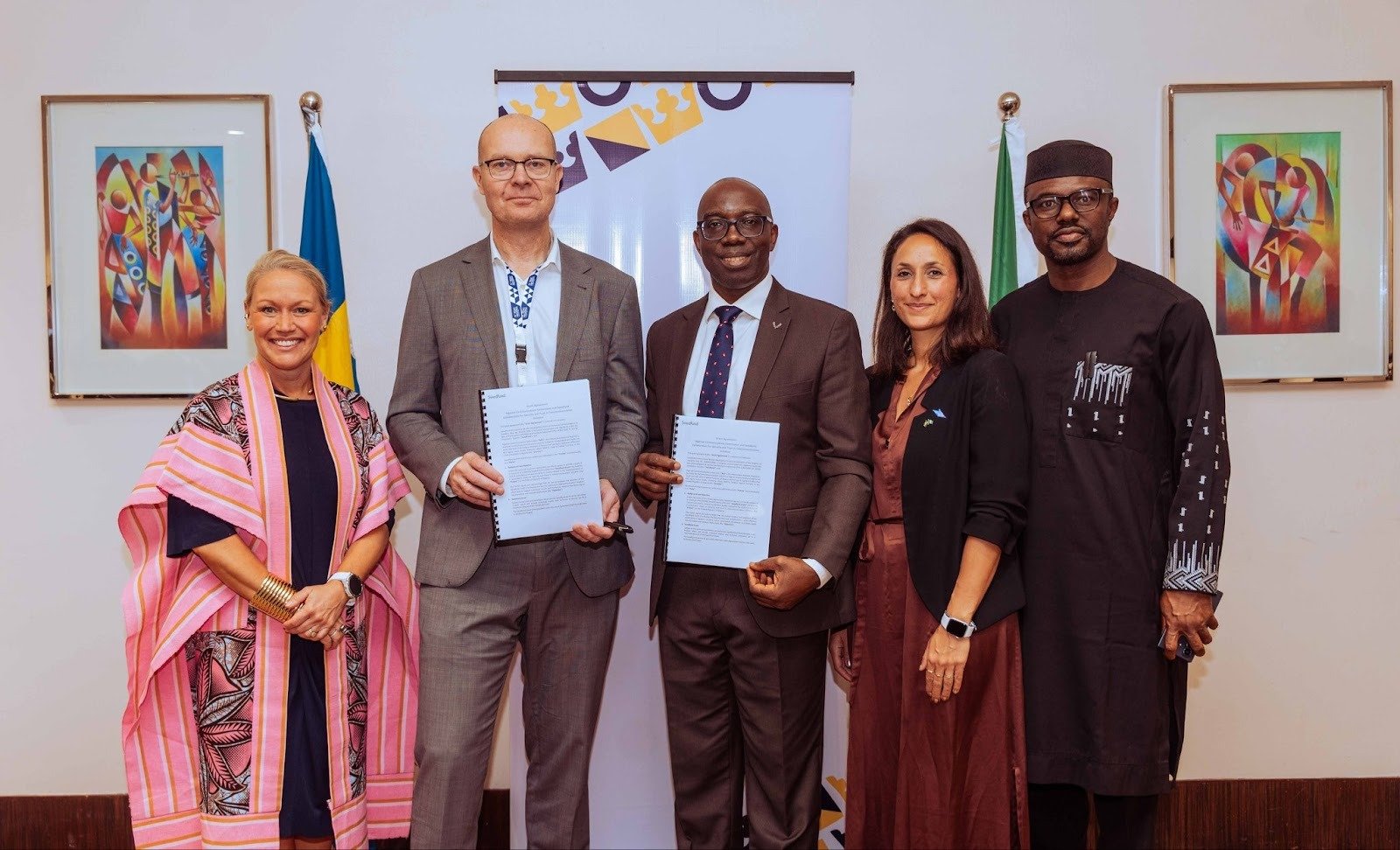
The Nigerian Communications Commission (NCC) is ramping up efforts to secure the country’s rapidly advancing 5G landscape, following the signing of a grant agreement with Swedfund, Sweden’s Development Finance Institution.
The collaboration is designed to establish a comprehensive risk-based security framework that will ensure the safe design, deployment, and operation of current and future network systems across Africa’s largest digital economy.
NCC said the initiative reinforces its commitment to safeguarding Nigeria’s critical network infrastructure as the nation deepens adoption of emerging technologies that underpin essential sectors including power, healthcare, education, smart mobility, and industrial automation.
In a statement issued by the commission, the regulator noted that while Fifth-Generation networks deliver high-speed connectivity, low latency, and support for millions of connected devices, they also introduce more intricate security exposures due to advanced architecture and diverse vendor environments.
“Through this partnership, the NCC aims to ensure that 5G and future network systems are securely designed, deployed, and operated. Security and trust remain central to Nigeria’s digital future. As 5G supports key sectors, this initiative will strengthen public confidence, protect national interests, and build a safer, more resilient digital economy,” the commission stated.
5G yet to reach most users despite rollout gains
Nigeria began commercial 5G rollout in 2022, with MTN, Airtel, and Mafab Communications leading deployments across select cities. Adoption has grown steadily but remains minimal in proportion to the country’s mobile subscriber base.
Data from the NCC shows that although Nigeria boasts over 170 million active mobile subscriptions, only 3.27 percent of users currently access 5G services as of August 2025. The sector continues to lean heavily on 4G, especially outside major commercial hubs.
A joint study titled Nigeria Network Performance and 5G Opportunity Analysis, conducted by the NCC and global internet performance analytics firm Ookla, highlights the infrastructure gaps. The findings reveal that while Lagos and the Federal Capital Territory command a high concentration of 5G gadgets, most users do not have effective network coverage.
Lagos records an average 5G coverage gap of 70.9 percent, with roughly 41,057 5G-capable devices yet to achieve full access. The gap in Abuja stands at 65.6 percent with 16,143 devices identified, underscoring a significant mismatch between device readiness and network availability.
The report warns that rural communities remain overwhelmingly dependent on 2G and 3G networks, resulting in slow speeds, degraded service quality, and widening digital exclusion. It recommends accelerated nationwide 4G and 5G deployment to avoid deepening socioeconomic inequality.
Performance variations across operators
The NCC-Ookla review also assessed the quality and consistency of service delivery across the major operators. Findings show MTN leading nationally with the most reliable performance, maintaining strong download and upload speeds backed by stable latency across regions. Airtel followed closely, demonstrating competitive speed strength particularly in urban centres, although the report notes that its latency performance requires improvement as the industry accelerates toward full 5G expansion.
Glo, on the other hand, recorded significant challenges linked to latency and jitter, issues that continue to affect user experience and overall network stability. T2, formerly 9mobile, showed mixed results, with pockets of high-speed performance but persistent service gaps that indicate inconsistent network reliability across the country.
Industry stakeholders believe the Swedfund partnership will help harmonise network security standards and reduce systemic vulnerabilities as operators scale up deployment.
Securing Nigeria’s digital leap
The NCC plans to apply global best practices to help Nigeria avoid the costly vulnerabilities witnessed in other markets, positioning telecommunications infrastructure as a secure national asset.
The initiative aligns with global standards championed by organisations such as the GSMA and the International Telecommunication Union (ITU), which advocate for secure, inclusive connectivity in every region. By partnering with Sweden’s Swedfund, the NCC is not only advancing widespread access to high-speed broadband but also fortifying Nigeria’s defenses at a time when cyberattacks are increasingly aimed at telecom infrastructure, cloud services, and the Internet of Things (IoT) landscape.
As Nigeria advances toward broader smart-city adoption, expanding fintech innovation, and deeper digital government initiatives, experts emphasise that stable and trusted connectivity will shape the nation’s competitiveness in the global digital economy.
The NCC maintains that the collaboration with Swedfund represents a foundational step toward a future-proof regulatory environment that balances innovation with national security priorities.








