
- PoS operators hint on raising service charges
Onome Amuge
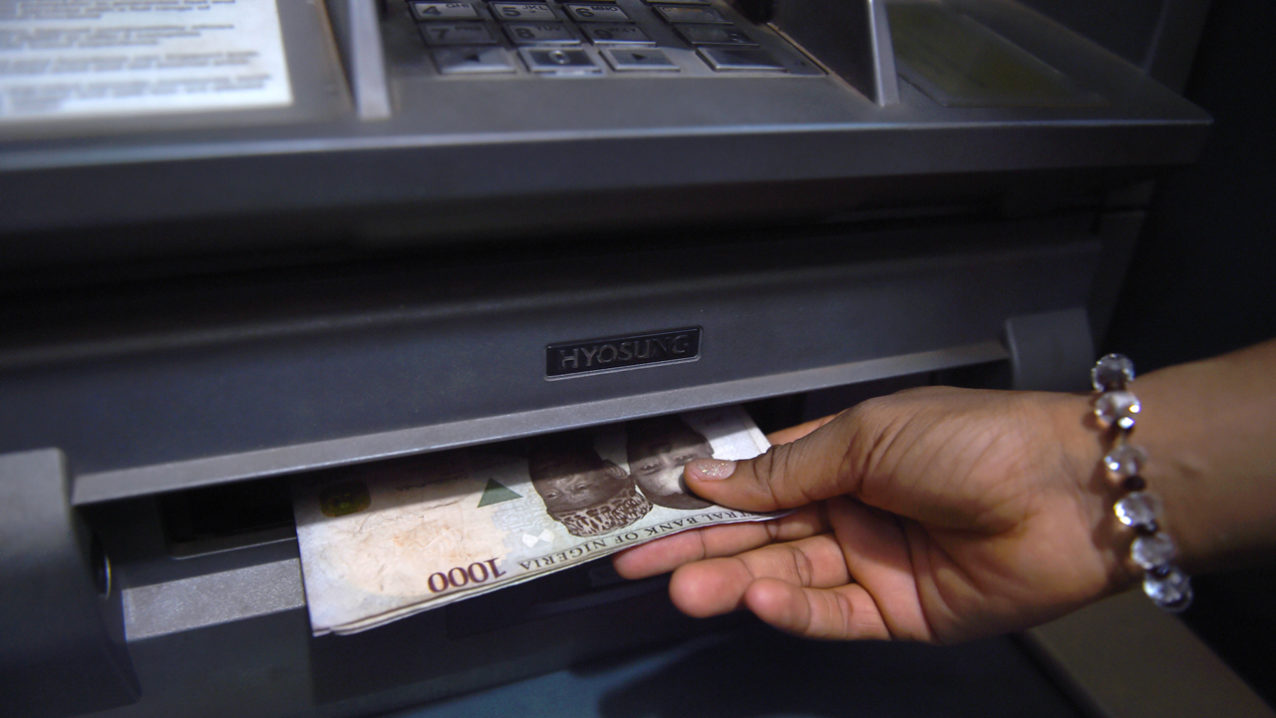
The Central Bank of Nigeria (CBN), recently announced a revision to Automated Teller Machine (ATM) withdrawal fees, effective from March 1 2025. The policy update, according to the apex bank, is part of sustained efforts to reduce the use of physical cash and promote digital transactions.
However, industry experts and customers alike are expressing concerns that this policy change might force more customers into physical bank branches, flooding the halls with queues, as customers attempt to dodge the additional charges as well as disruption in budgeting and spending habits they fear will come with the forthcoming ATM withdrawal policy.
On February 10, 2025, the Central Bank of Nigeria (CBN) issued a circular mandating banks and financial institutions to implement new Automated Teller Machine (ATM) withdrawal charges starting from March 1, 2025.
The new policy shift imposes a fee on customers for every withdrawal made at an ATM of a different financial institution from their own. This represents a departure from the existing provisions outlined in Section 10.7 of the CBN Guide to Charges by Banks, Other Financial, and Non-Bank Financial Institutions, issued in 2020.
The CBN’s circular, signed by John Onojah, acting director of financial policy and regulation department at the CBN, is aimed at spurring the widespread deployment of ATMs across Nigeria, while also empowering financial institutions to institute appropriate fees for ATM services.
As specified in the CBN’s new circular, the previous provision of three monthly fee-free withdrawals for Remote-On-Us (other bank’s customers or Not-On-Us) ATM transactions, under Section 10.6.2 of the Guide, shall no longer apply come March 2025.
The new CBN directive mandates that withdrawals made from a customer’s own bank’s ATM will remain free. However, for withdrawals made at ATMs of other banks, customers will be charged N100 for every N20,000 withdrawn at on-site ATMs (ATMs located within bank premises), and N100 for every N20,000 withdrawn at off-site ATMs (ATMs located outside bank premises), along with an additional surcharge of up to N500.
The CBN circular further emphasised that the surcharge imposed on customers must be clearly communicated to the customers at the point of withdrawal.
In addition, for withdrawals made at ATMs located outside the country, the CBN stated that charges will be set at the rates specified by the international acquirer.
The apex bank attributed the revision to rising operational costs and a need to ensure efficiency in ATM operations across the country. The introduction of fees, it explained, is designed to incentivise banks to invest in maintaining and expanding their ATM networks.
“In response to rising costs and the need to improve the efficiency of Automated Teller Machine services in the banking industry, the Central Bank of Nigeria has reviewed the ATM transaction fees prescribed in Section 10.7 of the extant CBN Guide to Charges by Banks, Other Financial and Non-Bank Financial Institutions, 2020 (the Guide).
“This review is expected to accelerate the deployment of ATMs and ensure that appropriate charges are applied by financial institutions to consumers of the service. Accordingly, banks and other financial institutions are advised to apply the following fees with effect from 1 March 2025,” the CBN stated.
The implications of the new policy have been closely examined by analysts, who noted that customers who frequently use ATMs belonging to banks other than their own are likely to face higher costs. The introduction of surcharges on off-site ATMs, they noted further, may also drive customers towards digital banking channels such as mobile apps and online transfers, which offer more cost-effective alternatives.
With banks set to roll out the new charges in March, analysts caution that customers may be compelled to alter their banking routines, seeking ways to avoid the additional fees. Among the strategies likely to be adopted by customers is an increased reliance on physical bank branches, resulting in a surge of customers flocking to bank halls for fee-free withdrawals.
According to analysts, this trend, if it materializes, could undermine the very purpose of the extensive ATM expansion efforts, which were meant to provide customers with greater convenience and reduce congestion in bank halls.
Moreso, the burden of accumulating bank charges continues to weigh heavily on many Nigerians, with each additional fee representing another obstacle in their pursuit of financial security and stability.
David Adonri, the managing director of Highcap Securities,expressed his concern over the implications that the new ATM withdrawal charge might have on Nigeria’s drive towards a cashless economy.
According to Adonri, the introduction of the N100 charge on ATM transactions could deter many Nigerians from embracing digital transactions, potentially undermining the country’s efforts to reduce the use of cash and promote electronic payments.
Adonri cautioned that traders and small business owners, wary of the potential costs of future withdrawals, might be dissuaded from depositing their earnings in banks.
With the introduction of the revised ATM
charges, concerns are mounting that Point of Sales (PoS) operators may soon hike their own fees to offset the increased costs of withdrawing cash.
David Abiodun, chairman of the Lagos Chapter of the Association of Mobile Money & Bank Agents of Nigeria (AMBANN), in a statement, warned that PoS operators would be left with no choice but to raise their charges if they are to continue providing their services.
“The new ATM fees will naturally affect the POS charges because, as we know, every provider has left the agents on their own. In the past, every terminal came with a preloaded SIM card and data, and the agent would work and receive a commission, but that is no more. Now, they have to provide everything for themselves.
“The ATM fees will affect POS operators in two ways: POS charges will go up, and customers will prefer to go to ATMs, thereby making PoS unprofitable,” he noted.
Abiodun also noted that the association is taking a close look at the impact of the new ATM charges on PoS operators. He expressed concern that the CBN implemented the fees without consulting with the association, leaving PoS operators without a voice in the decision-making process.
Elvis Eromosele, a public affairs analyst,warned of the potential effects that the new ATM withdrawal charges could have on Nigerians, especially those with limited financial means. In his analysis, Eromosele anticipates an increase in the crowds in banking halls as customers flock to avoid the increased fees associated with ATM withdrawals.
The influx of customers seeking to withdraw cash over-the-counter, Eromosele argues, will undo the benefits that the expansion of ATM networks was intended to bring, such as convenience and reduced congestion in banking halls.
To address the challenge posed by the new ATM withdrawal charges, Eromosele advised: “The CBN should focus on policies that promote financial inclusion rather than discourage it. So, instead of imposing additional fees, it should encourage competition among banks by incentivizing them to expand ATM access, particularly in remote areas. This would reduce dependence on interbank withdrawals and improve overall efficiency.”
Economist Olufemi Adeyemi, on his part, warned that the CBN’s move to raise ATM withdrawal charges may inadvertently harm the Nigerian economy, with small businesses being particularly vulnerable to the increased costs.
Adeyemi, while pointing out that small businesses are often operating on minimal profit margins, cautioned that the added banking fees could prove devastating, potentially pushing some enterprises into insolvency.
Adeyemi suggested that the CBN consider introducing a tiered fee structure that accounts for the typical withdrawal patterns of these companies.
He explained that under this proposed model, the CBN could implement different fee tiers depending on the frequency and amount of withdrawals made by small businesses, thus providing a level of protection from the additional banking costs.
This strategy, Adeyemi believes, could potentially mitigate the negative consequences of the new fees while still supporting the CBN’s cashless initiative.







