Onome Amuge
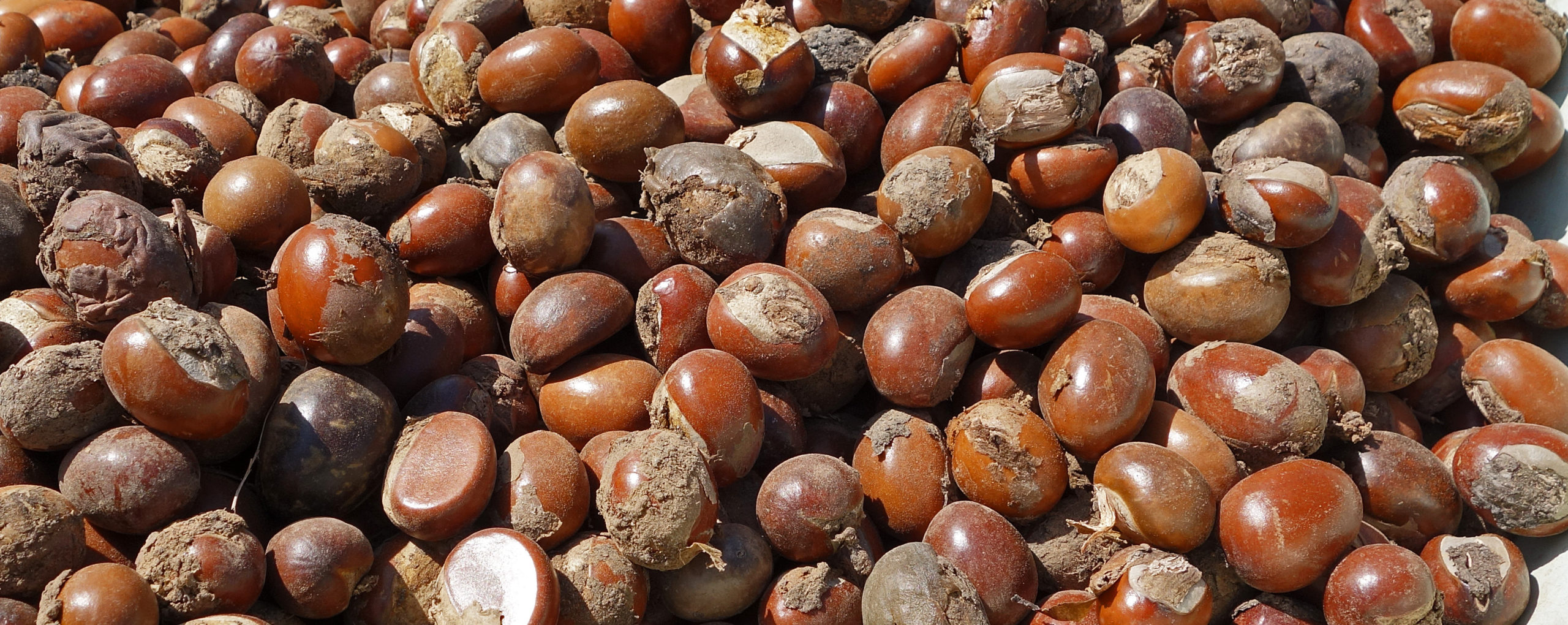
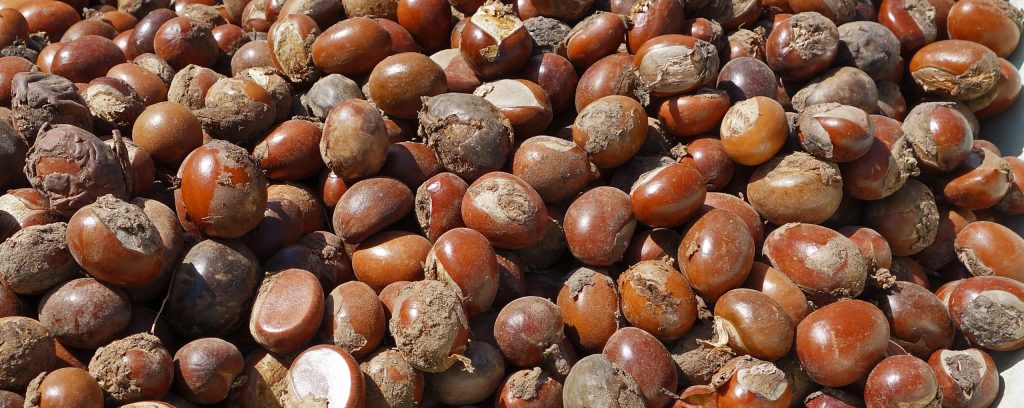
President Bola Ahmed Tinubu has imposed a six-month ban on the export of raw shea nuts in what officials describe as a decisive push to boost domestic processing, retain value locally, and reposition Nigeria within a global industry worth an estimated $6.5 billion.
The directive, announced by Vice President Kashim Shettima at a multi-stakeholder meeting in Abuja, is being billed as one of the most interventionist industrial policies yet under the administration’s Renewed Hope Agenda. While supporters hail it as a landmark step that could unlock revenues, jobs, and industrial competitiveness, critics warn of rushed execution, trade disruption, and unintended hardship for smallholder farmers.
As it stands, the stakes are high. Nigeria is ranked the world’s largest producer of shea nuts, yet it captures less than one percent of global market revenues.
Shettima, in his rationale concerning the ban, emphasised that the policy is not anti-trade but pro-value addition. “Nigeria produces nearly 40 per cent of the global shea product, yet we account for only one per cent of the market share. That is unacceptable,” he declared.
The shea industry is sometimes referred to as “women’s gold” and this is for a good reason. From collection to artisanal processing, the sector is dominated by women, many in rural communities with few other income sources. The crop is largely collected and processed by rural women, which according to market data is an estimated 90 per cent of the labour force in the sector.

Market potential and missed opportunities
Nigeria produces an estimated 500,000 tonnes of shea nuts annually, representing more than 40 per cent of global supply. The production is spread across 30 states, with Niger, Kwara, Kebbi, Kaduna, Benue, Ogun, and Oyo among the top-producing states. But much of this output is sold raw or processed into low-quality artisanal butter.
Meanwhile,processors are seen to be struggling. The Presidential Food Systems Coordination Unit (PFSCU) estimates that up to 90,000 metric tonnes of raw kernels are smuggled out annually, depriving local factories of feedstock and draining export earnings.
By contrast, Ghana and Burkina Faso, though smaller producers, have invested in industrial-grade facilities and quality certification, enabling them to supply premium buyers in Europe, the U.S., and Asia.
In Kwara State, Ibrahim Abubakar a small-scale processor said lack of technical know-how is a major barrier. “We cannot meet the standards demanded by U.S. or EU buyers. Without training and better equipment, we remain stuck in low-value markets,” he said.
In Niger State, farmer Mustapha Umar identified indiscriminate tree-felling as another challenge. “People cut shea trees for firewood without realising their economic importance. This reduces the availability of nuts and threatens the industry’s future,” he said.
Yusuf Fatima, a local shea-nut processor based in Niger State lamented the absence of basic milling equipment: “We still grind shea nuts in a mortar and roast them by hand. The process is back-breaking. With machines, we could double our output,” she said.
Agriculture minister Abubakar Kyari noted that most domestic processors operate at only 35–50 per cent of installed capacity, far below the potential of 160,000 tonnes. “Without corrective action, Nigeria risked being permanently locked in as a raw material supplier,” Kyari said.
By forcing raw nuts into domestic channels, officials believe processors can ramp up to full utilisation, producing refined shea butter, olein and stearin which are high-value derivatives used in cosmetics, pharmaceuticals, and food production. Policymakers calculate that the ban could generate $300 million in near-term revenues and lay the foundation for a ten-fold increase by 2027.
Nigeria is not alone in pursuing this path. This is as Ghana, Burkina Faso, and Mali, all smaller producers, have imposed varying restrictions on raw shea exports, protecting their processing industries and carving out growing market shares in the international cosmetics and confectionery supply chains.
Nigeria’s open-door stance had effectively turned it into West Africa’s raw depot, attracting unregulated foreign buyers to its borders. By closing that loophole, officials hope to align with regional peers and reposition the country as a value-added supplier.
The shea economy, estimated at $6.5 billion today, is projected to reach $9 billion by 2030, driven by consumer preferences for natural and organic ingredients, showcasing a buoyant market. About 85 per cent of shea exports are used as cocoa butter equivalents in chocolate production, while 15 per cent feed the cosmetics sector, which alone is worth $600 million and rising.
Brazil, one of the world’s largest cosmetics and food-processing markets, has already signaled interest. Tinubu secured an agreement in São Paulo recently to prioritise Nigerian shea butter and oil, with market access expected within three months.
“By protecting the shea industry, we are protecting livelihoods, dignity and opportunity for millions of our women,” Shettima said.
If value addition takes root locally, advocates say, the benefits will flow disproportionately to women, translating into greater financial empowerment, poverty reduction, and grassroots development.
Maryam Aliyu, a processor in Niger State, echoed this point, stating: “Many families in my community survive on the income from shea butter. If more factories are buying locally and paying better prices, women like us will benefit the most.”
Concerns over rushed policy execution
The Alliance for Economic Research and Ethics Ltd/Gte, chaired by trade lawyer Dele Kelvin Oye, commended the government’s intent but cautioned against abrupt implementation. In a statement, the group warned that immediate policy reversals without adequate transition and sector-wide consultation risk undermining ongoing commitments, investment plans, and the livelihoods of many members of the Alliance trade networks.
The Alliance urged a phased rollout, backed by clear government communication, financing options, and technical assistance to help processors upgrade facilities and meet export standards. It also recommended that the government purchase unsold shea stock to prevent losses for farmers and discourage smuggling.
“Sudden restrictions could disrupt existing export contracts, discourage investors, and expose smallholder farmers to hardship,” Oye stated.
Policy recommendations and investor interest
Analysts argue that the ban must be paired with concrete support measures. According to them, mechanised processing centers, better storage facilities, and rural infrastructure are critical to realising the government’s revenue projections.
Roland Oroh, director of the Nigeria Agribusiness Group, urged state governments in shea-rich areas to partner with private investors. “This collaborative approach could attract major players capable of setting up modern processing facilities, creating jobs and raising export earnings,” he said.
Peter Lovett, a researcher on shea development, proposed adoption of drying technologies to improve quality and traceability. “This will be critical for entering EU markets, where traceability is required for food safety, organic certification, and fair-trade labeling. With these premiums, farmers could earn significantly more,” he explained.
Investors are also watching closely. Temi Popoola, CEO of the NGX Group, said the policy could enhance Nigeria’s appeal to capital market players targeting agri-processing. “The story here is not just about commodities but about industrial policy. If Nigeria gets this right, it could catalyse investment across the agricultural value chain,” he said.
Ibrahim Musa, a trade analyst, in his summation of the stakes and opportunities, stated: “Nigeria is the largest producer of shea in the world, but the benefits to our economy have been minimal because we mostly export raw nuts. By processing locally into high-value products, we can earn more forex, reduce oil dependence, and create sustainable jobs. But if the ban is poorly executed, we risk hurting the very communities we want to help.”