
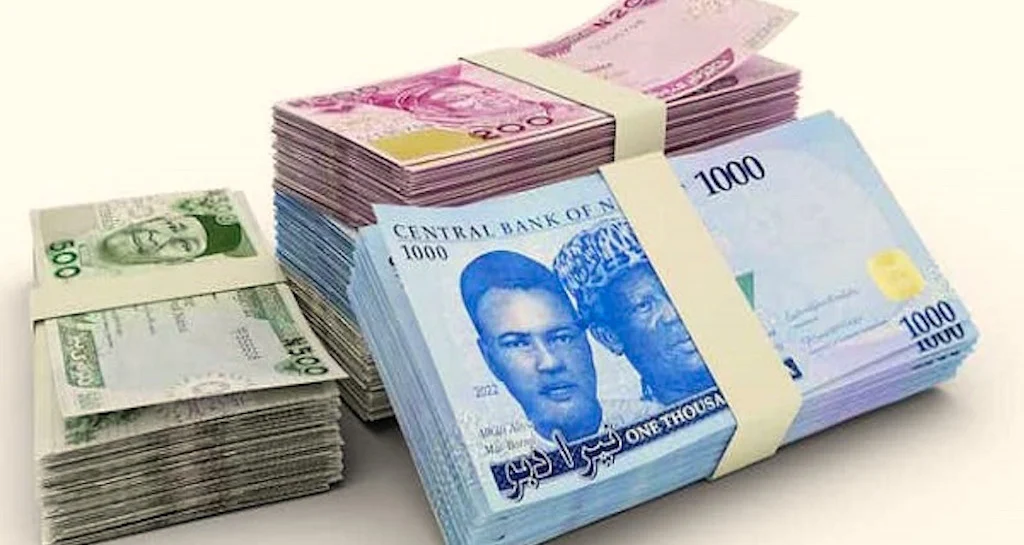
Foreign investors are increasingly rotating into Nigerian assets as geopolitical tensions in the Middle East drive crude prices higher and reshape capital flows across frontier markets.
Analysts at Citibank say the oil price hike is supporting the Nigerian Naira, giving the currency a rare period of resilience while many emerging market currencies face pressure.
In the report released Wednesday, Citibank strategists led by Katie Kironde said Nigeria’s status as a major energy exporter is allowing its currency to decouple from the broad sell-off affecting several emerging and frontier economies.
As global benchmark Brent Crude surpasses the $90-per-barrel level, investors are increasingly pricing in what analysts describe as a “commodity windfall” for Nigeria, offsetting the risk-off sentiment that typically triggers capital outflows from emerging markets during periods of geopolitical stress.
The research highlighted a growing divergence in how international investors are positioning themselves across Africa’s largest economies.
While capital flows into Nigerian assets have strengthened in recent weeks, exposure to Egypt has declined sharply. According to Citibank, the Egyptian Pound has become the worst-performing African currency so far this year as investors react to mounting macroeconomic pressures in energy-importing economies.
“Foreign investors are buying Nigerian assets while they’ve cut their exposure to Egypt,” the strategists wrote, noting that commodity-exporting countries are benefiting from the oil rally triggered by the Middle East crisis.
Dollar liquidity boosts reserves
At the centre of the Naira’s resilience is an increase in dollar liquidity flowing into Nigeria’s external accounts as crude prices climb.
Higher oil earnings have translated into stronger reserve accumulation at the Central Bank of Nigeria (CBN), whose foreign reserves recently climbed to about $50.45 billion, the highest level recorded in more than a decade.
The oil rally has pushed prices well above the federal government’s benchmark in the 2026 budget, creating additional fiscal headroom and strengthening the country’s external buffers.
For energy-importing economies, oil price spikes typically weaken currencies because governments and businesses must spend more foreign exchange to purchase fuel. Nigeria, by contrast, benefits from increased export receipts when crude prices rise, providing a natural hedge against global inflationary shocks.
The Citibank report also pointed to a similar pattern of resilience in Ghana, where a diversified export base, including gold, oil, and cocoa, has helped stabilise the Ghanaian Cedi amid the global turmoil.
Such export diversification provides an additional cushion for economies exposed to global commodity cycles, particularly during periods of geopolitical disruption affecting energy markets.
Risks for energy importers
Despite the positive outlook for oil exporters, Citibank warned that the Middle East crisis could trigger a new wave of currency devaluations across Africa’s energy-importing economies.
Countries such as Kenya and Ethiopia face what analysts describe as a dual shock, following rising fuel import bills and a strengthening U.S. dollar as investors move capital into safer assets.
These pressures often force central banks to weaken their currencies in order to manage external balances and preserve foreign reserves.
Policy buffers supporting Nigeria
Nigeria’s resilience is also being reinforced by recent policy initiatives aimed at insulating the domestic economy from oil price volatility.
Analysts pointed to the government’s naira-for-crude arrangement and foreign-exchange management strategies, alongside the ramp-up of production at the Dangote Petroleum Refinery, as factors helping to reduce the country’s exposure to costly refined fuel imports.
By increasing domestic refining capacity and improving foreign exchange supply, policymakers have helped limit the landed cost shocks that typically follow global oil price spikes.
With oil prices climbing and foreign reserves strengthening, investors appear to be reassessing Nigeria’s risk profile. For now, analysts say the country’s commodity-driven advantage is allowing the naira to defy the broader volatility sweeping across frontier markets.








