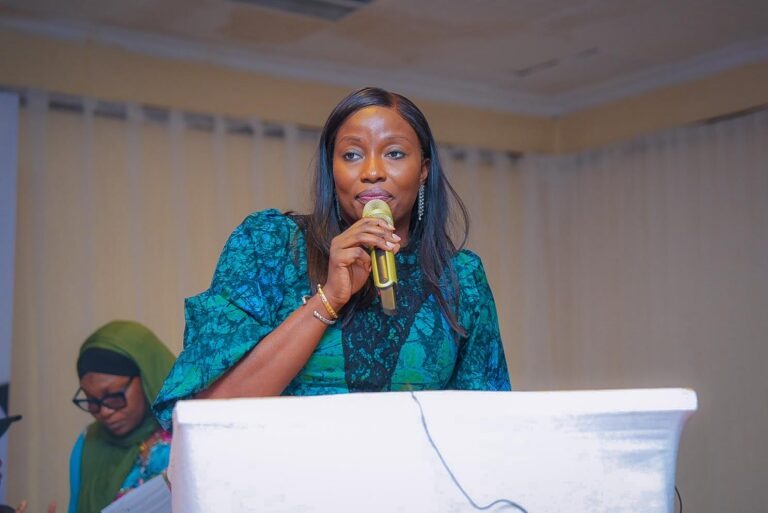
Onome Amuge
Nigeria is seeking a fresh $500 million facility from the World Bank to expand access to credit for micro, small, and medium-sized enterprises (MSMEs), as the government intensifies efforts to revive private-sector productivity amid slow recovery and tight credit conditions.
The loan, which forms part of a $2.39 billion financing package under the Fostering Inclusive Finance for MSMEs in Nigeria (FINCLUDE) Project, aims to deepen financial inclusion, mobilise private capital, and promote innovative lending solutions for small businesses across sectors.
According to a project document from the World Bank, the FINCLUDE initiative will be implemented through the Development Bank of Nigeria (DBN) and its subsidiary, Impact Credit Guarantee Limited (ICGL), two institutions seen as central to Nigeria’s MSME finance architecture.
“Through these catalytic institutions, the project will deploy a package of complementary, inclusive, and innovative instruments tailored to the diverse needs of MSMEs in Nigeria,” the World Bank said in its appraisal note.
Under the proposed structure, $400 million of the funding will come from the International Bank for Reconstruction and Development (IBRD) and $100 million from the International Development Association (IDA), the World Bank’s two main lending arms. The remaining $1.89 billion is expected to come from commercial lenders as unguaranteed private financing, making FINCLUDE one of Nigeria’s largest blended finance initiatives targeted at small business development.
The project is designed around three pillars including inclusive and innovative MSME finance, de-risking through partial credit guarantees, and technical assistance to modernise MSME financing ecosystems.
In practical terms, the facility will support the provision of Tier 2 subordinated capital to eligible financial institutions, the creation of an MSME investment fund for long-term debt and equity financing, and the rollout of digital tools to strengthen credit delivery and monitoring.
The World Bank noted that the project would also include targeted training and regulatory capacity-building to help banks and microfinance institutions expand credit to underserved segments, particularly women-owned enterprises, agricultural SMEs, and start-ups.
Analysts say this approach reflects a shift in Nigeria’s development financing strategy, from short-term, public-sector-driven credit interventions to a model that emphasises private capital mobilisation and risk-sharing mechanisms.
The World Bank’s appraisal document also credits these reforms with improving foreign exchange liquidity and creating new fiscal space for investment in infrastructure and enterprise support programmes.
However, access to finance remains one of the economy’s most entrenched bottlenecks. Only about 5 per cent of total bank credit goes to agriculture, a sector that employs over one-third of Nigeria’s workforce, while lending to MSMEs remains well below potential due to high interest rates, weak collateral systems, and limited risk-sharing mechanisms.
Under the proposed arrangement, the Development Bank of Nigeria (DBN) will serve as the lead implementing agency and borrower’s representative. The institution has been a key conduit for on-lending to smaller financial institutions since its inception, with a mandate to bridge the credit gap for MSMEs.
The World Bank described DBN as “a partner well known to the Bank with high implementation capacity and a proven track record in designing and executing complex, innovative projects.”
The World Bank’s confidence in DBN’s institutional framework is seen as critical to the programme’s design, as the FINCLUDE project aims not only to provide direct financing but also to strengthen Nigeria’s broader MSME lending ecosystem.
If approved, the FINCLUDE loan would add to Nigeria’s external debt, which stood at $46.98 billion as of June 30, 2025, according to data from the Debt Management Office (DMO). The World Bank Group remains Nigeria’s largest single creditor, holding about 41.3 percent of total external obligations; roughly $19.39 billion, comprising $18.04 billion from the IDA and $1.35 billion from the IBRD.
While Nigeria’s debt sustainability remains under watch, economists note that concessional loans targeting productive sectors, such as MSME financing, have higher developmental returns compared to recurrent spending.
The World Bank’s board is expected to consider the project for approval on December 18, 2025. If endorsed, disbursements could begin in 2026, aligning with the federal government’s push to leverage development finance institutions for inclusive growth.