Onome Amuge
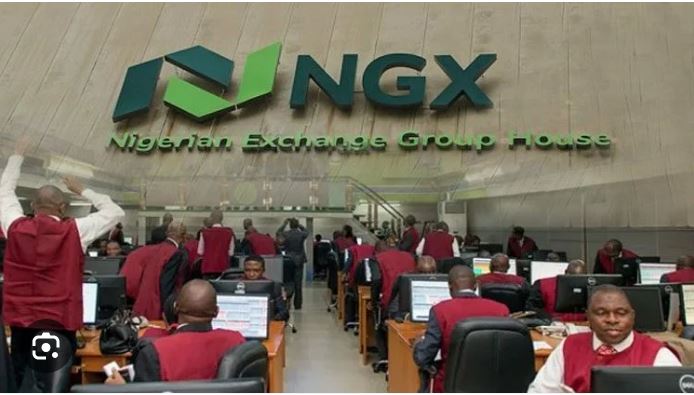
Nigeria’s stock market lost nearly N600 billion on Tuesday as profit-taking and heavy sell-offs in insurance and banking counters dragged the All Share Index (ASI) down 0.67 per cent, marking the market’s second consecutive decline this month.
The downturn, which erased N595.8 billion from total market capitalisation to close at N87.81 trillion was led by notable losses in AIICO Insurance and Wema Bank, both of which plunged the maximum 10 per cent allowed in a single session.
The benchmark ASI slipped from 139,722.19 points on Monday to 138,780.55 points, reducing year-to-date gains to 34.8 per cent. The sell-off came amid 31,406 transactions, with 407.6 million shares valued at N39.9 billion changing hands.
“Bearish signals dominated the session as some investors took profits. However, underlying fundamentals remain supportive, and we may see investors rotating back into recently corrected names in the coming sessions,” analysts at Vetiva Capital wrote in a note.
AIICO Insurance emerged as one of the day’s worst performers, dropping from N3.80 to N3.42, a 10 per cent slide. The insurer’s decline was emblematic of broader weakness across the insurance index, which fell 2.2 per cent, the sharpest sectoral drop of the day. Prestige Assurance and Consolidated Hallmark Insurance also slumped 10 per cent each, compounding the rout.
Banking stocks fared little better. This is as Wema Bank tumbled from N8.30 to N7.47, a 10 per cent loss, dragging the banking index 0.8 per cent lower. Guaranty Trust Holding Company (GTCO), the sector’s bellwether, also faced sell pressure despite being the most traded stock by volume, with 32.6 million units exchanged.
The market rout was not confined to insurance and banking. Lafarge Africa (WAPCO) shed 9.9 per cent, shaving N39 billion off its market value, while consumer goods giant PZ Cussons slid nearly 10 per cent. Dangote Sugar Refinery fell 5.2 per cent, and International Breweries lost 6.7 per cent.
Sectorally, the Industrial Goods index declined 1.5 per cent, while Consumer Goods slipped 1.4 per cent. The Oil & Gas index eked out a 0.1 per cent gain, supported by modest buying in Oando.
Market breadth, which is a measure of advancing to declining stocks,remained deeply negative, with 48 losers against just 11 gainers. NCR Nigeria and Austin Laz & Company each rose 10 per cent, topping the gainers’ chart.
Investor caution amid monetary policy bets
The sell-off comes as investors weigh the outlook for monetary policy. Analysts at United Capital said they expect cautious optimism in the equities market this week, pointing to moderating inflation, relative stability in the naira, and rising foreign reserves as potential triggers for a rate cut by the Central Bank of Nigeria.
A rate cut could ease borrowing costs for corporates, improve liquidity conditions, and stimulate risk appetite for equities. But for now, many traders remain on the sidelines.
“Liquidity is gravitating toward the fixed-income market in anticipation of new bond auctions, while equities are consolidating after a strong run-up in August,” said a Lagos-based portfolio manager.
Despite the bearish tone, analysts argue that the market’s longer-term fundamentals remain intact. Nigeria’s equities are up more than a third this year, supported by resilient corporate earnings, foreign investor re-entry, and hopes of reforms to tackle dollar shortages and boost fiscal revenues.
Yet Tuesday’s rout indicates the fragility of sentiment in a market heavily influenced by domestic retail flows.
“Short-term volatility is likely, but we do not see a structural reversal at this stage. Select counters in banking and consumer sectors remain attractive at current valuations,” Vetiva analysts said.
For now,AIICO Insurance and Wema Bank, top amongst Tuesday’s decliners, embody investor unease. Analysts observed that both stocks have delivered outsized gains this year, leaving them vulnerable to abrupt corrections when traders rush to lock in profits. Market watchers assert that whether bargain hunters return in coming sessions will determine if Tuesday’s N596 billion wipeout proves a mere blip in an otherwise bullish year for Nigerian equities.