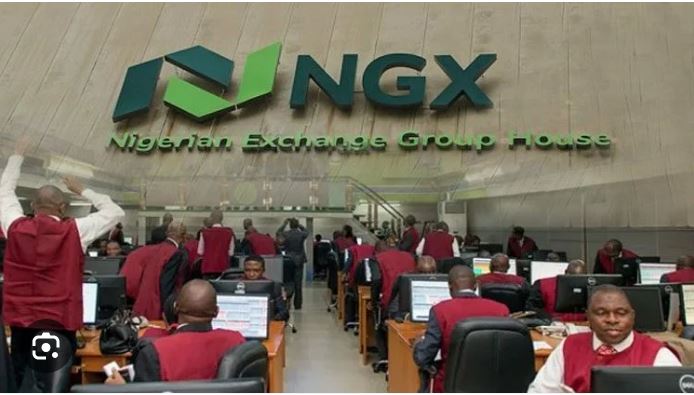
Nigerian bourse up N822bn as investors shrug off banking sector drag

Onome Amuge

The Nigerian equities market extended its bullish run last week, delivering fresh gains for investors even as banking stocks weighed on sentiment and overall activity levels softened. The performance underscored the market’s resilience in the face of sectoral headwinds, with broader optimism anchored on easing inflation, selective portfolio rebalancing, and growing speculation around monetary policy easing.

By the close of trading on Friday, September 19, 2025, the NGX All-Share Index (ASI) had advanced by 0.92 per cent week-on-week to 141,845.35 points, up from 140,545.69 points in the preceding week. This translated to a corresponding increase in market capitalisation to N89.744 trillion, from N88.922 trillion, representing investor gains of N822.25 billion over the five trading sessions. Year-to-date, the index has now returned 37.81 per cent, consolidating its position as one of Africa’s top-performing markets in 2025.

Trading began on a bullish note on Monday, September 15, with investors pocketing N704.38 billion in value, lifted by strong interest in blue-chip counters and select consumer goods names. The upbeat momentum proved short-lived, however, as profit-taking on Tuesday erased N70.99 billion in value.

Wednesday saw a strong rebound, with investors regaining N309.66 billion, supported by renewed interest in high-cap banking and industrial names. Thursday extended the rally, adding another N143.51 billion, before sentiment turned sharply negative on Friday, wiping N264.31 billion amid heavy sell-offs in banking and insurance stocks.

A total of 2.735 billion shares worth N85.197 billion changed hands in 127,284 deals, a decline from the previous week’s 3.188 billion shares valued at N99.685 billion in 132,711 deals.

The Financial Services Industry remained the dominant driver of market activity, accounting for 1.909 billion shares valued at N37.834 billion in 56,026 deals. This represented 69.8 per cent of total volume and 44.4 per cent of total value traded. The ICT industry followed, with 184.87 million shares worth N6.19 billion in 12,893 deals, while the Services Industry ranked third, contributing 176.5 million shares valued at N813.25 million across 6,011 deals.

Abbey Mortgage Bank, Fidelity Bank, and United Bank for Africa were the most actively traded equities by volume, jointly accounting for 875.8 million shares worth N16.4 billion across 11,389 deals. Combined, they represented 32.0 per cent of total equity turnover volume and 19.3 per cent of value.

Market breadth was nearly balanced, with 40 gainers against 41 losers, while 66 equities closed unchanged. This contrasted with the previous week, when 70 gainers far outpaced 22 losers, signalling that sentiment cooled somewhat despite the market’s net positive close.

Guinness Nigeria emerged as the week’s standout performer, rallying 28.6 per cent as investors rotated into consumer goods stocks in anticipation of resilient half-year results and a potential demand lift heading into the festive quarter. Multiverse Mining and Exploration surged 21.3 per cent, while Eunisell Interlinked advanced 20.4 per cent.

On the losing side, Omatek Ventures shed 18.2 per cent, leading declines, followed by Cornerstone Insurance, which slumped 15.4 per cent. Secure Electronic Technology also recorded a 12.8 per cent weekly fall. UBA, one of the market’s most liquid banking stocks, shed 9.2 per cent amid heavy post-earnings profit-taking.

A sectoral breakdown revealed four out of six NGX sectoral indices closed positive. The NGX Consumer Goods index led the charge, climbing 5.48 per cent week-on-week, supported by notable gains in Nigerian Breweries, Unilever, May & Baker, and Cadbury.

The NGX Oil & Gas index added 2.79 per cent, buoyed by strong flows into Seplat and Oando. The NGX Commodity and NGX Industrial indices advanced 1.42 per cent and 0.05 per cent respectively, reflecting steady demand for select industrial plays.

In contrast, the NGX Banking index retreated 2.57 per cent week-on-week, as Zenith Bank, UBA, Wema Bank, and Sterling Bank all posted declines following the release of half-year results that fell short of investor expectations. The NGX Insurance index fared worse, shedding 4.67 per cent as Cornerstone, Royal Exchange, and Veritas Kapital dragged sentiment lower.

Beyond the trading floor, investors faced a shifting macroeconomic environment. Nigeria’s National Bureau of Statistics reported that headline inflation eased marginally to 20.12 per cent in August 2025, down from 20.45 per cent in July. The figure, though still elevated, offered cautious optimism that monetary tightening by the Central Bank of Nigeria (CBN) was beginning to yield results.

Attention is now firmly fixed on the upcoming Monetary Policy Committee (MPC) meeting later this month. Speculation is rife that the CBN could deliver a modest rate cut, given signs of cooling inflation and the need to stimulate credit growth in a sluggish economy. Analysts say such a move could provide a significant tailwind for equities, particularly rate-sensitive sectors such as banking and consumer goods.

Investor positioning during the week highlighted a cautious but opportunistic stance. Portfolio managers continued to rotate into fundamentally strong names while trimming exposure to more volatile counters. The mixed earnings season in the banking sector reinforced this selectivity, with investors showing a preference for consumer goods and industrials as safer plays.

Looking ahead, Cowry Research analysts expect the cautious optimism to persist into next week, with the MPC decision serving as the critical catalyst for direction. The Q3 2025 earnings season, which kicks off in October, will also shape sentiment, with investors watching closely for signs of margin resilience amid a still-challenging macroeconomic environment.

From a technical perspective, the NGX ASI continues to trade above key moving averages, forming higher highs and higher lows that suggest the bullish trend remains intact. Importantly, the index is not yet in overbought territory, leaving room for further upside should macro conditions align.

Leave a Comment

Nigerian bourse up N822bn as investors shrug off banking sector drag

Onome Amuge

The Nigerian equities market extended its bullish run last week, delivering fresh gains for investors even as banking stocks weighed on sentiment and overall activity levels softened. The performance underscored the market’s resilience in the face of sectoral headwinds, with broader optimism anchored on easing inflation, selective portfolio rebalancing, and growing speculation around monetary policy easing.

By the close of trading on Friday, September 19, 2025, the NGX All-Share Index (ASI) had advanced by 0.92 per cent week-on-week to 141,845.35 points, up from 140,545.69 points in the preceding week. This translated to a corresponding increase in market capitalisation to N89.744 trillion, from N88.922 trillion, representing investor gains of N822.25 billion over the five trading sessions. Year-to-date, the index has now returned 37.81 per cent, consolidating its position as one of Africa’s top-performing markets in 2025.

Trading began on a bullish note on Monday, September 15, with investors pocketing N704.38 billion in value, lifted by strong interest in blue-chip counters and select consumer goods names. The upbeat momentum proved short-lived, however, as profit-taking on Tuesday erased N70.99 billion in value.

Wednesday saw a strong rebound, with investors regaining N309.66 billion, supported by renewed interest in high-cap banking and industrial names. Thursday extended the rally, adding another N143.51 billion, before sentiment turned sharply negative on Friday, wiping N264.31 billion amid heavy sell-offs in banking and insurance stocks.

A total of 2.735 billion shares worth N85.197 billion changed hands in 127,284 deals, a decline from the previous week’s 3.188 billion shares valued at N99.685 billion in 132,711 deals.

The Financial Services Industry remained the dominant driver of market activity, accounting for 1.909 billion shares valued at N37.834 billion in 56,026 deals. This represented 69.8 per cent of total volume and 44.4 per cent of total value traded. The ICT industry followed, with 184.87 million shares worth N6.19 billion in 12,893 deals, while the Services Industry ranked third, contributing 176.5 million shares valued at N813.25 million across 6,011 deals.

Abbey Mortgage Bank, Fidelity Bank, and United Bank for Africa were the most actively traded equities by volume, jointly accounting for 875.8 million shares worth N16.4 billion across 11,389 deals. Combined, they represented 32.0 per cent of total equity turnover volume and 19.3 per cent of value.

Market breadth was nearly balanced, with 40 gainers against 41 losers, while 66 equities closed unchanged. This contrasted with the previous week, when 70 gainers far outpaced 22 losers, signalling that sentiment cooled somewhat despite the market’s net positive close.

Guinness Nigeria emerged as the week’s standout performer, rallying 28.6 per cent as investors rotated into consumer goods stocks in anticipation of resilient half-year results and a potential demand lift heading into the festive quarter. Multiverse Mining and Exploration surged 21.3 per cent, while Eunisell Interlinked advanced 20.4 per cent.

On the losing side, Omatek Ventures shed 18.2 per cent, leading declines, followed by Cornerstone Insurance, which slumped 15.4 per cent. Secure Electronic Technology also recorded a 12.8 per cent weekly fall. UBA, one of the market’s most liquid banking stocks, shed 9.2 per cent amid heavy post-earnings profit-taking.

A sectoral breakdown revealed four out of six NGX sectoral indices closed positive. The NGX Consumer Goods index led the charge, climbing 5.48 per cent week-on-week, supported by notable gains in Nigerian Breweries, Unilever, May & Baker, and Cadbury.

The NGX Oil & Gas index added 2.79 per cent, buoyed by strong flows into Seplat and Oando. The NGX Commodity and NGX Industrial indices advanced 1.42 per cent and 0.05 per cent respectively, reflecting steady demand for select industrial plays.

In contrast, the NGX Banking index retreated 2.57 per cent week-on-week, as Zenith Bank, UBA, Wema Bank, and Sterling Bank all posted declines following the release of half-year results that fell short of investor expectations. The NGX Insurance index fared worse, shedding 4.67 per cent as Cornerstone, Royal Exchange, and Veritas Kapital dragged sentiment lower.

Beyond the trading floor, investors faced a shifting macroeconomic environment. Nigeria’s National Bureau of Statistics reported that headline inflation eased marginally to 20.12 per cent in August 2025, down from 20.45 per cent in July. The figure, though still elevated, offered cautious optimism that monetary tightening by the Central Bank of Nigeria (CBN) was beginning to yield results.

Attention is now firmly fixed on the upcoming Monetary Policy Committee (MPC) meeting later this month. Speculation is rife that the CBN could deliver a modest rate cut, given signs of cooling inflation and the need to stimulate credit growth in a sluggish economy. Analysts say such a move could provide a significant tailwind for equities, particularly rate-sensitive sectors such as banking and consumer goods.

Investor positioning during the week highlighted a cautious but opportunistic stance. Portfolio managers continued to rotate into fundamentally strong names while trimming exposure to more volatile counters. The mixed earnings season in the banking sector reinforced this selectivity, with investors showing a preference for consumer goods and industrials as safer plays.

Looking ahead, Cowry Research analysts expect the cautious optimism to persist into next week, with the MPC decision serving as the critical catalyst for direction. The Q3 2025 earnings season, which kicks off in October, will also shape sentiment, with investors watching closely for signs of margin resilience amid a still-challenging macroeconomic environment.

From a technical perspective, the NGX ASI continues to trade above key moving averages, forming higher highs and higher lows that suggest the bullish trend remains intact. Importantly, the index is not yet in overbought territory, leaving room for further upside should macro conditions align.

[quads id=1]

Get Copy

Leave a Comment