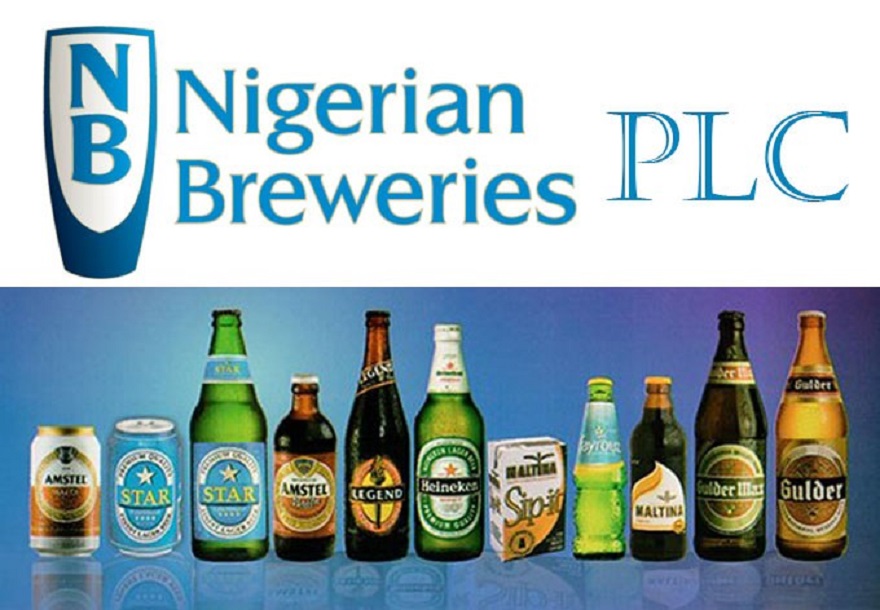
Nigerian Breweries posted a turnaround in 2025, reporting a net profit of N99.1 billion, reversing a N145 billion loss in 2024. The rebound was driven by strong revenue growth, disciplined cost management, and a decisive balance-sheet restructuring, highlighting the brewer’s ability to scale a volatile macroeconomic environment while positioning itself for long-term expansion.
According to the company’s full-year financial statement, revenue rose 35 per cent to N1.47 trillion from N1.08 trillion, reflecting broad-based growth across its beer and beverage portfolio. The performance indicates that the company successfully balanced price adjustments with sustained consumer demand amid inflationary pressures.
Operating profit more than doubled, rising to N205.2 billion from N69.9 billion in 2024, as the company leveraged economies of scale, improved production efficiency, and tightened cost controls. Pre-tax profit climbed to N161.1 billion, reversing a prior-year loss of N182.9 billion, despite finance costs remaining significant at N44.1 billion. The reduction in net finance costs by 83 per cent, following a successful 2024 rights issue, was a key factor in the recovery, helping to deleverage the balance sheet and eliminate foreign currency exposures.
The turnaround also had a tangible impact on investor sentiment. Diluted earnings per share rose to 319 kobo from a loss of N1,207 kobo, while net assets per share increased to 1,808 kobo from 763 kobo. The company’s share price more than doubled over the year, closing at N75.30 compared with N36 at the end of 2024, reflecting renewed confidence in the brewer’s strategic direction.
Analysts noted that Nigerian Breweries’ approach highlights a shift from short-term revenue growth to long-term structural positioning. Total assets rose to N1.07 trillion, driven by higher inventories, ongoing investments, and capacity expansion. Property, plant, and equipment increased to N585.3 billion, underlining continued capital deployment in breweries, logistics infrastructure, and production technology. Capital investment remained robust, with additions of N124.9 billion in the year, while capital work-in-progress declined to N47.2 billion, signalling that major projects are moving into operational phases.
The company also completed the full acquisition and integration of Distell Wines and Spirits Nigeria Limited in 2025. While the process incurred one-off integration costs, executives expect the expanded portfolio to support longer-term growth, broadening the business beyond its core beer operations into spirits and wine.
Despite the positive earnings, retained earnings remain negative due to the accumulated losses of previous years. The company’s board emphasised that the recovery is proceeding according to plan, with the 2025 results marking a critical step toward rebuilding shareholder equity.
Commenting on the results, the company highlighted that sustained innovation, premiumisation, and commercial execution were instrumental to the rebound, alongside disciplined pricing and improved operating leverage. The combination of strategic capital investment, efficiency gains, and portfolio diversification demonstrates a deliberate effort to ensure that profitability is sustainable rather than cyclical.
Industry observers said the turnaround reinforces Nigerian Breweries’ position as a resilient player in a capital-intensive, competitive sector, where operational efficiency and strong balance-sheet management are increasingly central to long-term value creation. The company’s focus on modernisation, automation, and integrated beverage offerings may also serve as a blueprint for peers seeking to navigate Nigeria’s challenging macroeconomic and inflationary environment.
With profitability restored and strategic projects underway, Nigerian Breweries appears poised to consolidate its market leadership while broadening its portfolio, offering investors a clearer line of sight on sustainable growth amid a recovering consumer economy.