The Nigerian stock market’s performance in 2025 indicates that the economy is finally responding to the reforms of the last two years. We have witnessed a significant bull run. As the “nose” of the economy, the stock market is always the first to “smell the coffee.” Because it adjusts quickly to prices and serves as a hedge against inflation, “smart money” always flocked here, in times of inflation.
The figures tell a powerful story. The market closed 2025 with a return of 51.19 percent, one of its best performances in years. The Composite All-Share Index reached an all-time high of 155,613 basis points, while market capitalisation approached N100 trillion. These are remarkable numbers for an economy undergoing difficult structural changes.
Notably, this growth is broad-based across all sectors, including Consumer Goods, Industrials, and Insurance. Even the Banking sector remains resilient despite regulatory pressure, recapitalisation requirements, and a focus away from, foreign exchange (FX).
Foundation of growth: Naira and subsidy reforms
The fundamentals are now so strong that 2026 may match or even surpass last year’s performance, barring any unforeseen events. This growth is powered by two major government reforms: the realignment of the Naira with the market and the removal of fuel subsidies.
These policies initially triggered a price spiral and pushed inflation to 30 percent at the start of 2025. This was the “bitter medicine” the economy required. The resulting hardship was largely due to delaying these decisions for so long. While these effects will linger as the public adjusts, corrective benefits are taking root.
A functioning foreign exchange market
We now have a functioning FX market where $8 billion is traded monthly translating to about $100 billion in a year. This is more than double our current reserves of $45 billion. Today, anyone can buy FX for their needs, and the market has more diverse sellers than ever before, and is becoming more liquid.
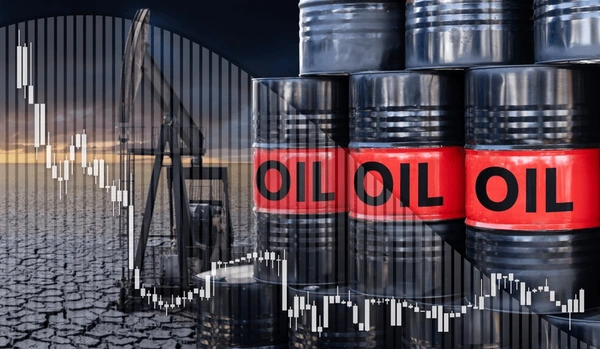
In a historic shift, crude oil no longer accounts for 80–90 percent of our foreign exchange earnings, it now represents only about 25 percent. This isn’t because oil receipts have plummeted, but because other sectors have stepped up.
Competitive Naira empowers local producers
Take “Titi,” a fashion designer in Owo. She makes clothes for borda (brother) Abiodun, in the UK and Sister Atinuke in the US and their friends. Because native designer wear is now a staple of diaspora weddings, she clears roughly $400,000 a year, in her domiciliary account.
Previously, people like Titi held onto dollars, expecting the Naira to lose value. That has not happened lately, so she now sells her dollars as quickly as she can, to her bank. These transactions do not even show up in our official export trade records. They are mostly, one on one, private transactions.
Now, because the Naira is appreciating, exporters are rushing to sell their dollars for Naira. Reports suggest the market converts over $200 million in domiciliary account proceeds daily.
Similarly, Nigerian consumer goods companies are competing to be low-cost producers in Africa. Thanks to AFCTA. They are exporting products like Lux and Omo and other personal products to Tanzania, Uganda, and Gabon, competing directly with goods from the UK and France.
And there is the cocoa boom, Nigeria is competing with Ghana and Ivory Coast for the leading cocoa producer in Africa. Many other agricultural products have also now joined regular exports, earning dollars, and selling to our FX market.
Balance of payments and regulatory stability
The Central Bank recently reported a positive Balance of Payments figure of $6.8 billion at the end of 2024. We are importing less and have successfully reduced “round-tripping” and FX padding schemes. Critics who claim the reserves are artificial or that the CBN is subsidizing the market are mistaken. Any CBN intervention to fund the retail end of the market is done at market price; even Bureau De Change operators pay the same rate as everyone else.
As for the fuel subsidy removal, the resources formerly used in subsidy payments, have now gone to inflate budgets at all levels – Federal, State and Local Governments – as seen in FAAC monthly allocations, to provide for social welfare programmes, like schools, healthcare and infrastructure. This is slow in coming, at the moment, but it will come.
Fuel prices that rose to N1100 in the middle of 2024, now sells for N790 per litre. And fuel queues have disappeared. The implication for our economy in this regard, is going to be crucial in bringing down inflation and enhancing food distribution.
We also now benefit from oil price movements. If the international price goes up, our crude oil receipts go up and if it goes down, our domestic fuel prices go down. Unlike before, when we suffered, no matter what happens.
In my published article of 21st September, 2023 when the Naira first crossed the N1000 mark, I wrote … “I have always been a long term advocate of letting the Naira find its value in the market. I have not changed my mind, there are all sorts of problems for letting market forces work to find the true value. We have to get to a point where the cost of buying dollars will change our economy for good. That is how economics work. First, it will be rough, before it gets better.”
I continued, “We are at that critical point now. To be able to get the gains, we must stay the course.” I speculated, for the first time, that the Naira may trade around the N1500 mark, because comparable currencies, with even better fundamentals like the South Korea currency the “WON”, were trading for 1350 to the dollar.
I then concluded that we should see this as our “American Nixon moment” when on August 15, 1971, president Nixon severed the link between the US currency, the Dollar, and Gold… declaring that henceforth, the American economy will now back the dollar.
That is what our Central Bank has done now, our ability to earn dollars, will determine what value is placed on the Naira. We should pursue reforms and get the economy to work efficiently and let the Naira never get to where its value is determined by anything but the market.
As the overall economy improves, the Stock Market is poised to become a more powerful engine to create wealth this year, because of a convergence of many positive initiatives that are all working together to enhance the market.
The 10-year capital market master plan
The market’s success is bolstered by a current world-class regulatory environment. The 10-year Capital Market Master Plan, launched in 2015, has seen the implementation of most of its landmark propositions. As chairman of the “Market Structure” sub-committee, I can testify to the thoroughness of this work. This plan aimed to deepen the market by increasing scale, transparency, and investor confidence. These efforts are further bolstered in the recent passage of the Investment and Securities Act 2025 (ISA 2025). The results are already evident, companies listed on the NGX declared N1.1 trillion in dividends last year, making the NGX one of the world’s top-performing markets for Return on Investment (ROI).
2026 presents many opportunities
This new year promises high activity, with several Mergers and Acquisitions (M&A) plans, with significant new listings on the horizon. Companies like the Dangote Refinery, and likely the NNPC, are expected to list this year. The government is also expected to monetize some of its assets through privatisation, as it targets a $1 trillion economy by 2030.
However, opportunities come with risks. The greatest threat is political instability and insecurity that must now be tackled or risk undermining the economy significantly.
To sustain this momentum, reforms must continue without being influenced by political considerations. As we enter the election season, monetary authorities must remain vigilant against inappropriate fiscal decisions that could undo the progress of the last two years.

Victor Ogiemwonyi, a retired investment banker, is a former Governing Council member of the Nigerian Stock Exchange (NSE), now Nigerian Exchange Group (NGX Group). He sent this contribution from Ikoyi, Lagos. He can be reached via comment@businessamlive.com and marketconversations.substack.com