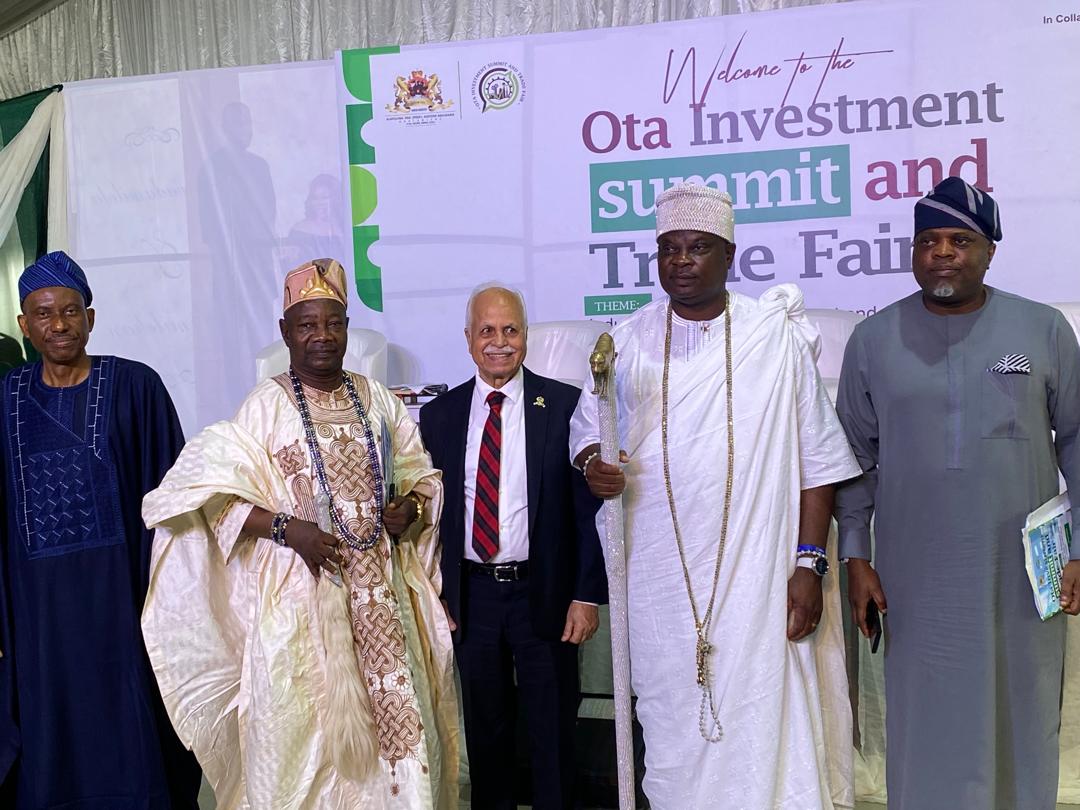
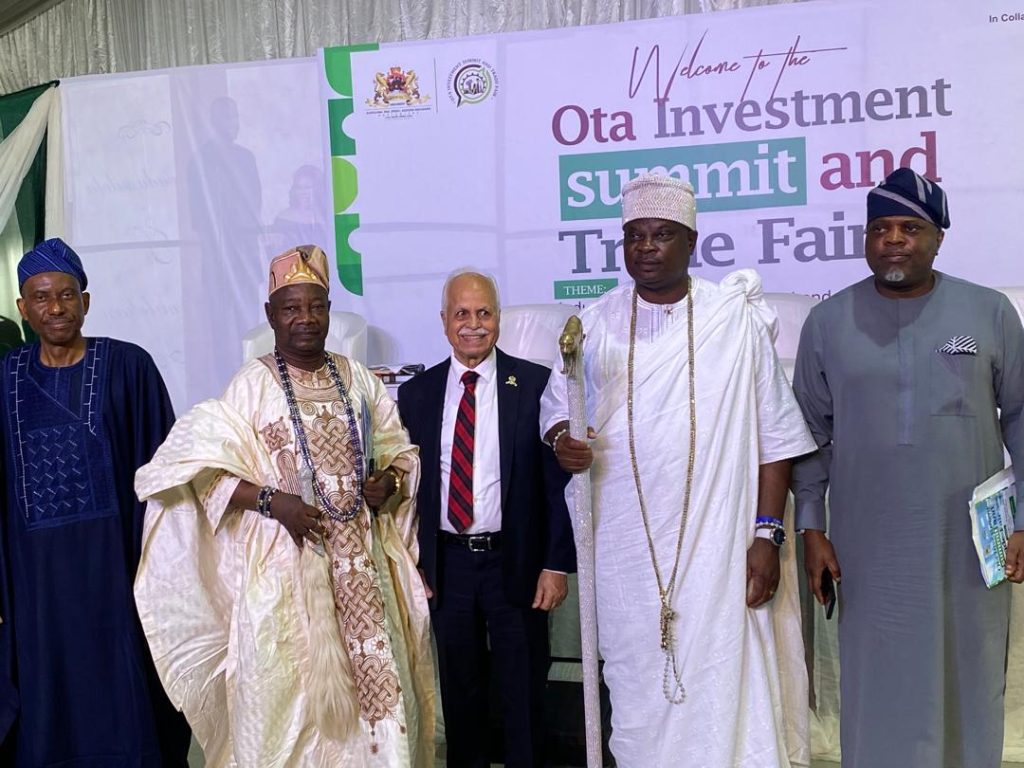
The Ota industrial belt in Ogun State has been identified by Kashim Shettima, Nigeria’s Vice President, as a critical engine for the country’s industrialisation drive. Shettima, speaking at the Ota Investment Summit and Fair, asserted that if the belt’s potential is fully optimised, it could captivate the world and be instrumental in achieving the government’s ambitious goal of a $1 trillion economy.
Shettima’s views were shared by Adeyemi Obalanlege, the Olota of Ota, who believes that with strategic infrastructural upgrades, targeted business incentives, and sustained investor confidence, Ota can be a major driver of national prosperity.
Both leaders expressed their perspectives at a summit themed “Industrial Revolution: Potential and Opportunities from Ota to the Rest of the World.”
Shettima, who was represented by Tope Fasua, his special adviser on economic affairs,described Ota as more than just a city, noting that it is a strategic location of industry and an engine of the nation’s economic progress. He highlighted the city’s location and dense concentration of manufacturing assets as key factors that position it at the forefront of Nigeria’s industrial revolution.
The vice president called on industrialists and investors to take advantage of emerging opportunities in advanced manufacturing, green energy, and agribusiness. This focus on diversification and high-growth sectors aligns with the government’s broader economic agenda and its aspiration for a $1 trillion economy.
Obalanlege reinforced this vision, pointing out Ota’s natural advantages, including its proximity to global shipping routes, airports, and a skilled labour pool. However, he stressed that unlocking the city’s full potential requires greater attention to key areas such as road rehabilitation, a reliable power supply, modern logistics, and business-friendly policies.
According to the Olota, these improvements would significantly boost Nigeria’s gross domestic product (GDP) through increased manufacturing output for both domestic and export markets, attract greater foreign direct investment, and create thousands of jobs.
Kayode Bowale, chairman of the Ota Parapo Chamber of Commerce, Industries, Mines, and Agriculture (OPCCIMA), also contributed to the dialogue, calling for a stronger partnership between the public and private sectors. He emphasised the need for crucial business enablers such as infrastructure, research and development, and the enforcement of local content utilisation to support the industrial belt’s growth.
With over 500 multinational and homegrown companies across various sectors, Ota is one of Nigeria’s largest industrial concentrations. The combined support from the government, traditional institutions, and the private sector signals a growing effort to revitalise the industrial belt and leverage its potential to power Nigeria’s economic growth and diversification.