Harnessing innovation, regulation and revenue for a thriving megacity
Introduction
Africa is the second largest continent and the second most populous one after Asia. It covers a land area of 30.37 million square kilometres and comprises 55 recognised countries. The real estate market in Africa is expected to reach a value of $17.64 trillion by 2025. Within this market, the residential real estate (RRE) segment dominates with a projected market volume of $14.87 trillion in 2025. It is anticipated that the market will experience an annual growth rate of 5.58 percent from 2025 to 2029, resulting in a market volume of $21.92 trillion by 2029. Comparing the real estate market globally, the United States is expected to generate the highest value, with $136.6 trillion in 2025. This value is expected to be in the region of $236.3 trillion in 2029! The real estate market in most African countries like Nigeria, Egypt, Rwanda, Ghana, South Africa and Kenya is experiencing a surge in demand for affordable housing due to rapid urbanisation.
Egypt’s real estate market is expected to reach a value of $1.58 trillion by 2025. South Africa’s market is expected to reach a value of $1.23 trillion by 2025 with the residential sector dominating at $0.853 trillion and Nigeria’s market, $2.61 trillion by 2025 with residential leading at $1.6 billion. South Africa leads the continent in housing affordability according to multiple market indicators. The country boasts a price-to-income ratio of 3.07, suggesting the average home costs just over three times the average annual household income compared to Nigeria’s price-to-income ratio of 10.00 (average price of 3-bedroom houses in the cities being N45,000,000, while average household income is N4,500,000 per annum). The urgent need for more housing across Africa is immediately visible. In virtually every city across the continent, evidence of informal and inadequate housing conditions can be found in the proliferation of informal settlements, slum areas, and overcrowding. African cities have among the highest urbanisation, population and household growth rates globally – in some cities it is as high as six percent per annum.
Without the supply of adequate, affordable housing at scale, housing backlogs continue to grow almost to the point of absurdity: Nigeria claims a backlog of 28 million units; in Kenya, the housing backlog is estimated at about two million units, growing at over 200,000 units per annum as the formal supply sector fails to meet new family formation. Angola’s backlog is also estimated at just under two million units and growing at 100,000 units per annum; Cameroon and Côte d’Ivoire both claim backlogs of over 700,000 units and growing at 80,000 and 120,000 units per annum respectively; and in South Africa, notwithstanding its ambitious subsidised housing programme the backlog persists at an estimated 2.2 million units.
Innovation in the property market
Innovation can be defined as a new method, a new idea or new product. There is innovation everyday across the world in the way the property market is being operated. Lagos State government in Nigeria has launched her land administration e-Portal System (e-GIS). This is a welcome innovation and an exercise in the right direction. The portal will enable customers to register their land online, and track the progress of their applications/transactions that have been accepted for processing at the Land Bureau. Innovations in the property markets globally include Blockchain, Analytics, Internet of Things (IOT), Virtual and augmented reality, Artificial Intelligence (AI), Smart Homes, Proptech, Crowdfunding, Drones, Fractional ownership, Sustainable Building Practice, Virtual Tours, Airbnb, Homestay, etc. Not all these innovations can be adopted in Nigeria because of our culture. Our culture and tech-adoption level is affecting the acceptance by the general public and the performance of these innovations.
Rwanda has launched a new electronic certificate system for land registration known as e-Title. The system aims to improve service delivery, address the issue of land titles getting lost or damaged, and help realise the goal of “zero trips, zero paper” for land transactions as application can be done online and certificate printed in the corridor of applicant’s home. But in Nigeria title registration is still rudimentary with about five percent (5%) of the properties having titles and 95 percent of them being dead capital.
Innovation in real estate is poor in Africa. For example in real estate development, “the Principle of Conformity” states that maximum value is realized when a reasonable degree of architectural homogeneity exists and land uses are compatible. This principle implies reasonable similarity, not monotonous uniformity, and tends to create and maintain optimum value in the human community. Of late, there is widespread lack of procurement of building plans in Lagos State, Nigeria, especially in the Lekki area according to the governor of the state. The building materials being used in the African real estate sector and the backlogs of housing demands that a modern method of construction like 3D printing or industrial building method and new sets of building materials, especially those manufactured locally to control cost, should be used. Before colonisation, Africa used to be the centre of civilisation and was able to develop and manage its human communities seamlessly! Globalisation has worsened Africa’s housing situation!
Regulating property market of a nation
It is one of the functions of states to regulate their property markets. Property market is any medium, physical or virtual where property businesses are transacted. Property businesses include mapping of land into different land uses like residential, industrial, office, commercial, recreation etc; surveying of land; building construction; sale of properties; letting of properties; renovation of properties; manufacture and sale of building materials etc. States make sure they map out their land areas into the various land uses for a thriving economy using critical map analysis or other urban development models. All lands are the same except for the way they are planned which results in branded areas and different values. We have residential, industrial, office, agricultural, transportation, education, health, social for cinemas, event centres, markets and shopping malls, sports, recreation land uses and service for waste management and sewerage plant or services.
To be continued next week
- business a.m. commits to publishing a diversity of views, opinions and comments. It, therefore, welcomes your reaction to this and any of our articles via email: comment@businessamlive.com

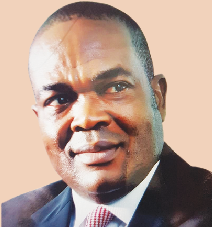
Olufemi Adedamola Oyedele, MPhil. in Construction Management, managing director/CEO, Fame Oyster & Co. Nigeria, is an expert in real estate investment, a registered estate surveyor and valuer, and an experienced construction project manager. He can be reached on +2348137564200 (text only) or femoyede@gmail.com