Climate policy ambitions across Africa are increasingly being matched by private-sector experimentation in carbon markets. The latest example comes from Releaf Earth, whose issuance of industrial-scale carbon removal credits signals a potential new pathway for climate-linked economic growth.
The credits, purchased by multinational companies including US software group Salesforce through climate funding platform Milkywire, represent an initial verified tranche of 190 tonnes of carbon dioxide equivalent generated from biochar production in Cross River State.
Carbon removal credits differ from traditional carbon offsets, which often involve avoided emissions such as forest conservation. Removal credits, particularly those based on durable carbon storage, are considered more valuable because they physically extract carbon dioxide from the atmosphere and lock it away for long periods. Demand for such credits is rising as corporations pursue net-zero commitments under increasing regulatory and investor scrutiny.
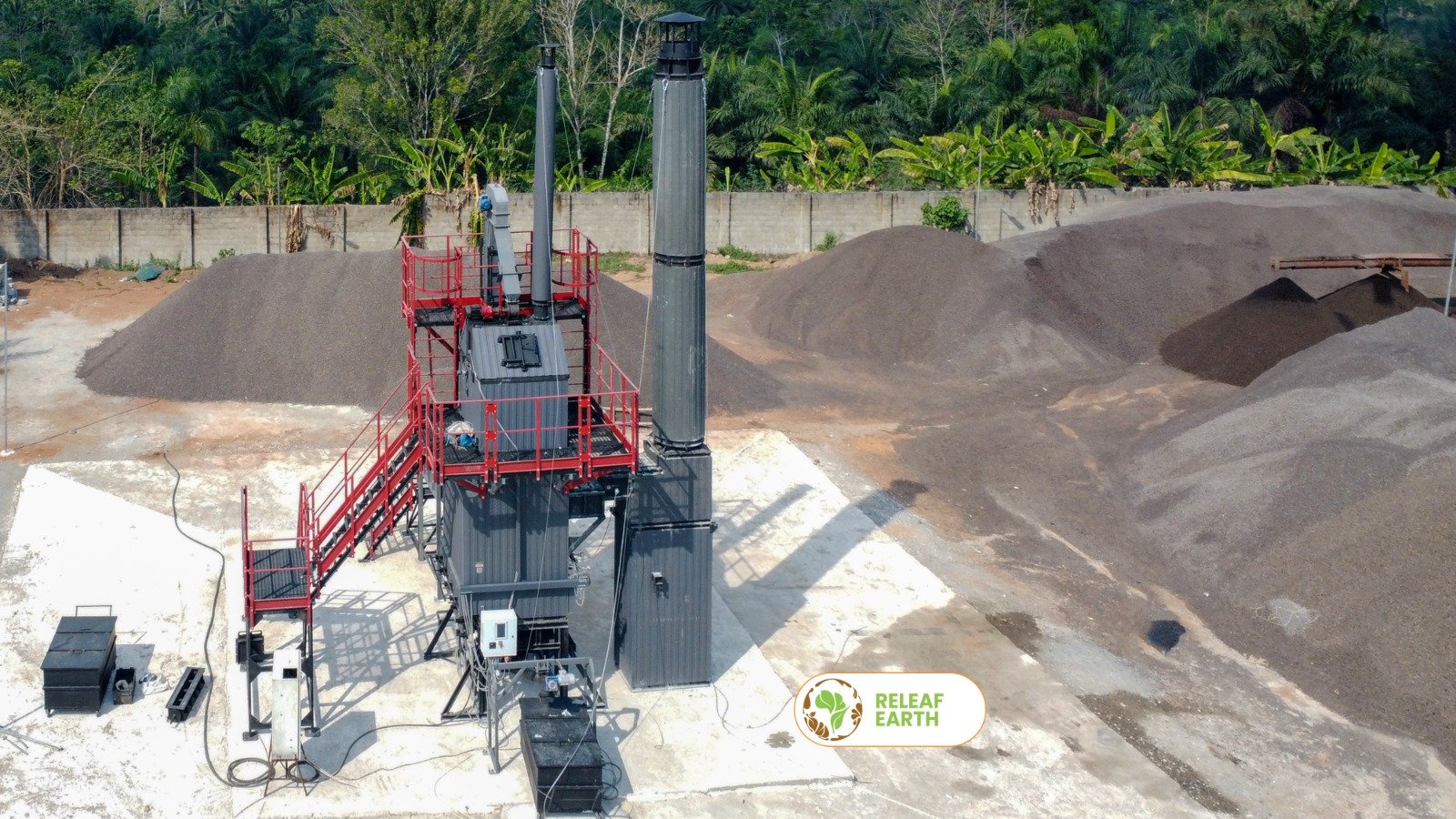
Releaf Earth’s model centres on converting agricultural waste into biochar through pyrolysis, a low-oxygen heating process that stabilises carbon into a solid form resistant to decomposition. The resulting biochar is applied to farmland, simultaneously improving soil fertility while preventing carbon from re-entering the atmosphere.
Africa’s agricultural sector generates vast volumes of crop residues, much of which is currently burned or left to decay, releasing greenhouse gases without economic return. Releaf Earth argues that converting such biomass into carbon removal assets could create a new export industry while delivering local agricultural benefits.
The company estimates that biochar application can boost crop yields significantly by improving soil structure, water retention and nutrient availability, a particularly attractive proposition as fertiliser prices remain elevated globally. Higher yields combined with income from biomass supply chains could materially raise smallholder farmer earnings, potentially strengthening rural economies.
Economists note that such dual-impact models , climate mitigation paired with agricultural productivity gains, are increasingly viewed as essential for emerging markets where climate action must align with development priorities.
One persistent challenge for African carbon projects has been credibility in international markets, where concerns about verification standards, governance and permanence have sometimes deterred investors. Releaf Earth says its credits were issued under the Rainbow Standard, a registry designed for high-durability carbon removals, and supported by geospatial tracking technology that traces biomass from farm source to soil application.
Such data transparency is becoming a prerequisite as voluntary carbon markets face tighter scrutiny following criticism of certain offset methodologies. Corporate buyers, particularly listed multinationals, are under pressure from shareholders and regulators to ensure climate claims are backed by scientifically robust credits.
Despite the optimism, scaling remains a significant hurdle. Biochar production requires reliable biomass supply chains, capital investment in pyrolysis facilities and stable regulatory frameworks. Transport logistics, rural infrastructure constraints and financing costs could limit rapid expansion.
There is also increasing global competition. North America, Europe and parts of Asia are investing heavily in engineered carbon removal technologies, including direct air capture and mineralisation processes. African producers will likely need to compete primarily on cost efficiency and co-benefits such as agricultural development.
However, proponents argue that Africa’s abundant biomass resources and lower production costs could provide a structural advantage, particularly if supportive policies and carbon market frameworks mature.
For Nigeria, participation in high-integrity carbon markets could complement ongoing economic diversification efforts. Climate-linked exports offer the prospect of foreign exchange inflows without the environmental liabilities associated with fossil fuel production.
The government has signalled increasing interest in climate finance, including carbon trading frameworks and incentives for green investment. If projects like Releaf Earth’s scale successfully, it is believed that they could attract additional international capital into climate technology, agriculture and rural infrastructure. Beyond revenue generation, there are potential reputational benefits. Demonstrating leadership in carbon removal could strengthen Nigeria’s position in global climate negotiations and sustainability-linked investment discussions.
Ikenna Nzewi, Releaf Earth’s chief executive, sees the issuance as evidence that Africa can compete in advanced climate solutions rather than merely hosting offset projects tied to conservation. Whether that ambition materialises will depend on consistent project performance, policy clarity and sustained investor confidence.
For now, the inaugural carbon credit issuance serves primarily as a signal to markets, policymakers and investors that Africa’s role in the climate economy may be evolving from passive recipient of climate finance to active exporter of climate solutions.
If replicated at scale, such initiatives could reshape perceptions of Africa’s economic future, positioning environmental innovation alongside natural resources and agriculture as a driver of growth in the decades ahead.