
- State has seen nearly two-and-a-half decade dip in FDIs
- Received $49.21m in FDI over nearly 10 years
Rivers State’s $33 billion GDP economy appears to have remained in a state of zero growth, at least since Governor Siminalayi Fubara returned to office following a six-month suspension triggered by President Bola Tinubu’s emergency rule declaration.
The oil-driven economy has shown little or no tangible improvement since the embattled Fubara administration assumed office in May 2023. A prolonged political standoff between the governor and his political benefactor, Nyesom Wike—now Minister of the Federal Capital Territory (FCT)—has significantly weighed on the state’s economic trajectory.
The conflict, marked by repeated impeachment attempts initiated by the State House of Assembly reportedly aligned with Wike, has created persistent instability, undermining governance and investor confidence.
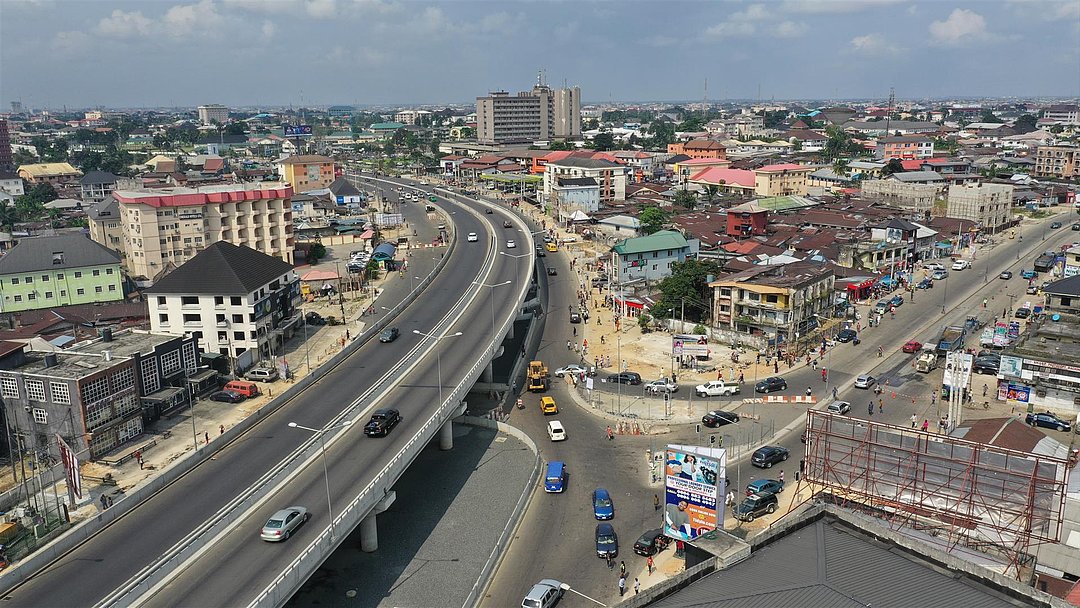
Today, Port Harcourt, the state capital and its commercial nerve centre, presents a diminished profile. Once regarded as a vibrant oil hub, the city now appears less resilient, with subdued business activity and periodic security disruptions. Incidents involving gang violence and political thuggery have further weakened the social and economic fabric.
A recent example is the burning and destruction of the state office of the African Democratic Congress (ADC), one of the country’s major opposition parties, underscoring the tense political climate.
In an attempt to reset governance, Governor Fubara recently submitted a list of nine commissioner nominees to the State House of Assembly for approval. However, the Assembly approved only five of the nominees, rejecting four.
Among those rejected was Datonye Dennis Alasia, a consultant nephrologist and professor of medicine at the University of Port Harcourt Teaching Hospital (UPTH). Alasia, who serves as Chairman of the Medical Advisory Committee (CMAC) at UPTH, has extensive experience in clinical governance, healthcare policy implementation, and hospital administration.
His rejection has drawn criticism and is seen as emblematic of the broader clash between professional expertise and entrenched political interests in the ongoing Wike-Fubara dispute.
Critics argue that the Assembly’s decision reflects a systemic challenge faced by technocrats navigating political vetting systems primarily structured for career politicians rather than seasoned professionals.
With less than one year remaining in his first term, Governor Fubara is now compelled to submit four new nominees. However, development economists remain sceptical about the potential impact of any new appointees within such a limited timeframe.
Many analysts contend that Rivers State has effectively lost a full four-year governance cycle, a reality reflected in its declining foreign direct investment (FDI) performance.
Data from the National Bureau of Statistics (NBS) for the period 2013 to the first quarter of 2020 indicate a sustained decline in FDI inflows into Rivers State. Within this period, the state attracted only $49.21 million in FDI, representing 10.38 per cent of the total $474.13 million recorded across the South-South region.
In contrast, neighbouring Akwa Ibom State received $278.26 million, accounting for 58.68 per cent of the regional total. Cross River attracted $66.13 million, Delta $59.48 million, Edo $21.04 million, while Bayelsa recorded no foreign investment within the same period.
According to Professor Willy Okowa, an economist and development expert, the persistent decline in investment inflows is largely due to an unfavourable investment climate shaped by political instability and security concerns.
“No investor will commit capital to an environment where safety is uncertain,” Okowa said. “Most investments in the region are tied to oil production, but due to insecurity, many companies have relocated their headquarters to Lagos.”
He further noted that addressing insecurity—including kidnapping and political violence—is critical to reversing the trend. He also emphasised the need for improved governance and infrastructure development.
“There is a lack of functional infrastructure such as seaports and motorable highways, as well as limited market access,” he said. “Manufacturing is virtually non-existent in the Niger Delta. Producing in Port Harcourt alone is not viable without access to broader regional markets like the South-East.”








