Oluwadarasimi Omiyale
Travelling between Lagos and Abuja, Nigeria’s two most commercially significant cities, is often presented as a straightforward domestic flight. In reality, however, it is a multi-layered logistical experience that reflects both the progress and persistent inefficiencies within the country’s aviation and travel ecosystem. For business travellers, government officials, and high-frequency commuters, the journey is less about the hour-long flight and more about the chain of processes that begin long before take-off and extend well beyond landing.
From ticket booking to final destination arrival, the Lagos–Abuja corridor highlights the operational realities of domestic air travel in Africa’s fourth largest economy, where aviation infrastructure, passenger processing systems, hospitality services, and urban mobility all intersect in a tightly linked but often strained value chain.
For most passengers, the process begins with securing a flight ticket. In recent years, digital booking platforms and airline mobile applications have made this stage more convenient, allowing travellers to compare prices, select preferred airlines, and confirm reservations within minutes. However, the relative ease of booking contrasts sharply with the physical experience that follows.
Passengers are typically advised to arrive at least one to two hours before departure for domestic flights. In practice, many business travellers arrive earlier, factoring in unpredictable traffic conditions in Lagos and the need to navigate airport access roads that are frequently congested during peak hours.
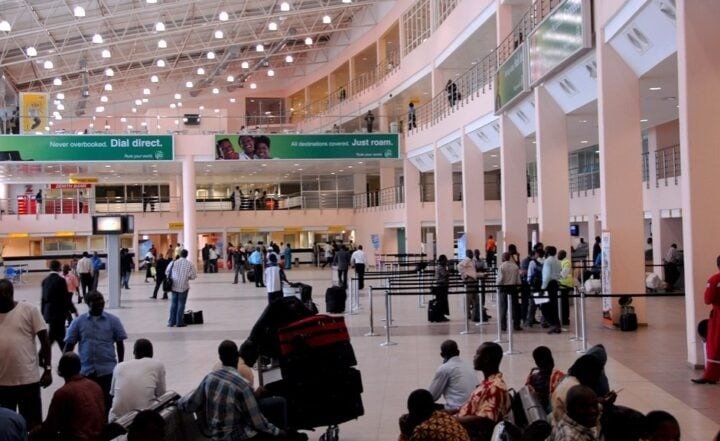
Upon arrival at either the Murtala Muhammed Airport in Lagos or Nnamdi Azikiwe International Airport in Abuja, passengers are immediately drawn into a sequence of mandatory procedures including document verification, check-in, baggage drop, and security screening. While these steps are standard globally, the efficiency with which they are executed varies significantly and often determines the overall passenger experience.
Persistent congestion at check-in and security checkpoints continues to expose structural inefficiencies in domestic aviation. What begins as a minor delay at one stage often escalates into a system-wide bottleneck, affecting boarding coordination and occasionally delaying departures. For time-sensitive business travellers, this introduces a level of unpredictability that undermines the value proposition of short-haul air travel.
Once passengers clear initial processes, they proceed to boarding gates where final identity checks are conducted before entry onto the aircraft. Airlines operating the Lagos–Abuja route typically maintain structured boarding procedures, but congestion at gates is not uncommon during peak travel periods.
Despite improvements in airline scheduling and increased frequency of flights on the route, the boarding experience remains highly time-sensitive. Any delay in earlier processes compresses boarding windows, leaving little room for operational flexibility.
Inside the aircraft, passengers are taken through mandatory safety briefings before take-off. The flight itself, typically lasting about one hour, is among the shortest commercial routes in Nigeria. Yet even within this brief window, passenger experience varies widely depending on aircraft type, airline service standards, and in-flight conditions.
While air travel remains significantly faster than road transportation between Lagos and Abuja, a journey that can take over 10 hours by road under ideal conditions, it is not without discomfort. Passengers frequently report minor physiological stress such as ear pressure during ascent and descent, as well as occasional anxiety among less frequent flyers.
Upon landing in Abuja, the process shifts once again to baggage retrieval and exit logistics. The efficiency of baggage handling remains a key determinant of arrival satisfaction. In some cases, luggage is delivered promptly; in others, passengers experience delays that extend their overall travel time.
After exiting the airport, passengers transition into the final stage of the journey: urban mobility. Transportation to hotels, offices, or event venues is arranged through taxis, ride-hailing services, or private vehicles. However, this stage introduces another layer of variability, as traffic conditions and availability of transport services can significantly affect travel time within the city.
For business travellers, this final leg is particularly important, as it determines punctuality for meetings, conferences, or official engagements.

Taken as a whole, the Lagos–Abuja travel corridor showcases the interconnected nature of Nigeria’s domestic travel ecosystem. Each stage (from booking and airport processing to flight experience, arrival logistics, accommodation, and urban mobility), functions as part of a system that determines the efficiency of domestic air travel.
However, the chain remains uneven. While certain segments, such as airline scheduling and hospitality services, have seen measurable improvements, other areas, particularly airport processing efficiency and ground logistics, continue to face structural constraints.
For business travellers, these inefficiencies translate into time costs, unpredictability, and operational friction. In an economy where speed and reliability are critical to productivity, such factors carry implications for commerce, investment, and intercity connectivity.