Growing geopolitical tensions in the Middle East are prompting renewed global debate over economic resilience and geopolitical risk, with a new international study identifying a group of countries most likely to remain stable in the event of a major global conflict.
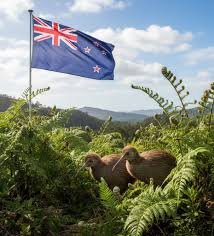
The March 2026 Peace and Political Stability Report, analysed by digital entertainment platform JB.com, ranks New Zealand as the safest country should the escalating Iran–United States tensions evolve into a wider global war.
The research examined a wide range of geopolitical, economic and infrastructure indicators to determine which countries could maintain internal stability and essential supplies during a prolonged global crisis.
According to the report, New Zealand achieved the highest World War III safety score of 100, supported by strong political stability, reliable energy infrastructure and high food security. The island nation’s geographical isolation, located more than 15,000 kilometres from the centre of the Middle East tensions, also contributed significantly to its ranking.
Analysts behind the study say that geographic distance from potential conflict zones remains a crucial factor in assessing long-term national resilience during global instability.
New Zealand also ranks 20th globally for political stability and maintains a quality-of-life score of 188.5, while its energy infrastructure can generate about 76 per cent of domestic electricity needs, enabling a high level of operational independence in the event of disrupted global trade.
The report emphasised that strong domestic resource capacity, including food production and energy supply, plays a decisive role in determining how well countries can withstand prolonged international disruptions.
Japan ranked second in the global safety index with a score of 99, supported by a strong internal security environment and advanced infrastructure. Despite its proximity to major global shipping routes, Japan benefits from a strong peace index rating and high levels of societal stability.
Japan stands 21st globally for political stability and is located roughly 9,000 kilometres from the current Middle East conflict zone, factors that contribute to its resilience in the study’s modelling.
In third place, Iceland emerged as one of the most energy-independent countries in the ranking. With 92 per cent energy self-sufficiency, Iceland possesses sufficient electricity production capacity to support domestic needs even if international supply chains are disrupted.
The country also records one of the highest quality-of-life indicators in the ranking, with a score of 195.8, and holds the 16th position globally for political stability.
Energy independence was highlighted as a particularly critical variable in the study, especially during wartime scenarios when fuel supply chains and international trade routes could be severely disrupted.
Australia placed fourth on the list, benefiting from vast domestic energy resources and geographical distance from major geopolitical flashpoints.
The report notes that Australia generates three times more electricity than it consumes, providing a large surplus that could sustain economic and social activity during a global crisis. The country is located 12,800 kilometres from Tehran, placing it far from the centre of current Middle East tensions.
Rounding out the top five safest locations is Singapore, which combines high political stability with strong domestic safety indicators and a well-developed infrastructure network.
Singapore ranks 15th globally for political stability and sits roughly 6,600 kilometres from Tehran, making it relatively insulated from direct military escalation in the Middle East.
Beyond the top five, the study also listed Canada, Switzerland, Norway, Uruguay and Finland among the countries with strong resilience scores.
The report highlighted Norway’s energy system as one of the most robust globally, noting that the country currently produces 8.5 times more electricity than it consumes, giving it a substantial buffer against global energy supply disruptions.
Meanwhile, Switzerland was identified as having the highest quality of life among the countries studied, a factor researchers believe would help sustain social stability during prolonged international crises.
To build its global ranking, the study evaluated seven core indicators, including peace index ratings, political stability, internal safety levels, energy self-sufficiency, food security and a “Border Resilience Rating”, which measures geographic distance from the epicentre of potential conflicts.
These metrics were combined to calculate an overall WW3 Safety Score, reflecting the likelihood that a country could maintain economic stability, infrastructure functionality and basic services during a large-scale international conflict.