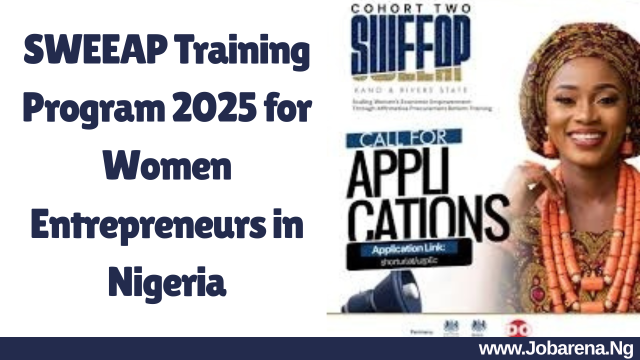
SWEEAP initiative moves to expand opportunities for women-owned businesses in Rivers 

Onome Amuge

As Rivers State continues its push to diversify its economy beyond federal allocations and oil receipts, a new UK-backed initiative is drawing attention to the untapped potential within Nigeria’s public procurement market, an industry valued at trillions of naira annually. But while the federal government has rolled out multiple reform frameworks over the years, implementation has lagged, leaving women-owned businesses with limited access to the contracts that drive local economic growth.

Next week, the Chevening Alumni Association of Nigeria (CAAN), in partnership with civil-society organisation DO Take Action and supported by the UK Foreign, Commonwealth & Development Office (FCDO), will host a two-day programme in Port Harcourt aimed at shifting that reality. The initiative, part of the Scaling Women’s Economic Empowerment through Affirmative Procurement (SWEEAP) programme, seeks to position gender-responsive procurement not just as a governance obligation but as a strategic tool for stimulating job creation, improving service delivery, and strengthening state-level economic resilience.

The programme will open on 11 December with a train-the-trainers workshop for procurement officers, gender focal persons and civil society groups. The session is expected to focus on how government ministries, departments and agencies in Rivers State can integrate Gender-Responsive Budgeting (GRB) and Gender-Responsive Procurement (GRP) into their systems. 

The second day will feature a high-level stakeholder forum bringing together government officials, policymakers, private sector leaders, development agencies and women entrepreneurs. Beyond the policy discussions, organisers say the forum is designed to build long-term alliances that can drive institutional change, attract investment and encourage businesses, especially women-owned and led enterprises, to position themselves for public sector opportunities.

For the UK government, the programme aligns with its broader development strategy in Nigeria, which increasingly emphasises institutional strengthening over direct financial interventions. “This project embodies our commitment to strengthening institutional capacity and fostering policy dialogue necessary for inclusive economic growth and gender equality,” said Oluwafunmilayo Ladepo, Chevening programme officer at the British High Commission.

CAAN president Kester Osahenye said the initiative demonstrates the role alumni networks can play in advancing reform. “Our goal is to strengthen the capacity of both government institutions and women-owned businesses so that gender-responsive procurement becomes a norm, not an aspiration,” he said.

Women-owned businesses in Nigeria face multiple barriers to accessing public contracts, including limited access to bid information, lack of certification, restrictive prequalification criteria and inadequate financial records. SWEEAP aims to address part of this gap through training and mentorship. Beneficiaries of the programme will be formally graduated at the forum, marking their transition into a pipeline of emerging suppliers equipped to compete for public procurement opportunities.

Precious Ebere Chinonso, chief executive of DO Take Action, described the initiative as a deliberate effort to “break long-standing barriers that have kept women at the margins of public procurement,” adding that capacity-building and stakeholder engagement would be central to ensuring women are not only included but prioritised.


Leave a Comment

SWEEAP initiative moves to expand opportunities for women-owned businesses in Rivers 

Onome Amuge

As Rivers State continues its push to diversify its economy beyond federal allocations and oil receipts, a new UK-backed initiative is drawing attention to the untapped potential within Nigeria’s public procurement market, an industry valued at trillions of naira annually. But while the federal government has rolled out multiple reform frameworks over the years, implementation has lagged, leaving women-owned businesses with limited access to the contracts that drive local economic growth.

Next week, the Chevening Alumni Association of Nigeria (CAAN), in partnership with civil-society organisation DO Take Action and supported by the UK Foreign, Commonwealth & Development Office (FCDO), will host a two-day programme in Port Harcourt aimed at shifting that reality. The initiative, part of the Scaling Women’s Economic Empowerment through Affirmative Procurement (SWEEAP) programme, seeks to position gender-responsive procurement not just as a governance obligation but as a strategic tool for stimulating job creation, improving service delivery, and strengthening state-level economic resilience.

The programme will open on 11 December with a train-the-trainers workshop for procurement officers, gender focal persons and civil society groups. The session is expected to focus on how government ministries, departments and agencies in Rivers State can integrate Gender-Responsive Budgeting (GRB) and Gender-Responsive Procurement (GRP) into their systems. 

The second day will feature a high-level stakeholder forum bringing together government officials, policymakers, private sector leaders, development agencies and women entrepreneurs. Beyond the policy discussions, organisers say the forum is designed to build long-term alliances that can drive institutional change, attract investment and encourage businesses, especially women-owned and led enterprises, to position themselves for public sector opportunities.

For the UK government, the programme aligns with its broader development strategy in Nigeria, which increasingly emphasises institutional strengthening over direct financial interventions. “This project embodies our commitment to strengthening institutional capacity and fostering policy dialogue necessary for inclusive economic growth and gender equality,” said Oluwafunmilayo Ladepo, Chevening programme officer at the British High Commission.

CAAN president Kester Osahenye said the initiative demonstrates the role alumni networks can play in advancing reform. “Our goal is to strengthen the capacity of both government institutions and women-owned businesses so that gender-responsive procurement becomes a norm, not an aspiration,” he said.

Women-owned businesses in Nigeria face multiple barriers to accessing public contracts, including limited access to bid information, lack of certification, restrictive prequalification criteria and inadequate financial records. SWEEAP aims to address part of this gap through training and mentorship. Beneficiaries of the programme will be formally graduated at the forum, marking their transition into a pipeline of emerging suppliers equipped to compete for public procurement opportunities.

Precious Ebere Chinonso, chief executive of DO Take Action, described the initiative as a deliberate effort to “break long-standing barriers that have kept women at the margins of public procurement,” adding that capacity-building and stakeholder engagement would be central to ensuring women are not only included but prioritised.

[quads id=1]

Get Copy

Leave a Comment