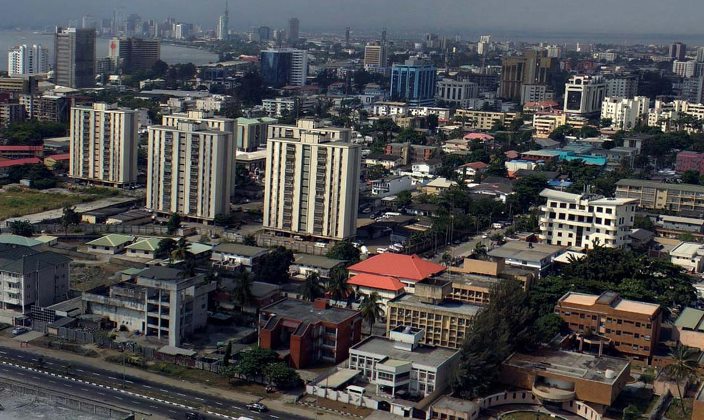
The estimated housing deficit in Nigeria, according to various sources, is not less than 20 million units in a country with about 220 million people. If we use the “two-plus-one” rule to determine the occupancy rate of homes, a three bedroom house like a bungalow or duplex will have seven occupants. 220 million people will require an average of 32 million units of three bedroom housing. It then means that 12 million quality housing are available in Nigeria. The remaining residents are either in substandard housing in standard environment, informal housing in non-housing environment or substandard housing in substandard environment, and are homeless. This situation is a big opportunity for those in the housing industry in Nigeria. 20 million units for about 140 million un-served citizens is a big opportunity for housing production. Producers only need to ensure that they produce houses that the market needs and not what they have in mind.
Across Lagos, Abuja, Abeokuta and Port Harcourt, there are numerous empty houses that show that the producers are probably producing houses that buyers do not need or cannot afford. Survey of vacant houses in Nigeria indicates that not less than five million houses are completed but vacant, or under construction with above average duration of construction due to various reasons. Firstly, there is no law against vacant and abandoned properties, making it common to see completed but empty and abandoned uncompleted buildings in Nigeria. These buildings that cannot meet their objectives within a reasonable period stagnate with capital that is supposed to be used in the financial markets, especially by financial institutions, to generate interest. Secondly, housing is a big sector where illicit money is laundered, globally. The 753 apartments valued at $42.045 million (N63.068 billion) and seized from former Central Bank of Nigeria Governor, Godwin Emefiele, is an example.
According to a recent report by the Nigerian Institute of Quantity Surveyors (NIQS), there are about 56,000 abandoned construction projects valued at N12 trillion across the country belonging to private and public sector organisations. These projects include residential, commercial, industrial and office buildings. The last estimate of completed but abandoned or underused buildings in Nigeria was put at over N9 trillion. This buildings include NETCOM House at 1, Marina; Federal Ministry of Justice Building at 6, Marina; Custom and Excise Building at Tinubu Street; FIRS House at Tinubu Street; LASACO Building on Tinubu Street; defunct Savannah Bank Building on Broad Street; former National Library Building on Broad Street; old Federal Secretariat at Alagbon, Ikoyi; part of CBN Building along Broad Street; Williams House on Williams Street, Lagos Island; some states liaison offices in Victoria Island etc. In Lagos State alone, including prime areas like Gerard Road, Thompson Avenue and Alexandra Road in Ikoyi, we have not less than 3,000 abandoned buildings occupied by only security officers. The NSITF Building at Iyana Era, along Badagry Road, Lagos, is an eyesore.
Some of these buildings in Victoria Island and Ikoyi are illegally rented out to bachelors and spinsters who pay daily for staying in the buildings to be able to get to their places of work on the island promptly during the week and go to their various families at the outskirts of the state during weekends. Illegal occupation of houses is a security threat to the state as terrorists may hide in the houses without government security agent’s notice! In developed countries, laws are made against abandoned and vacant buildings as without these laws, there cannot be housing adequacy. Abandoned properties and vacant completed buildings affect the dynamics of the property market. Privileged citizens in high offices and the moneybags will practice multiple acquisitions of houses for speculation and money laundry if allowed. The government must be interested in the completed but abandoned houses in the country. Housing is not only the shelter that shields occupiers from inclement weather; it is a human space consisting of the shelter, access roads, drainages, electricity, plants and gardens, recreation areas, water provision, security etc.
The contiguous facilities of housing make it a composite product and opportunities for business. Most housing in Africa lacks these contiguous facilities making public-private partnership in their provision inevitable. Governments alone cannot provide these facilities because of scarce resources. Property developers, especially those who are innovative and focused, will have a field day. Real estate is a universal product without alternatives. The only challenge it has is affordability. Nigeria is a poor country with average affordability index being N6.5 million, N7.5 million, N8.5 million and N9.5 million for Studio flat, 1 bedroom flat, 2 bedroom flat and 3 bedroom flat respectively. Real estate developers should think of how to produce these types of housing at the affordability index rate. With the price of cements averaging N10,000, price of 9 inches sandcrete hollow blocks averaging N600 and Plaster of Paris (POP) in Nigeria averaging N10,000 per square metre, property developers must look for alternative building materials and building methodology that will make it possible to install a two bedroom flat for N8.5 million.
Only fools do the same thing, the same way and expect different results. Adopting stabilised laterite blocks as walling materials, wooden windows, locally produced water closets, tile-less bathroom and toilet and incremental housing in which studio apartments can be increased to 1 bedroom and 2 bedrooms in the future will make sense to the buyers. Social housing would not be too much to provide for primary and secondary teachers. The government should be able to provide land for property developers at a cheaper rate so that everybody can have access to housing at an affordable price. Location of property is a factor to be considered especially in residential, commercial and office developments so as not to have “ghost towns”. This is where urban regeneration as a business comes to mind. Property developers and state governments (and FCT administration in case of FCT land) need to sit down and produce or review master plans of states and FCT to ensure that features of modern/inclusive cities including highrise buildings close to central business districts for low/medium income earners are incorporated in their city plans.

Olufemi Adedamola Oyedele, MPhil. in Construction Management, managing director/CEO, Fame Oyster & Co. Nigeria, is an expert in real estate investment, a registered estate surveyor and valuer, and an experienced construction project manager. He can be reached on +2348137564200 (text only) or femoyede@gmail.com