By Simple Flying
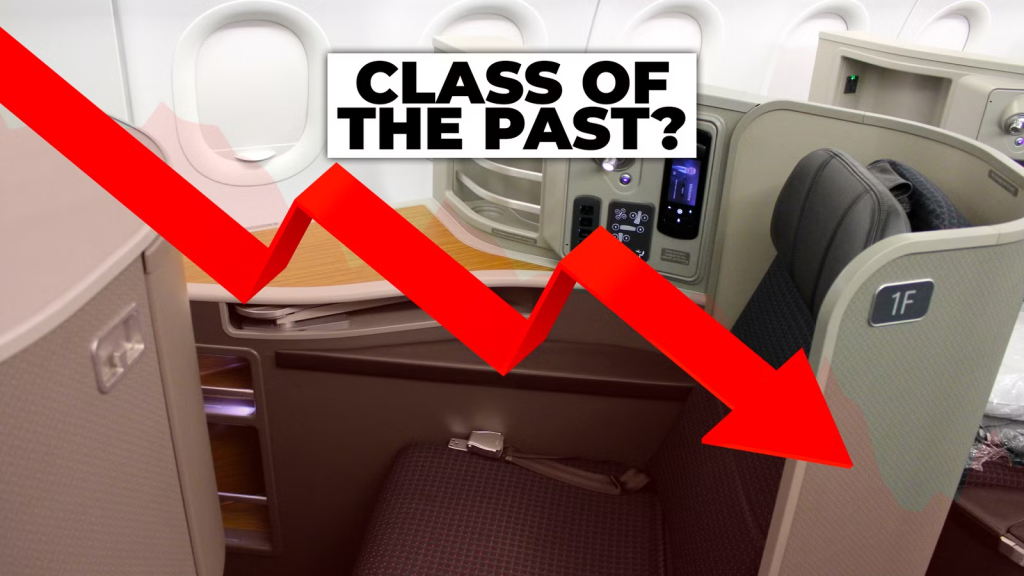
For decades, first class air travel was seen as the epitome of luxury, with passengers treated to fine dining, relaxing environments, and silver service. However, in recent years, many carriers have removed their first class offering, concentrating instead on their business class and, more recently, their premium economy products.
In this article, we will look at the rise of first class throughout the ages and why it proved so popular. We will also consider the reasons why first class does not necessarily work as well in today’s commercial aviation market, and will reveal which airlines have recently removed their first class offerings as a result.
The rise of First Class
First class air travel once represented the pinnacle of exclusivity, luxury, and prestige in commercial aviation. The rise of this innovative travel experience can be traced back to the 1950s and 1960s, which was the so-called “golden age” of air travel. Unlike today, flying was expensive, infrequent, and an event in itself, and airlines offered lavish onboard experiences to cater to the elite — celebrities, politicians, and wealthy business people. Onboard service included multi-course meals served on fine china, lounge areas, cocktail bars, and personalized attention from the cabin crew.
The emergence of wide-body aircraft like the Boeing 747 in the 1970s allowed airlines to dedicate large, luxurious spaces to first class cabins, and it was during this period that first class became not just a mode of transportation, but a status symbol, for both passengers and airlines.
In the early days of first class, many businesses around the world and particularly in the US, had sizable corporate travel budgets, allowing them the flexibility to splurge on first class air travel more than today. It is also worth considering that the option of traveling by private jet was much less prevalent back then as it is today, meaning that for celebrities, the mega-rich, and other VVIPs, first class was the only option.
Business Class marked beginning of end for First Class
Another factor that helped to boost the success of first class air travel was that, up until the late 1970s and early 1980s, business class as a concept did not exist, meaning that splurging on first class was really the only option to upgrade from regular economy class travel.
However, the launch of business class cabins changed everything. Passengers looking for extra luxury now had another option without having to shell out thousands of dollars on a first class ticket. Qantas is widely considered to be the first airline to introduce a business class product in 1979, followed shortly after by British Airways (or BOAC – British Overseas Airways Corporation as it was known at the time) in 1981.
Since then, airlines have continued to invest considerably in their business class products, with the latest iterations now offering private suites and the kind of exclusive service once reserved only for those in first class.
The world’s best Business Class
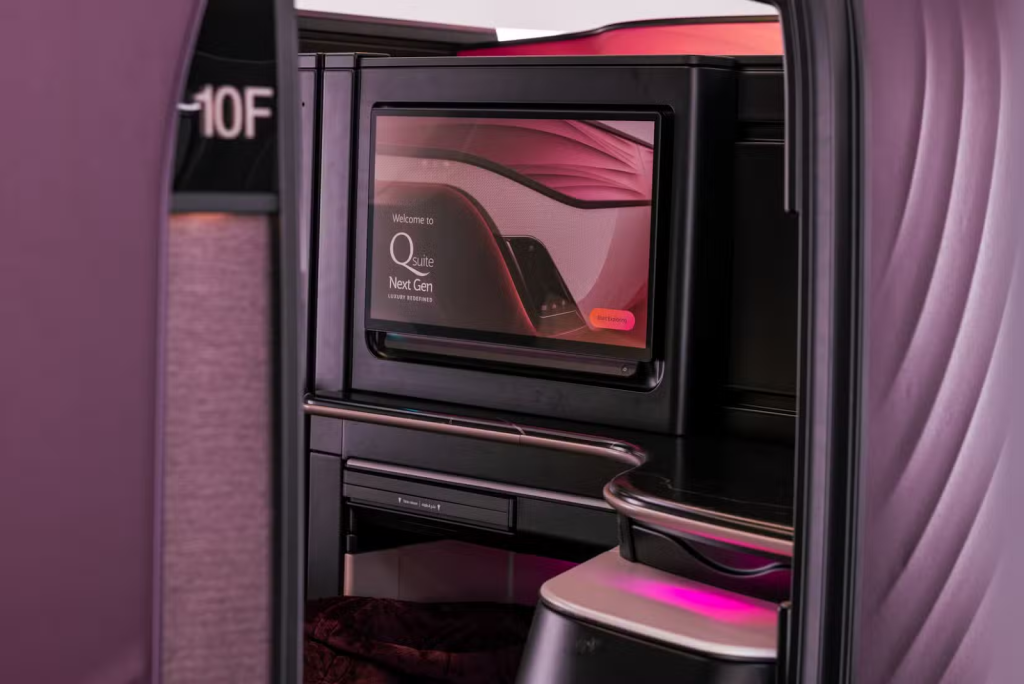
At the Skytrax 2025 World Airline Awards, Qatar Airways picked up the award for Best Business Class, thanks to its industry-leading Qsuite product. Launched in 2017, the Qsuite has now been rolled out to the majority of the carrier’s widebody aircraft, including the Boeing 777-300ER and the Airbus A350-900.
Qatar Airways’ Qsuite cabin features a unique, customizable layout with sliding privacy doors, transforming each seat into a private suite. The configuration allows for forward- and rear-facing seats in a staggered 1-2-1 layout, ensuring direct aisle access for every passenger. One of Qsuite’s standout features is its flexibility, as the middle seats in the center section can be converted into a double bed, ideal for couples. Additionally, the four seats in the middle can be configured into a “quad” layout for groups or families traveling together.
Each Qsuite includes a fully lie-flat bed, premium bedding by The White Company, a large entertainment screen, and à la carte dining on demand. Beyond the seat itself, passengers are treated to Qatar Airways’ award-winning service, elevating the overall experience with meticulous attention to detail and luxury amenities. All of these features make Qatar Airways’ Qsuite a game-changer in business class travel and a benchmark for other airlines around the world.
Why are airlines removing First Class?
Over recent years, airlines around the world have gradually been phasing out their first class products. One of the primary reasons for the downfall of first class is mentioned in the previous section, and is all to do with airlines’ massively improved business class products. Business class cabins have now been developed to the extent that, on the surface at least, there is little to differentiate them from first class, leaving passengers
Other factors that have contributed to the removal of first class is that these cabins and suites take up a lot of floor space and are expensive to operate for a relatively small number of passengers. It makes more financial sense to concentrate on business class cabins, which now represent a significant portion of revenue for many airlines.
In addition, corporate travel budgets have been slashed as businesses look for ways to reduce costs, meaning that today, only a few routes around the world can sustain a significant amount of first class availability. One of the best examples of this is the flagship route between London Heathrow Airport (LHR) and New York John F. Kennedy International Airport (JFK).
Thai Airways latest airline to remove First Class
Thai Airways recently made the strategic decision to phase out its first class cabins as part of its ongoing restructuring and fleet modernization efforts. Facing financial challenges and evolving market demands, the airline is focusing on streamlining its product offerings and maximizing revenue efficiency.
Currently, the service is only available on three of the carrier’s Boeing 777-300ER aircraft, which are deployed on routes from the airline’s hub at Bangkok Suvarnabhumi International Airport (BKK) to both London Heathrow Airport (LHR) and Tokyo Narita Airport (NRT). Operating an expensive product on only three aircraft is not financially viable, and this will be phased out completely by 2028.
By removing its first class product, Thai Airways aims to optimize cabin space for more profitable business and economy class seating, particularly in light of changing passenger preferences and reduced demand for ultra-luxury travel. With that in mind, the airline’s newer aircraft deliveries, including the Airbus A350 and Boeing 787, are configured without a first class cabin.

Airlines still offering First Class
Despite the widespread removal of first class seen among airlines worldwide, a number of airlines still offer a first class product and, at least publicly, have no intention of getting rid of them anytime soon. These include Singapore Airlines, Emirates, and British Airways.
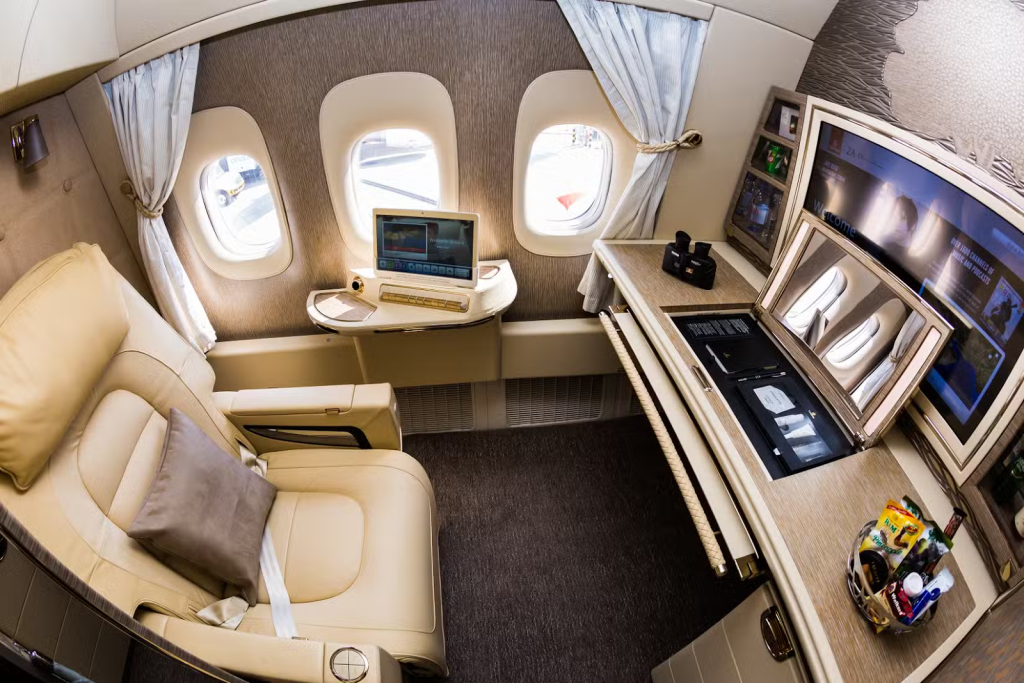
Let’s take a closer look at Emirates’ celebrated first class product, which is widely regarded as one of the most luxurious experiences in commercial aviation. Known for its opulence, privacy, and attention to detail, it has set a benchmark for premium travel since its debut, and is now a key part of the carrier’s brand identity.
At the heart of the Emirates’ first class experience is its private suite, which is available on select Boeing 777-300ERs and Airbus A380s, and offers fully enclosed rooms with floor-to-ceiling walls and sliding doors. Passengers enjoy lie-flat beds with plush bedding, ambient lighting, a large entertainment screen, and virtual windows that project real-time views outside the aircraft. The attention to comfort is evident in every detail, from leather upholstery and vanity mirrors to the carrier’s exclusive Bulgari amenity kits.
Emirates at the top of its game
The service in Emirates’ first class is equally indulgent. From the moment a passenger arrives at the airport, the experience is designed to be seamless and stress-free. Chauffeur-driven transfers, priority check-in, and access to exclusive first class lounges set the tone before boarding even begins. Once onboard, the crew provides personalized service, greeting passengers by name and offering an à la carte dining experience with a wide selection of gourmet meals and vintage wines, available on demand throughout the flight.
However, by far one of the most iconic features of Emirates’ first class product is the onboard shower spa found on the carrier’s Airbus A380s. Passengers are given a scheduled time to use the private shower, which comes stocked with luxury toiletries and heated floors, emphasizing the airline’s philosophy of offering a lifestyle experience, not just transportation. The Airbus A380 also features an onboard lounge and bar area where first and business class passengers can socialize mid-flight.
In a time when many airlines are scaling back luxury offerings, Emirates’ first class remains defiantly extravagant. However, the shift of the worldwide commercial aviation industry towards operating superior business class experiences instead of first class is clear for all to see, and we are likely to see continued innovation in business class products over the coming years as airlines look to equal, and better, Qatar Airways’ industry-leading Qsuite.