Nigeria, Africa’s most populous country and one of the continent’s largest economies, has experienced a decade-long flatlining of its air travel growth, new data show.
Analysts say the data from a consensus of economists and stakeholders contradict their expectations, especially with the country’s population exceeding 220 million, a robust middle class, and activities appearing to show uptick in domestic carriers and seat availability.
Per a TTW report, global aviation has bounced back from the pandemic and regional markets like Ethiopia and Rwanda have soared, Nigeria air travel has failed to make progress as a result of a recurring cycle of economic volatility, infrastructure deficits, and policy inconsistency.
TTW writes that data presented by industry experts paints a stark picture as they note that despite the emergence of new domestic carriers and the modernisation of select airport terminals, the actual volume of passengers — both domestic and international — has failed to show meaningful year-on-year growth since 2016.
According to the TTW article, the stagnation is not due to a lack of demand, noting that Nigerians are mobile, entrepreneurial, and increasingly pressed for time. “However, the conversion of that demand into actual ticket sales is being throttled.,” with experts pointing out that while the capacity (the number of seats available) occasionally fluctuates, the utilization remains hampered by a cost-of-living crisis that has rendered air travel a luxury many can no longer afford.
A currency crisis?
If there is a single “black box” recording the downfall of Nigerian aviation growth, it is the foreign exchange (FX) market. Aviation is a dollar-denominated industry. From aircraft leasing and spare parts to insurance premiums and pilot training, almost every operational cost is paid in US dollars.
The persistent devaluation of the naira over the last decade has created a massive disconnect. Airlines earn in naira but spend in dollars. This mismatch has led to:
-
Astronomical airfares: Domestic one-way tickets that once cost 15,000 naira a decade ago now frequently exceed 150,000 naira, outstripping the average person’s income growth.
-
Trapped funds: International carriers have historically struggled to repatriate their earnings from Nigeria, leading to reduced frequencies and, in some high-profile cases, temporary withdrawals from the market.
-
Fleet depletion: Unable to fund heavy maintenance (C-checks) abroad due to FX scarcity, many local aircraft are grounded, leaving airlines with “ghost fleets” that exist on paper but not on the tarmac.
Infrastructure: Gold-plated terminals, rusty runways
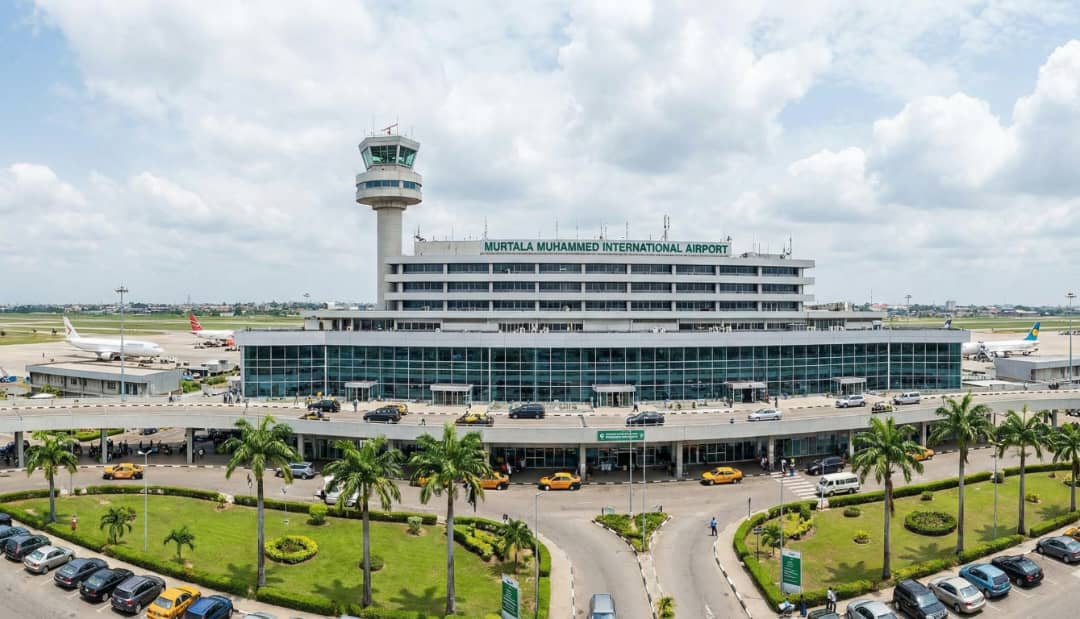
There is a visual irony in Nigerian aviation. Passengers often check in at gleaming new terminals in Abuja or Lagos, only to experience delays caused by prehistoric ground handling equipment, inadequate runway lighting, or a lack of functional hydrants for fueling.
Experts argue that the focus has been on “monument tourism” — building impressive terminal buildings — rather than the “invisible” infrastructure that actually moves planes.
For instance, the lack of Maintenance, Repair, and Overhaul (MRO) facilities within Nigeria remains a glaring hole. Currently, local airlines must fly their planes to Europe, the Middle East, or Ethiopia for major repairs, draining millions of dollars in foreign reserves every year.
The policy pendulum
Aviation thrives on long-term stability, but Nigeria’s policy environment has been characterised by “starts and stops.” The long-running saga of the national carrier, “Nigeria Air,” is a prime example. Years of energy and resources were poured into a project that faced legal hurdles and public skepticism, arguably distracting from the urgent need to support existing private flag carriers like Air Peace or United Nigeria Airlines.
The TTW report also pointed to the high “tax-to-ticket” ratio in Nigeria which has remained a point of contention. Industry analysts estimate that nearly 40 percent of a domestic ticket price consists of various taxes and charges levied by agencies like the Federal Airports Authority of Nigeria (FAAN) and the Nigerian Civil Aviation Authority (NCAA). For an industry already gasping for air, these fees act as a heavy anchor.
The “road” alternative
To understand the stagnation, one must look at the travellers. As airfares remain prohibitive, more Nigerians are forced onto the country’s road networks. In a climate where security challenges on highways are a constant concern, the inability to access affordable air travel isn’t just an economic statistic — it’s a safety issue.
Business owners who once flew between Lagos and Kano twice a month to manage supply chains now do so once a quarter, or rely on spotty internet connections for Zoom calls. The “velocity of money” slows down when the velocity of people is hindered.
Roadmap to recovery
Is the situation terminal? Not necessarily. The experts highlighting this decade of stagnation also offer a roadmap for recovery.
First, there is an urgent call for the liberalisation of the FX window specifically for aviation-related transactions. Allowing airlines to access currency at predictable rates would stabilize fares and allow for long-term fleet planning.
Second, the government must prioritize MRO facilities. By incentivising private investors to build world-class hangars on Nigerian soil, the country could become a hub for West African aviation maintenance, turning a drain on reserves into a source of foreign income.
Lastly, there must be a shift toward Single African Air Transport Market (SAATM) compliance. By opening up the skies and reducing the protectionist barriers that make inter-African travel so expensive, Nigeria can leverage its geographic position to become the true gateway to the continent.
Conclusion
Nigeria’s aviation sector has spent ten years in a holding pattern. The engines are running, the pilots are ready, and the passengers are waiting at the gate — but the economic and structural runway is currently too short for takeoff.
As we look toward the remainder of 2026, the message from experts is clear: Addressing the “decade of stagnation” requires more than just new planes or shiny terminals. It requires a fundamental shift in how the nation values the “freedom to fly” as a driver of economic survival.