It is beginning to show that African leaders who meet at the yearly summits in the Ethiopian capital of Addis Ababa, do not care about words of wisdom from our elders. Otherwise, how would they have missed the saying of the Agaw people of Eritrea and Ethiopia which says, “if you want to walk fast, walk alone. But if you want to walk far, walk together?” Because they have refused to be guided by what our elders said about life, unity has eluded them.
It is for this reason that when news flickered in from Addis Ababa, about the 39th Ordinary Session of the African Union (AU), there was this ‘deja vu’ feeling that the leaders will never learn from the past and for this reason, continue the same noise making over the years without achieving any result. So, one is tempted to ask, “for how long will the continental grouping, the African Union, continue with this talk shop, knowing that it has never produced any result.”
The whole spectacle that came through from the AU summit, reflected once again, as has always been the case that all that African leaders keep looking forward to at their annual meeting, is the pomp and pageantry associated with their presence in Addis Ababa. Their minions, who accompany them, also do not help contribute in any way toward the growth of the continent, but only go there for their per diems. Thus, summits continue to come and go, but they produce nothing concrete.
As always, there was a theme for the year 2026 and they found a sexy one to get the headlines: “Ensuring sustainable water availability and safe sanitation systems to achieve the goals of Agenda 2063.” The leaders once again made vague promises that they know will not be able to provide any solution to what they have seen as a problem.
What they did not pick was the truth from the non-governmental organisation, African Forum and Network on Debt and Development (AFRODAD). The nongovernmental organisation had analysed the situation and said, though Africa currently invests between $10 billion and $19 billion annually in water infrastructure, what is actually needed is some $30 billion more a year to close the financing gap.
AFRODAD delved into the problem and provided what will solve the water problem. It pointed out that the continent’s water insecurity is more than meets the eye. It is not just climate change or service delivery gaps, but chronic underinvestment and debt pressures rooted in an inequitable global financial architecture. This is what African leaders should be looking at, but they will not. Their policy makers will return home, feeling good among their friends who will envy them for attending the summit, but will do nothing in formulating policies to solve a continental problem. The documents from the summit will be put on files to gather dust till another summit.
What AFRODAD has seen, which our leaders, and their minions will forever be blind to, point to the fact that there is a shortfall in investment in irrigation systems, dams, sanitation facilities, and climate-resilient infrastructure essential for agriculture, urbanisation, and industrial growth.
They also pointed out that water is central to the continent’s development, underpinning food security, public health, energy generation and economic productivity. Agriculture alone employs more than half of Africa’s population. Unfortunately as of 2020, approximately 411 million Africans lacked access to basic drinking water, including more than 387 million in sub-Saharan Africa. Climate change — through rising temperatures, erratic rainfall, droughts, and floods — is intensifying pressure on already fragile systems. These are issues that should concern the policy makers, but they remain on the back burner.
AFRODAD linked Africa’s water crisis to the continent’s mounting debt burden, stating that, though Africa accounted for just 1.9 percent of global public debt, governments spend an average of 18.7 percent of public revenue on debt servicing. It said currently, external debt repayments are projected to reach $90 billion in 2026.
At the same time, it said public debt is growing across the continent and stands at approximately $2.1 trillion, exceeding 60 percent of GDP, with about 21 countries either in or at high risk of debt distress. Another thing that is also compounding the situation is high borrowing, which amounts to structural bias in global credit rating systems and other dollar-dominated capital markets. African countries pay average interest rates of 9.1 percent, compared to 6.5 percent in Latin America and 4.7 percent in Asia.
“Every dollar diverted to debt servicing is a dollar unavailable for water pipes, sanitation systems and irrigation schemes,” AFRODAD said. These are all issues that will not feature at any meeting of African policy makers. So, the situation will continue till another summit where they will be mentioned again.
The summit also looked at the report of the Peace and Security Council (PSC) on the state of peace and security on the continent. Again the leaders, we were told, expressed deep concern over the persistence of conflicts, terrorism and violent extremism, unconstitutional changes of government, and humanitarian crises in parts of the continent. This is not the way to solve problems, as the constant expression of concern at all AU summits have not provided solutions.
In the first place, it seems the leaders are not sure what to do with the insecurity on the continent. Last year when the Lome Peace and Security Forum conference was held, African leaders did not show much concern and ignored it. But this forum has come out with clear cut plans on how to deal with a nagging situation on the continent. There was also the Accra Initiative conference a year earlier to find out ways to deal with the worrying security situation all over Africa. This also did not jolt the leaders to attend. So what we have all over is some fragmented approach intended to solve a problem that is never going away.
What our leaders are not doing is to sit up to find out what is not working in order to put in place what must be done to create a conducive environment for development to take place. Again all these must be attributed to the fragmented approach that has been adopted over the years.
The leaders, though they did not provide any framework to solve existing problems, reaffirmed the Union’s unwavering commitment to zero tolerance for unconstitutional changes of government and reiterated the determination to silence the guns in Africa. The assembly underscored the imperative of predictable, sustainable, and flexible financing for AU-led peace support operations.
With the latest mention of their intolerance to constitutional changes, one wonders if shouting slogans alone was enough. What the leaders failed to put in place is how to prevent very old and frail politicians from holding on to power. They also did not speak about how to prevent corruption that is reported to be widespread among them. They also did not show how they will break down their barriers to promote trade so that employment could be generated to prevent the unusual route the young people are taking to enter Europe.
To catch the headlines, the summit also described colonization as a crime against humanity and certain acts committed during the era of slavery, deportation, and colonization as acts of genocide against the peoples of Africa for the umpteenth time. They made noise about the importance of historical justice, truth, remembrance, reparatory justice, and the preservation of the dignity of African people.
Here again, they exposed their hypocrisy. In December last year when Togo held the 9th Pan-African Congress in Lome, which was a big platform to address the issue of colonisation and reparation, African leaders were busy outside the continent. It was as if these issues did not matter to them at the time. So, they chose the AU summit to address it. Regrettably, mentioning these issues does not amount to solving them.
So, the leaders must know that the fragmented approach that they have used so far, has yielded no result. It is therefore about time that they decided to get serious to work on providing solutions and speaking with one voice through the various platforms available to them. If they have to wait till they attend their yearly summits, to talk, then, God help Africa.
- business a.m. commits to publishing a diversity of views, opinions and comments. It, therefore, welcomes your reaction to this and any of our articles via email: comment@businessamlive.com

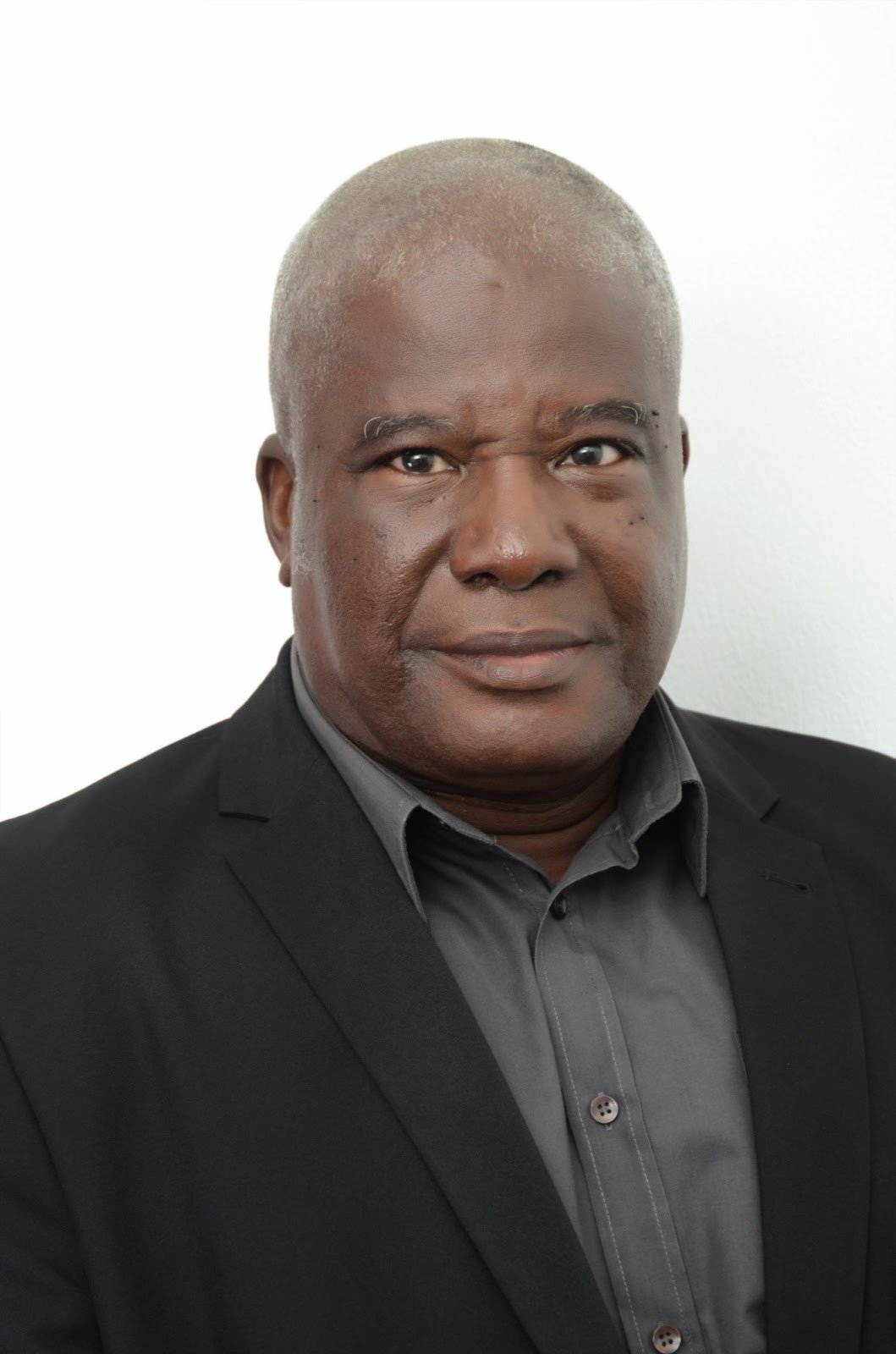
Francis Koktuse is a free-lance journalist based in Accra. Currently, he is the local Stringer for the New York Times. He also writes for University World News, as well as Science and Development.Net. He was a Staff Writer for the African Concord, and Africa Economic Digest in London, UK.