
When describing African towns, leaders, or cultural phenomena, a peculiar pattern is discernible in the media, in travel content and in tourism marketing. Ganvie or Makoko becomes “the Venice of Africa.” Shaka Zulu is labelled “the Napoleon of Africa.” Old Dahomey is dubbed “the Black Sparta,” while its women warriors are christened “the Amazons of Africa.”
These comparisons seem harmless, even complimentary; but they reveal a deeper problem with how African exceptionality is framed and represented. This rhetorical device, while perhaps well-intentioned, fundamentally positions Africa as derivative rather than original. It suggests that African peculiarities only become intelligible when filtered through European or Western reference points. The implied message is clear: to validate something African, we must first find its Western equivalent. This framework does not honour Africa and Africans—it subordinates them instead.

Consider the “Venice of Africa” label applied to various locations, from Ganvie stilt village in Benin Republic to Makoko waterfront community in Lagos. Venice was built on water for specific historical reasons related to refuge from mainland invasions. While this factor is similar in the case of Ganvie, the fact is that Makoko and several other African stilt settlements developed from entirely different circumstances—fishing economies, spiritual significance, or strategic trade positions. By forcing the Venice comparison, we erase these unique contexts and replace them with a European narrative that may bear little resemblance to the actual story.
Moreover, this pattern is conspicuously unidirectional. We do not hear Venice called “the Ganvie of Europe.” Paris is not “the Marrakech of the West.” Cañada Real, the infamous Spanish shantytown, is not dubbed the “Kibera of Europe”. The comparison always flows one way, positioning Europe as the original and Africa as the imitation. This asymmetry reveals the power dynamics at play: the culture making the comparisons considers itself the standard against which others must be measured.
The problem intensifies when applied to historical figures. Calling Shaka Zulu “the Napoleon of Africa” may seem to honour the Southern African king’s military genius, but it actually diminishes his distinct strategic innovations and the specific political landscape he navigated. Shaka developed unique military tactics like the “buffalo horns” formation and revolutionised Zulu warfare in ways that had nothing to do with Napoleonic methods. His achievements deserve to be understood on their own terms, within their own context.
Similarly, American writer Stanley B. Alpern popularised the christening of Old Dahomey Kingdom as the “Black Sparta,” and the flattening of the Agojie or Minọ—an all-female military regiment—into the “Amazons of Black Sparta.” This comparison, in which Africanist historians Hélène d’Almeida-Topor and Robin Law also had a hand, references a mythological Greek society, reducing real African women warriors to mere echoes of European legends. The Dahomey warriors had their own complex history, motivations, and significance within West African politics. They were not performing African versions of Greek folklore; they were making their own history.
These comparative labels are remnants of colonial thinking, where Africa was perpetually viewed through European eyes. Colonial powers consistently described African societies using European analogies because they could not—or would not—develop frameworks to understand Africa on its own terms. This habit positioned European civilisation as the universal reference point, the yardstick for all human achievement. Decades after independence from colonial rule, this linguistic colonialism persists in travel writing and vlogging, travel marketing, and even academic discourse. It reveals an enduring inability to grant Africa the dignity of originality. When every African achievement must be explained as “Africa’s version of X,” we are essentially saying that Africa does not produce anything novel or worthy of defining itself.
Defenders of these labels often argue that they are practical marketing tactics and branding catchphrases—that calling a place “the Venice of Africa” helps tourists get a grasp of what to expect. But this justification prioritises Western convenience over accurate representation. It suggests that rather than educating potential visitors about Africa’s genuine character, we should be more interested in packaging African experiences in European wrapping paper.
This approach also does travellers a disservice. Someone visiting Ganvie expecting Venice will miss what makes Ganvie remarkable in its own right—its unique architecture, its specific cultural practices, its distinct history. The comparison creates false expectations and blinds visitors to genuine discovery.
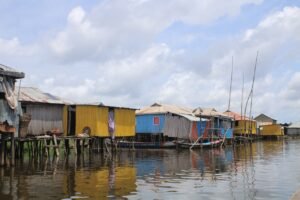
Moving forward, we must be interested in letting Africa define itself. And this is not complicated; all it requires is that we describe African entities in their own terms. Instead of searching for Western analogues, we should explain what makes something distinctive within its own local context. Ganvie is not “the Venice of Africa”—it is a historic stilt village built by the Tọfinu people on Lake Nokoué. That description is both more accurate and more interesting.
This shift requires historians, writers, travel agencies, tour operators, and educators to be more conscientious. It demands actual knowledge of African history and culture rather than relying on convenient European shortcuts. This effort is essential for moving beyond colonial frames and patterns of thought.
Africa does not need to be understood as approximations of somewhere else. It deserves the same courtesy automatically extended to Europe: the right to be original, to be the first of something, to define excellence on its own terms. Until we abandon the “X of Africa” framework, we remain trapped in colonial modes of seeing—where Africa is always secondary, always derivative, never quite itself.
Dr. Ṣeun Sedẹ Williams, an assistant professor in history, writes in from Dublin.