
Onome Amuge
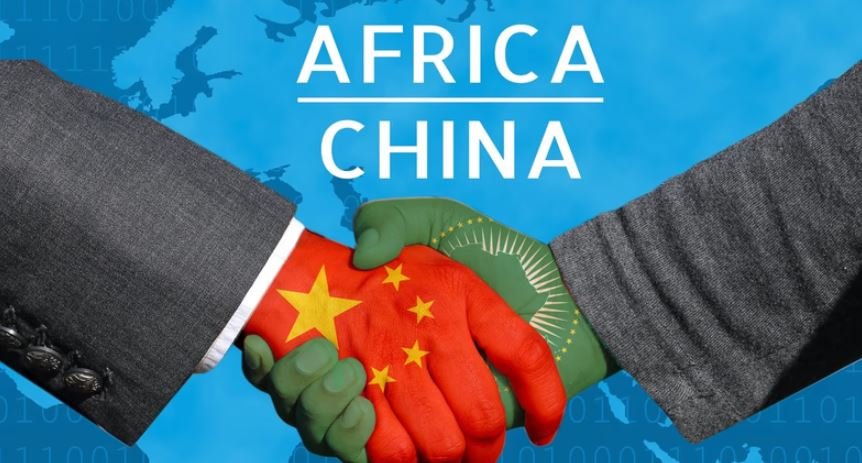
China’s role as a financier of African development has shifted over the past decade, with the Asian giant moving from being a major source of funding to a net debt collector across the continent. New research by ONE Data for the Development Finance Observatory, reveals that African nations are now repaying more to the world’s second largest economy than they are receiving in new loans, a reversal of financial flows amounting to over $52 billion since 2010.
The findings reflect growing debt pressures across African economies and mark a structural change in China’s engagement with the continent, which has dominated development finance in the region for nearly two decades.
According to the report, African countries received $30.4 billion in net flows from China between 2010 and 2014. In contrast, over the past five years, the continent has paid out $22.1 billion in net flows to China, resulting in a $52.5 billion swing. Chinese inflows to low- and lower-middle-income countries collapsed from $26.5 billion in 2018 to just $5.1 billion in 2024, while debt service outflows rose from $10.6 billion to $17.4 billion during the same period.
The analysis shows that in 2020–2024, 20 African countries experienced net outflows to China, with $33.8 billion extracted in total.
China’s rise as Africa’s largest bilateral lender in the early 2000s was fueled by investments in roads, railways, power plants, and other large-scale infrastructure projects, often backed by Chinese policy banks and government guarantees or tied to natural resource agreements. Between 2010 and 2016, these “mega loans” helped fund transformative projects but also generated concerns over repayment capacity and debt sustainability.
In response, Chinese policy has shifted toward smaller, more targeted financing, alongside an increased focus on recovering outstanding loans. In Nigeria, China remains the largest bilateral creditor, holding $5.16 billion of the country’s $6 billion external bilateral loan stock, a slight decline from $5.3 billion at the end of 2024, according to the Debt Management Office.
The contraction in Chinese lending is part of a slowdown across the continent. A Boston University report published last week noted that China’s lending to Africa fell to just $2.1 billion in 2024, down from $28.8 billion in 2016. Both Chinese lenders’ reduced appetite and African borrowers’ growing caution have contributed to the decline, with countries increasingly prioritising debt restructuring, fiscal consolidation, and risk mitigation over new borrowing.
This shift is altering the balance of development finance available to African governments. Multilateral institutions, including the World Bank, have stepped in to fill part of the void. ONE Data’s report shows that multilateral funding more than doubled over the five years through 2024 compared to the previous decade, providing $378.7 billion in total, equivalent to 56 per cent of net financial flows to developing nations.
Economists warn that while reduced reliance on Chinese funding may lower the risk of debt distress, African countries will need to carefully manage their fiscal policies and borrowing strategies. Projects financed by multilateral institutions often come with stricter oversight, environmental, social, and governance requirements, and longer approval processes, which could slow the pace of infrastructure delivery.
Meanwhile, Chinese creditors are increasingly seen as risk managers rather than growth financiers, collecting repayments while providing selective funding. “Africa’s engagement with China is no longer about expansion; it’s now about settlement and sustainability,” the ONE Data report notes, highlighting the continent’s changing financial architecture.







The souls of our ancestors will now rest in peace!