People begrudge real estate investment for being slow and tedious because of its gestation period especially construction, documentation process and waiting period before income stream or getting a tenant. Real estate investment is not nearly as stimulating as chasing big tech or the latest artificial intelligence share. But slow and steady wins the race! With stocks doing well for decades, observers would think most investors would be far better off investing in stocks than in real estate. A cursory look at the two investment options will give it to capital market investment but a critical look at the two, over a decade, showed that real estate investment has an upper hand. Comparing the returns of the listed companies by Nigerian Exchange Limited with the capital appreciation of Nigeria median home price will prove the cynics wrong. It certainly appears that company shares are the far more lucrative choice since 1961 when the Lagos Stock Exchange, now known as the Nigerian Exchange Group (NGX) officially began operations with 19 securities listed for trading.
However, after a thorough research of the capital gains of the two investment options between 1961 and 2025, it was revealed that rents on properties in prime locations outperformed the dividends on shares of the best companies for the same capital value invested. Analysing the data on some of the best real estate holdings and the best quoted firms, it will be realized that stocks do not necessarily generate more wealth. In fact, it will be appreciated that more returns are made from real estate than from stocks over the same period.
The average capital gain on properties in Nigeria in 2024 varied significantly by location, with prime areas in major cities like Lagos and Abuja seeing appreciation rates of between 15 percent and 39 percent, whereas the Nigerian stock market, tracked by the NGX All-Share index (ASI), recorded impressive average capital gain (return) of 37.65 percent for the full year 2024. The real estate market out-performed the stock market despite the fact that the stock market performance made the Nigerian Exchange (NGX) one of the top-performing markets globally for the year.
The 2008-2009 global financial crises revealed a lot about resilience of investments. The global financial crisis (GFC) refers to the period of extreme stress in global financial markets and banking systems between mid 2007 and early 2009. The housing sector led not only to the financial crisis, but also the downturn in broader economic activity. Residential investment peaked in 2006, as did employment in residential construction. The overall economy peaked in December 2007, the month the National Bureau of Economic Research (NBER) recognizes as the beginning of the recession. The crisis began with a housing bubble, fuelled by years of ultra-low interest rates and an increased availability of mortgages. The expansion in the housing sector was accompanied by an expansion in home mortgage borrowing by households. Excessive liquidity led to high inflation and economic crisis. The financial crisis which began at a low level in the USA became global by the beginning of 2008.
Real estate is all around us. It is real property that consists of land and its improvements, which include buildings (houses, shopping malls, offices, industrial buildings etc), fixtures, roads, bridges, structures, and utility systems. Investors cherish real estate because it affects all sectors of the economy and is a ‘guaranteed investment’. It can be categorised as residential, commercial, office, industrial, hospitality and tourism including hotels and holiday resorts, agricultural, educational, health, services etc. Real estate still remains one of the most highly sought investment havens globally especially because of its rapid appreciation rate and low rate of risks. All the investors that bought a piece of the Earth in prime areas are thankful that they did at the time they did. A rule is that you do not buy real estate when the price is bad, you buy at any time and wait for it to appreciate. This is unlike stocks in which you buy when the price is low and sell after a significant advance of 20 percent to 25 percent from a proper buy point. You buy low and sell high; you buy during a bear market and sell during a bull market. This means you must constantly monitor the stock market!
Real estate investment is ethical. Ethical investment is an investment type that integrates an investor’s personal values and moral principles with their financial decisions, aiming to generate both a financial return and a positive social or environmental impact. While some religionists will not want to invest in company producing alcoholic drinks, pork and bleaching cream because of their faith, there is no ethical issue associated with real estate investment.
A group that works with union pension funds pressed Hyundai Motor Co to respond to reports of child labour at U.S. parts suppliers, and warned of potential reputational damage to the Korean automaker, according to reports by Mica Rosenberg and Kristina Cooke in Reuters of October 19, 2022. In its 2023 sustainability report, fast fashion retailer Shein said it found two cases of child labour at its suppliers the previous year, as it stepped up audits of manufacturers in China to assuage criticisms of its low-cost business model ahead of a planned flotation. Child labour and low-cost businesses are not part of the challenges of real estate sector.
The phrase “real estate is a hot cake” means that the real estate market is very active, with properties selling quickly, often at or above the asking price. Real estate investment offers numerous benefits from steady cash flow to long-term appreciation and tax advantages. While there are risks, the potential rewards make it a compelling priority choice for investors. Moreover, you can evade the risks by using expert help like the services of estate surveyors and valuers in Nigeria.

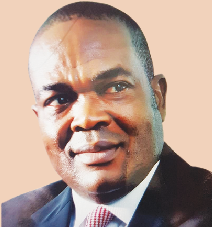
Olufemi Adedamola Oyedele, MPhil. in Construction Management, managing director/CEO, Fame Oyster & Co. Nigeria, is an expert in real estate investment, a registered estate surveyor and valuer, and an experienced construction project manager. He can be reached on +2348137564200 (text only) or femoyede@gmail.com