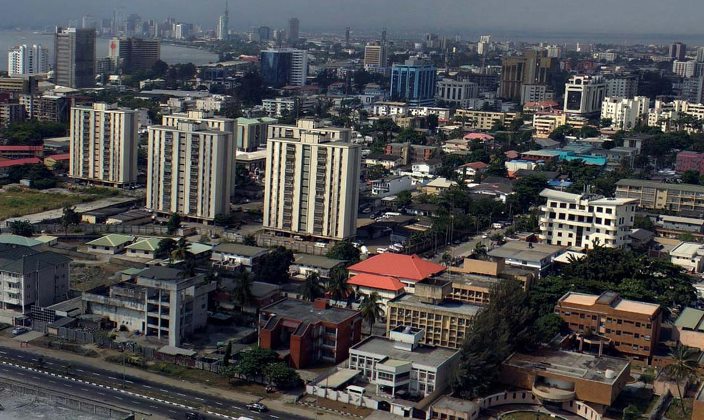
The IMF, World Bank and the CBN forecasts for Nigeria’s economic outlook in 2026 are all positive. Investors in real estate should tap into this for good returns
The International Monetary Fund (IMF) 2026 outlook forecasts Nigeria’s nominal GDP at $334.34 billion, following South Africa and Egypt. World Economic Outlook (WEO) 2026 has predicted 3.2 percent growth for Nigeria. The World Bank projection is 2.5 percent growth rate while the Central Bank of Nigeria (CBN) projects moderate economic growth for Nigeria in 2026, with a real GDP growth rate of around 4.2 percent. CBN Outlook is supported by a focus on stability, which includes efforts to stabilise inflation and the foreign exchange and a focus on maintaining stability through continued reforms and disciplined policies. Key priorities for CBN in 2026 are reinforcing bank resilience, deepening price stability, expanding digital payments, and improving operational efficiency.
Amid all these positive outlooks and predictions on the 2026 health of Nigeria’s economy, it would appear on face value that investors would be spoilt for choice with respect to investment outlets. One strong area, however, that investors can look to explore is real estate. Real estate remains a favourite investment choice because it is a basic need of man, a concrete investment that is not volatile like crypto-currency and virtual gold trading. Real estate is necessary to do all businesses; it is a business when speculated on and allowed to appreciate in value before disposal brings a bundle of joy! Real estate, that is land and properties, is physical and investors can see and admire their investments.
It bestows status on its owners and can give a passive income due to its easy-to-manage nature. Titled (formal) real estate can be used as collateral for credit facilities. There are housing and infrastructure deficits in Nigeria that will make real estate development a worthwhile investment in 2026. The various land uses in real estate – residential, commercial, industrial, hospitality, recreation, sports, education, agricultural and health – will attract different returns on investment (ROI) and for each land use, different locations will yield different returns. Highest and best use of land in different locations can best be decided by professional estate surveyors and valuers who have been trained for this purpose. It is therefore important for real estate investors or their consultants to do thorough appraisals before embarking on any of these land uses in any location.
Despite the impact of COVID-19 pandemic in Nigeria, the real estate sector over-performed and exceeded its prediction of 1.5 percent by achieving 3.85 percent growth in the second quarter (the highest in six years) and contracting to 2.1 percent in the last quarter of 2021. This was because investors’ confidence in Nigeria real estate is growing and most investors who could not transact import and trade businesses decided to invest in real estate in the local market. The inflow of Diaspora funds also contributed immensely to real estate market growth in Nigeria. In recent times, the real estate sector in Nigeria is changing with residential housing development still taking the lead, especially in the Federal Capital Territory (FCT), Lagos and Port Harcourt. There are few industrial developments at Sagamu Interchange axis, up to Ogere, along Lagos – Ibadan Expressway in Ogun State. In Lagos State, Ibeju Lekki axis, up to Epe where we have numerous industrial and residential developments is a hot cake.
This rapid growth rate of Ibeju Lekki where we have Lekki Free Trade Zone and Dangote Refinery will soon overflow to the Epe axis where we have Oko Orisan and Alaro City development. For those who can afford the costs of land or old buildings in Old Ikoyi, Banana Island, Ikeja GRA, Lekki Phase I and II, Apapa GRA and Surulere, these areas are still sizzling for investments because of their easy access and infrastructure. Eko Atlantic City is an international commercial city and a coastal estate built in Victoria Island on land reclaimed from the Atlantic Ocean. The properties in Eko Atlantic City will for a long time receive consistent patronage. Port Harcourt is still the hottest place to invest in real estate in the South-South of the country. Places like GRA Phase II, Rukpokwu, Eneka, D-Line, Trans Amadi Industrial Layout and Choba (university town) are worthwhile areas. In the North, the Federal Capital Territory (FCT), especially Abuja, has a promising future because of the rapid migration of people to the city.
Kaduna is equally good for those who are ready to invest in logistics and distribution facilities like warehouses and shop outlets for retails. Along the Lekki – Epe Expressway, I foresee some retail shopping malls developing before Eleko Junction. These shopping malls will serve the underserved people of Abijo, Awoyaya, Eluju, Bogije, Onosa, Elemoro and Lakowe. Real estate investment along Lekki – Epe Expressway will record high patronage in 2026 because of the public infrastructure provision. Apapa GRA requires more modern shopping malls and any investor that can take a risk in this area will have a field day.
Institutional investors will take advantage of the growth among cities like Abeokuta, Ibadan and Kano to speculate on properties in these areas. With government diversification efforts, more people will go into farming and rural real estate will boom. Land in rural Epe, Ikorodu, Badagry, along Idi Iroko Road, Abeokuta Road after Sango-Ota and Lagos – Ibadan Expressway will see an increase in buyers who want to embark on commercial agriculture.
Investors will be interested in developing hostels in the new tertiary institutions being developed in the major cities in the country. The rail transport development will boost real estate development in areas like Alagbado in Lagos, Laderin in Abeokuta and Moniya in Ibadan, for example, where there are train stations. Hospitality facilities in Lagos, Abuja, Port Harcourt and Kaduna will see growth. The new retail shop owners will see growth potentials in their businesses in 2026 and will demand for more properties to open their outlets, especially, in new residential areas. Operators of fast food businesses will demand new facilities for branch development. Commercial real estate (CRE) will receive the second highest investment after residential. Industrial and logistics facilities along the major roads will receive a boost as well as farmlands.
The prices of building materials will continue to look up since we have not imbibed the culture of using local building materials. This high cost of building materials will not have a considerable impact in stalling real estate growth in 2026 especially for those developers who are going into wholesale real estate. These investors will greatly benefit from “economies of scale”. The persistent building demolition across the nation will affect investors’ confidence.
In conclusion, I recommend residential, commercial, hospitality and rural real estate investments, in that order, for those who plan to invest in real estate in 2026. Real estate continues to be the favourite choice of wise investors in Nigeria and next year will not be different.

Olufemi Adedamola Oyedele, MPhil. in Construction Management, managing director/CEO, Fame Oyster & Co. Nigeria, is an expert in real estate investment, a registered estate surveyor and valuer, and an experienced construction project manager. He can be reached on +2348137564200 (text only) or femoyede@gmail.com