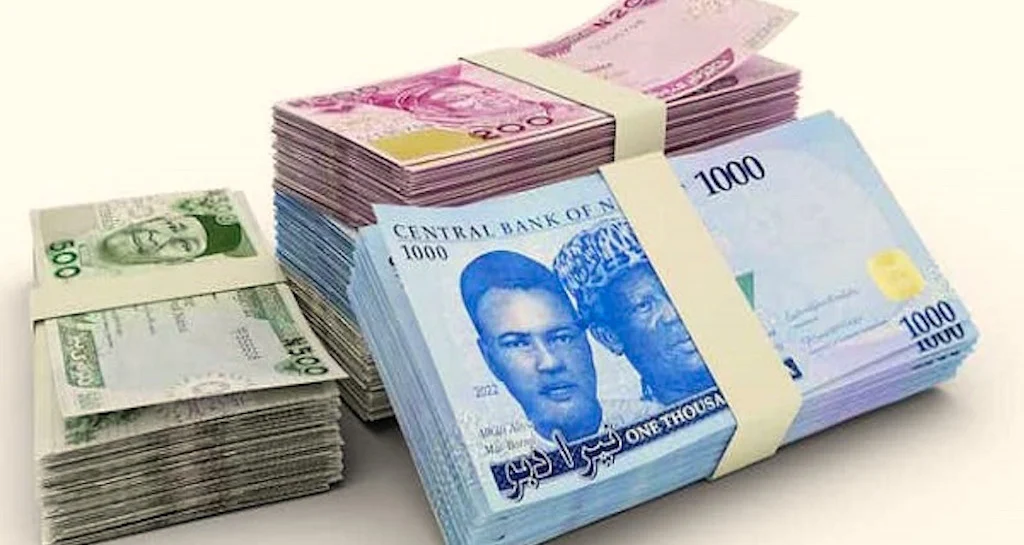
Nigeria’s currency recovered strongly at the official foreign exchange market on Friday, with the naira closing at N1,363.5 per dollar after a volatile trading week that saw the currency slide before staging a steady rebound.
Data tracked on the website of the Central Bank of Nigeria (CBN) show the local currency experienced significant fluctuations during the week, weakening at the start of trading before gradually strengthening over subsequent sessions as supply conditions improved.
The turnaround highlights easing pressure in the foreign exchange market following earlier demand-driven stress that pushed the naira to its weakest level in months.
The naira opened the week on a weak footing, falling to N1,425 per dollar on Monday from N1,398 recorded the previous Friday. The drop marked the currency’s lowest closing level since January 12, 2026.
However, the local currency began recovering from Tuesday, when it appreciated to N1,390.5 per dollar as market liquidity improved.
The upward trend continued midweek. On Wednesday, the naira strengthened further to N1,373.5 per dollar, before gaining slightly to N1,370 per dollar on Thursday.
By Friday, the currency extended the rally to close at N1,363.5 per dollar, representing a rebound of more than N60 within four trading sessions after the sharp early-week slide.
The volatility marked a departure from the relatively stable trading pattern recorded the previous week, when the naira moved within a narrower range at the official market.
During that period, the currency opened at N1,376 per dollar on Monday, traded at N1,390 on Tuesday, strengthened slightly to N1,382.65 on Wednesday and exchanged at N1,388 on Thursday before closing the week at N1,398 per dollar.
The depreciation recorded at the start of the current week therefore represented a notable break from the stability seen earlier.
According to the Central Bank of Nigeria, the country’s net foreign exchange reserves rose to $34.80 billion at the end of 2025, reflecting improved external liquidity.
Gross external reserves climbed further to about $50.45 billion as of February 2026, supported by stronger oil earnings and increased foreign inflows into the economy.
Governor Olayemi Cardoso said ongoing monetary and foreign-exchange reforms are designed to strengthen market confidence and improve liquidity conditions in the FX market.
Projections contained in the CBN’s 2026 macroeconomic outlook indicate that Nigeria’s external reserves could rise further to about $51.04 billion this year, largely supported by higher oil revenues.
Currency markets globally have been reacting to rising geopolitical tensions in the Middle East and shifting expectations around the strength of the U.S. dollar.
The uncertainty has contributed to fluctuating oil prices and heightened volatility across emerging market currencies, including Nigeria’s.