The global construction industry is entering a new phase of data-driven quality control as GreenVibe, an Israeli construction technology company, seeks to replace conventional concrete testing with real-time, in-element verification after deploying more than 10,000 wireless sensors across over 20 projects and laboratories.
The company, which has raised $12 million across seed funding rounds, says its sensor technology delivers up to 95 percent correlation with the actual concrete poured into a structure, addressing what it describes as a long-standing gap between construction specifications and the strength of concrete ultimately delivered on site.
The issue has gained renewed global attention following the June 24, 2026 doublet earthquake in Venezuela, which killed roughly 3,000 people and prompted the announcement of a $200 million reconstruction fund.
The disaster has intensified scrutiny of whether construction projects are being built to the standards specified in their designs, with industry experts increasingly pointing to verification and enforcement as major weaknesses in construction quality control.
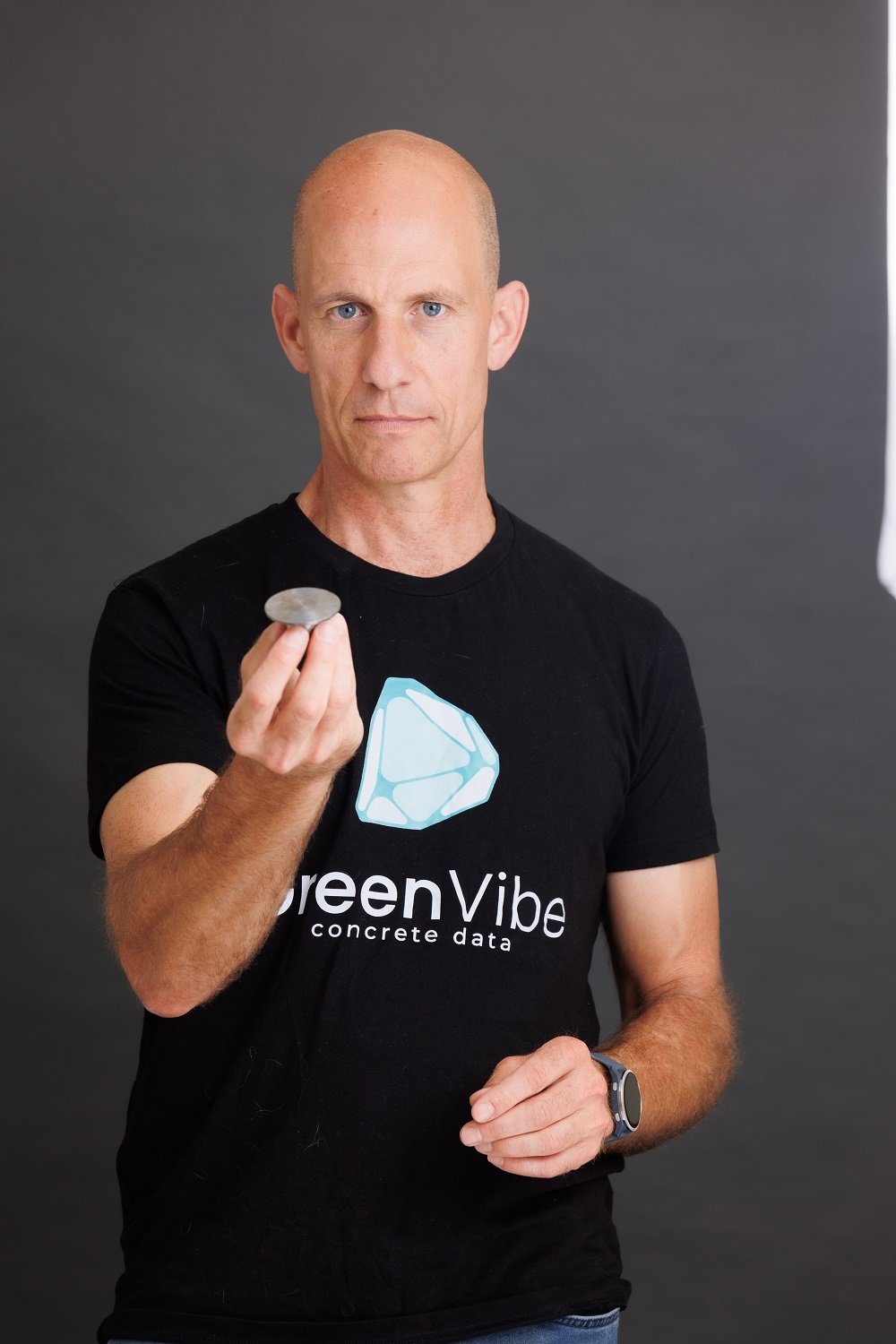
GreenVibe’s technology is designed to address that gap by embedding wireless multi-sensing devices into concrete before pouring. The sensors then transmit strength and structural status readings every 30 minutes during and after the pour.
The company describes its platform as the “ultrasound of construction”, combining five sensing technologies, including ultrasound, with artificial intelligence to monitor concrete performance in real time through mobile and desktop platforms.
Traditional concrete verification typically relies on cylinder testing, a process that GreenVibe says can produce an inherent error range of between 10 and 50 percent.
That means concrete specified at 60 megapascals could, under certain circumstances, register significantly below the intended strength when tested through conventional methods.
GreenVibe’s in-element approach is intended to provide a direct measurement of the concrete actually incorporated into a structure rather than relying solely on laboratory samples.
The company says its sensors have achieved 95 percent in-element accuracy and that its deployments have produced returns on investment exceeding 10 times in most projects.
It also claims that the technology has reduced waste and inefficiency by up to 50 percent through shorter waiting periods, fewer quality problems and optimisation of concrete mixes.
On one bridge project, GreenVibe said the time required to wait for concrete curing was reduced by approximately 60 percent, from five or six days to two days.
The company also said that in more than 10 cases where its readings differed from laboratory results, subsequent investigations proved its readings correct. In cases where construction teams failed to act on the sensor data, damage later occurred, including on super-tall building projects.
GreenVibe’s technology has already been deployed on a number of major projects in Israel, including Beyond by Tidhar, described as the country’s tallest building, as well as The Spiral at Azrieli, Toha 2 by Amot, Rothschild10 by Tidhar, Midtown Jerusalem, Lexus Tower, Vertical City, the Discount Bank Campus and the Herling Bridge.
Internationally, the company has worked with Ferrovial, the Nasdaq-listed infrastructure company, on the Malpartida bridge in Spain and completed a pilot programme with US contractor Clark Construction.
The company is now seeking to expand the adoption of real-time concrete verification across global construction markets, particularly as governments and private developers prepare to invest heavily in infrastructure renewal.
GreenVibe is also in the process of entering the ASTM and Eurocode standards frameworks, a move that could support the wider recognition of embedded sensor-based concrete verification as an industry standard.
“Data-driven construction is the only way to be sure that what is poured is what was specified. GreenVibe supports mega projects by delivering data-driven solutions that improve efficiency, accelerate delivery, and enhance construction quality. Don’t compromise on quality,” ,” said Roee Reshef, CEO and co-founder of GreenVibe.
The company is backed by Insight Partners, Tidhar Construction, Israel-Canada and Shikun and Binui.