Business A.M
No Result
View All Result
Tuesday, July 14, 2026
  • Login
  • Home
  • Technology
  • Finance
  • Comments
  • Companies
  • Commodities
  • About Us
  • Contact Us
Subscribe
Business A.M
  • Home
  • Technology
  • Finance
  • Comments
  • Companies
  • Commodities
  • About Us
  • Contact Us
No Result
View All Result
Business A.M
No Result
View All Result
Home Commodities

$1bn opportunity beckons in Nigeria’s feed, fodder market

by Admin
January 21, 2026
in Commodities

Onome Amuge

Long-standing conflicts between farmers and pastoralists in Nigeria have resulted in widespread violence, displacing communities, destroying farmland, and depleting livestock. Driven largely by competition for resources such as grazing land and farmland, these clashes have claimed millions of lives and continue to threaten rural economies and food security.

Amid the long-running farmer-herder conflict, experts highlight a largely overlooked opportunity in Nigeria’s underdeveloped $1 billion feed and fodder industry, considered as a potential catalyst for boosting the livestock sector, promoting national stability, and unlocking economic growth.

According to agricultural specialists and livestock experts, with the right infusion of investment and well-directed policy, this dormant sector has the potential to transform the rural landscape, offering a pathway to peaceful coexistence, enhanced food security, and greater resilience for rural communities.

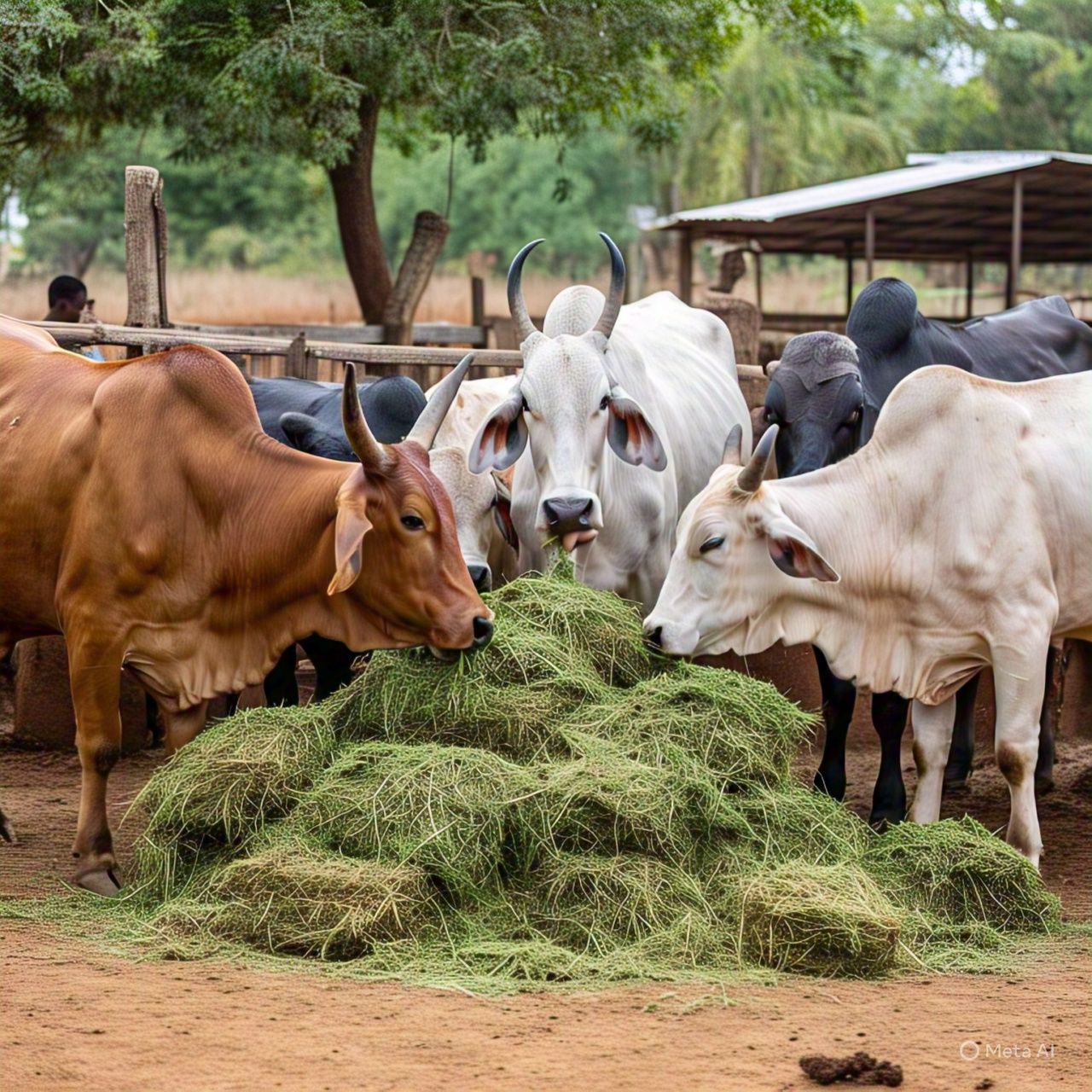
Fodder, comprising dried hay or straw, serves as essential feed for cattle and other grazing animals. While the northern regions of Nigeria possess considerable natural advantages for fodder production, the industry remains largely underdeveloped, characterised by traditional methods and a lack of robust market infrastructure.

In a bid to chart a course towards sustainable peace and economic advancement, leading experts from across the African continent, under the umbrella of the African Union Inter-African Bureau for Animal Resources (AU-IBAR), recently convened in Abuja. Notably, their mission was to brainstorm strategies on how Nigeria, and by extension the wider continent, could unlock the immense potential of this overlooked sector. The central theme of their discussions was ‘’Harnessing Feed and Fodder Data for Sustainable Livestock Sector Development, Resilience, and Stability.’’

Huyam Salih, the director of AU-IBAR, underscored the critical juncture at which Nigeria finds itself, urging the nation to seize this natural investment opportunity as a means of extricating itself from the persistent and devastating farmer-herder crisis.

The recent high-level forum, she explained, focused on boosting fodder production, establishing a comprehensive and reliable national feed inventory and balance sheet, and developing a sophisticated data dashboard to effectively monitor feed availability across six key African countries, with Nigeria at the forefront.

This comprehensive initiative, Salih emphasised, is strategically designed to propel livestock sector development, bolster overall food security, and stimulate significant growth within the currently underutilised feed and fodder industry.

“The project involves developing a feed and fodder dashboard to capture crucial production and availability data, thereby empowering governments to take timely and informed corrective action to support the sector,” Salih elaborated.

“This vital dashboard will play a critical role in identifying existing gaps and potential shortages, enabling the implementation of effective early warning systems to mitigate crises,” she added.

 The scope of this ambitious project spans a diverse range of agro-ecological zones across the continent, including Nigeria in West Africa, Cameroon in Central Africa, Uganda, Somalia and Kenya in East Africa, and Zimbabwe in Southern Africa.

A key outcome of this collaborative effort was the official handover of the National Feed Inventory Database and Dashboard to the Federal Ministry of Livestock Development. This cutting-edge digital platform offers real-time, granular data on critical parameters such as feed availability, prevailing market prices, quality standards, and distribution patterns across the entirety of Nigeria.  Idi Mukhtar Maiha, the minister of livestock development, hailed this initiative as a game-changer for the sector.

Maiha lauded the collaborative effort for providing the livestock sector with the essential tools needed to ensure consistent feed security and, crucially, to attract much-needed private sector investment.

“These dedicated efforts have culminated in a scientifically validated Feed Inventory and Fodder Balance Report that provides a clear and comprehensive picture of our existing feed resources, identifies critical gaps, and highlights significant opportunities for growth and investment,” the Minister stated.

With the implementation of the new digital dashboard, the Ministry has ambitious plans to significantly strengthen institutional capacity within the sector, actively promote robust private sector participation, and mainstream the effective use of feed data at all levels of planning and implementation.

“Working together, we can forge a vibrant and dynamic feed and fodder industry that not only robustly supports our national food security objectives but also strategically positions Nigeria as a dominant livestock powerhouse on the African continent,” Maiha affirmed.

Laban MacOpiyo, a seasoned animal production and natural resource management expert at AU-IBAR, speaking at the high-level feed and fodder inventory and investment forum in Abuja, addressed the economic value that Nigeria could unlock by effectively mobilising and trading its currently underutilised biomass resources. He advocated for the development of thriving rural feed markets and the establishment of efficient pelleting industries, coupled with comprehensive training programmes for producers on effective conservation techniques and the active promotion of private-sector aggregation and seamless inter-state trade.

MacOpiyo pointed out the current reality that Nigeria faces a 10 per cent deficit in overall feed and fodder availability. However, he highlighted that the more pressing and immediate challenge lies in the realm of distribution, with readily available feed often inaccessible in the very regions where livestock populations are most heavily concentrated.

According to MacOpiyo, addressing this logistical bottleneck through targeted investments in infrastructure development and the implementation of supportive policy interventions could drastically reduce the frequency and intensity of farmer-herder conflicts by significantly limiting the imperative for cattle migration in search of adequate grazing land.

Huyam Ahmed Salih of AU-IBAR further underscored the paramount importance of implementing evidence-based policies within the sector, revealing the concerning statistic that a majority of African nations (38 out of 47), have yet to conduct comprehensive and reliable feed and fodder assessments.

She commended Nigeria for its proactive leadership in this crucial area and for its commitment to integrating robust feed data into its national agricultural systems, noting with optimism that over $248 million in investment has already been successfully mobilised within the sector.

On her part, Winnie Lai-Solarin, the director of ruminants and monogastrics development at the Federal Ministry of Livestock Development, further called for the urgent establishment of strategic national feed reserves and the development of resilient hybrid pasture seed systems to ensure a consistent and high-quality supply of essential fodder throughout the year.

According to industry players, the development of a thriving and well-organised feed and fodder sector in Nigeria presents a multi-faceted and compelling opportunity. Economically, it holds the promise of unlocking a billion-dollar market, generating significant employment opportunities across the value chain, from production and processing to transportation and trade.

Environmentally, it is seen as having the capacity to promote more sustainable land management practices, reducing the intense pressure on natural grazing lands that currently fuels conflict.

Socially, it is believed that by ensuring a more reliable and readily accessible supply of feed for livestock, it could substantially reduce the need for disruptive nomadic herding patterns, thereby mitigating the violent clashes over scarce resources and fostering greater harmony between Nigeria’s diverse agricultural and pastoral communities.

As it stands, the advanced digital tools and data-driven insights now at the disposal of the Nigerian government have been indicated to represent a crucial and commendable first step. However, analysts argue that translating this immense potential into tangible and lasting benefits will necessitate sustained political will, strategic and targeted investment, and the effective implementation of enabling policies.

To this end, analysts assert that actively encouraging private sector participation through well-designed incentives, developing the necessary infrastructure for efficient feed production and distribution networks, and empowering local communities with the knowledge and resources to actively engage in fodder cultivation and processing will be absolutely paramount to unlocking this billion-dollar opportunity and fostering a more peaceful and prosperous future for Nigeria.


Admin
Admin
Previous Post

Codix Pharma expands footprint with new high-impact diagnostic facility in Sagamu

Next Post

Nigeria’s farmers gamble with climate chaos as agric insurance falls short

Next Post

Nigeria's farmers gamble with climate chaos as agric insurance falls short

  • Trending
  • Comments
  • Latest

CBN to issue N1.5bn loan for youth led agric expansion in Plateau

July 29, 2025

How UNESCO got it wrong in Africa

May 30, 2017

Glo, Dangote, Airtel, 7 others prequalified to bid for 9Mobile acquisition

November 20, 2017
NGX taps tech advancements to drive N4.63tr capital growth in H1

Insurance-fuelled rally pushes NGX to record high

August 8, 2025

6 MLB teams that could use upgrades at the trade deadline

Top NFL Draft picks react to their Madden NFL 16 ratings

Paul Pierce said there was ‘no way’ he could play for Lakers

Arian Foster agrees to buy books for a fan after he asked on Twitter

NAAPE moves to shield pilots, engineers with loss-of-licence insurance scheme

NAAPE moves to shield pilots, engineers with loss-of-licence insurance scheme

July 14, 2026
Global airlines are investing heavily in economy class cabins as competition for passengers shifts beyond ticket prices to the quality of the travel experience, prompting carriers to modernise fleets, redesign cabins and enhance onboard services in a bid to strengthen customer loyalty and improve long-term profitability. The renewed focus reflects a transformation in the aviation industry, where economy class, despite offering lower fares than premium cabins, remains the largest contributor to passenger volumes and an increasingly important driver of commercial performance. With millions of travellers continuing to prioritise affordability, airlines are finding that modest improvements in comfort and convenience can translate into stronger repeat business, improved customer satisfaction and higher ancillary revenues. As a result, carriers are directing substantial investment towards upgrading economy cabins through newer aircraft, ergonomically designed seats, advanced inflight entertainment systems, onboard connectivity, enhanced catering and improved cabin service. Industry analysts say the strategy is becoming a key differentiator as airlines compete more aggressively for passengers on both regional and long-haul routes. Unlike business and first-class travellers, whose numbers are relatively limited, economy passengers account for the overwhelming majority of airline traffic, making their overall travel experience increasingly central to airlines' growth strategies. Rather than relying solely on fare reductions to attract customers, airlines are seeking to build stronger brand loyalty by improving the value passengers receive throughout their journeys. "Passenger expectations have changed significantly. Travellers increasingly compare airlines based not only on ticket prices but also on comfort, reliability, connectivity and the overall onboard experience," aviation analysts note. Several of the world's leading airlines have already embraced the strategy. Carriers including Singapore Airlines, Qatar Airways, Emirates, Turkish Airlines, All Nippon Airways (ANA), EVA Air and Cathay Pacific have invested significantly in upgrading their economy cabins through improved seating, larger entertainment libraries, enhanced meal services and customer-focused cabin experiences. Although each airline has adopted different approaches, the underlying objective remains the same: making economy travel more comfortable for the largest segment of their customer base while strengthening long-term commercial competitiveness. Fleet modernisation is playing a critical role in that transformation. Next-generation aircraft such as the Boeing 787 Dreamliner, Airbus A350 and Airbus A321neo are enabling airlines to improve the passenger experience while simultaneously lowering operating costs. Compared with older aircraft, these models offer quieter cabins, larger windows, improved air quality, better humidity control and greater fuel efficiency, creating benefits for both passengers and airline operators. The newer aircraft also reduce fuel consumption and maintenance expenses, allowing airlines to improve customer experience without significantly increasing operating costs over the aircraft's lifespan. Technology has emerged as another major area of investment. Features once reserved almost exclusively for premium cabins, including USB charging ports, wireless internet connectivity, mobile application integration and personalised digital entertainment platforms, are increasingly becoming standard in economy class. Passengers are also benefiting from greater control over their travel experience, with digital services allowing them to access entertainment, communicate onboard and manage various aspects of their journeys more conveniently. The growing investment reflects changing consumer expectations in an increasingly digital travel environment. Recent international passenger satisfaction surveys consistently indicate that airlines investing in cabin comfort, inflight technology and customer service continue to perform strongly in global service rankings. While competitive pricing remains an important consideration for travellers, customer experience has become an increasingly influential factor in airline selection, particularly on medium and long-haul routes where comfort plays a greater role in purchasing decisions. The trend is expected to reshape competition within Africa's aviation industry as airlines expand their fleets to meet growing passenger demand.

Global airlines raise economy class spending to win passenger loyalty

July 14, 2026
US

How Vulnerable Are US Financial Markets?

July 14, 2026
Development

Reinventing Development Finance

July 14, 2026

Popular News

  • CBN to issue N1.5bn loan for youth led agric expansion in Plateau

    0 shares
    Share 0 Tweet 0
  • How UNESCO got it wrong in Africa

    0 shares
    Share 0 Tweet 0
  • Glo, Dangote, Airtel, 7 others prequalified to bid for 9Mobile acquisition

    0 shares
    Share 0 Tweet 0
  • Insurance-fuelled rally pushes NGX to record high

    0 shares
    Share 0 Tweet 0
  • Major tech companies conquering Africa with sports

    0 shares
    Share 0 Tweet 0
Currently Playing

CNN on Nigeria Aviation

CNN on Nigeria Aviation

Business AM TV

Edeme Kelikume Interview With Business AM TV

Business AM TV

Business A M 2021 Mutual Funds Outlook And Award Promo Video

Business AM TV

Recent News

NAAPE moves to shield pilots, engineers with loss-of-licence insurance scheme

NAAPE moves to shield pilots, engineers with loss-of-licence insurance scheme

July 14, 2026
Global airlines are investing heavily in economy class cabins as competition for passengers shifts beyond ticket prices to the quality of the travel experience, prompting carriers to modernise fleets, redesign cabins and enhance onboard services in a bid to strengthen customer loyalty and improve long-term profitability. The renewed focus reflects a transformation in the aviation industry, where economy class, despite offering lower fares than premium cabins, remains the largest contributor to passenger volumes and an increasingly important driver of commercial performance. With millions of travellers continuing to prioritise affordability, airlines are finding that modest improvements in comfort and convenience can translate into stronger repeat business, improved customer satisfaction and higher ancillary revenues. As a result, carriers are directing substantial investment towards upgrading economy cabins through newer aircraft, ergonomically designed seats, advanced inflight entertainment systems, onboard connectivity, enhanced catering and improved cabin service. Industry analysts say the strategy is becoming a key differentiator as airlines compete more aggressively for passengers on both regional and long-haul routes. Unlike business and first-class travellers, whose numbers are relatively limited, economy passengers account for the overwhelming majority of airline traffic, making their overall travel experience increasingly central to airlines' growth strategies. Rather than relying solely on fare reductions to attract customers, airlines are seeking to build stronger brand loyalty by improving the value passengers receive throughout their journeys. "Passenger expectations have changed significantly. Travellers increasingly compare airlines based not only on ticket prices but also on comfort, reliability, connectivity and the overall onboard experience," aviation analysts note. Several of the world's leading airlines have already embraced the strategy. Carriers including Singapore Airlines, Qatar Airways, Emirates, Turkish Airlines, All Nippon Airways (ANA), EVA Air and Cathay Pacific have invested significantly in upgrading their economy cabins through improved seating, larger entertainment libraries, enhanced meal services and customer-focused cabin experiences. Although each airline has adopted different approaches, the underlying objective remains the same: making economy travel more comfortable for the largest segment of their customer base while strengthening long-term commercial competitiveness. Fleet modernisation is playing a critical role in that transformation. Next-generation aircraft such as the Boeing 787 Dreamliner, Airbus A350 and Airbus A321neo are enabling airlines to improve the passenger experience while simultaneously lowering operating costs. Compared with older aircraft, these models offer quieter cabins, larger windows, improved air quality, better humidity control and greater fuel efficiency, creating benefits for both passengers and airline operators. The newer aircraft also reduce fuel consumption and maintenance expenses, allowing airlines to improve customer experience without significantly increasing operating costs over the aircraft's lifespan. Technology has emerged as another major area of investment. Features once reserved almost exclusively for premium cabins, including USB charging ports, wireless internet connectivity, mobile application integration and personalised digital entertainment platforms, are increasingly becoming standard in economy class. Passengers are also benefiting from greater control over their travel experience, with digital services allowing them to access entertainment, communicate onboard and manage various aspects of their journeys more conveniently. The growing investment reflects changing consumer expectations in an increasingly digital travel environment. Recent international passenger satisfaction surveys consistently indicate that airlines investing in cabin comfort, inflight technology and customer service continue to perform strongly in global service rankings. While competitive pricing remains an important consideration for travellers, customer experience has become an increasingly influential factor in airline selection, particularly on medium and long-haul routes where comfort plays a greater role in purchasing decisions. The trend is expected to reshape competition within Africa's aviation industry as airlines expand their fleets to meet growing passenger demand.

Global airlines raise economy class spending to win passenger loyalty

July 14, 2026

Categories

  • Frontpage
  • Analyst Insight
  • Business AM TV
  • Comments
  • Commodities
  • Finance
  • Markets
  • Technology
  • The Business Traveller & Hospitality
  • World Business & Economy

Site Navigation

  • Home
  • About Us
  • Contact Us
  • Privacy & Policy
Business A.M

BusinessAMLive (businessamlive.com) is a leading online business news and information platform focused on providing timely, insightful and comprehensive coverage of economic, financial, and business developments in Nigeria, Africa and around the world.

© 2026 Business A.M

Welcome Back!

Login to your account below

Forgotten Password?

Retrieve your password

Please enter your username or email address to reset your password.

Log In
No Result
View All Result
  • Home
  • Technology
  • Finance
  • Comments
  • Companies
  • Commodities
  • About Us
  • Contact Us

© 2026 Business A.M