Onome Amuge
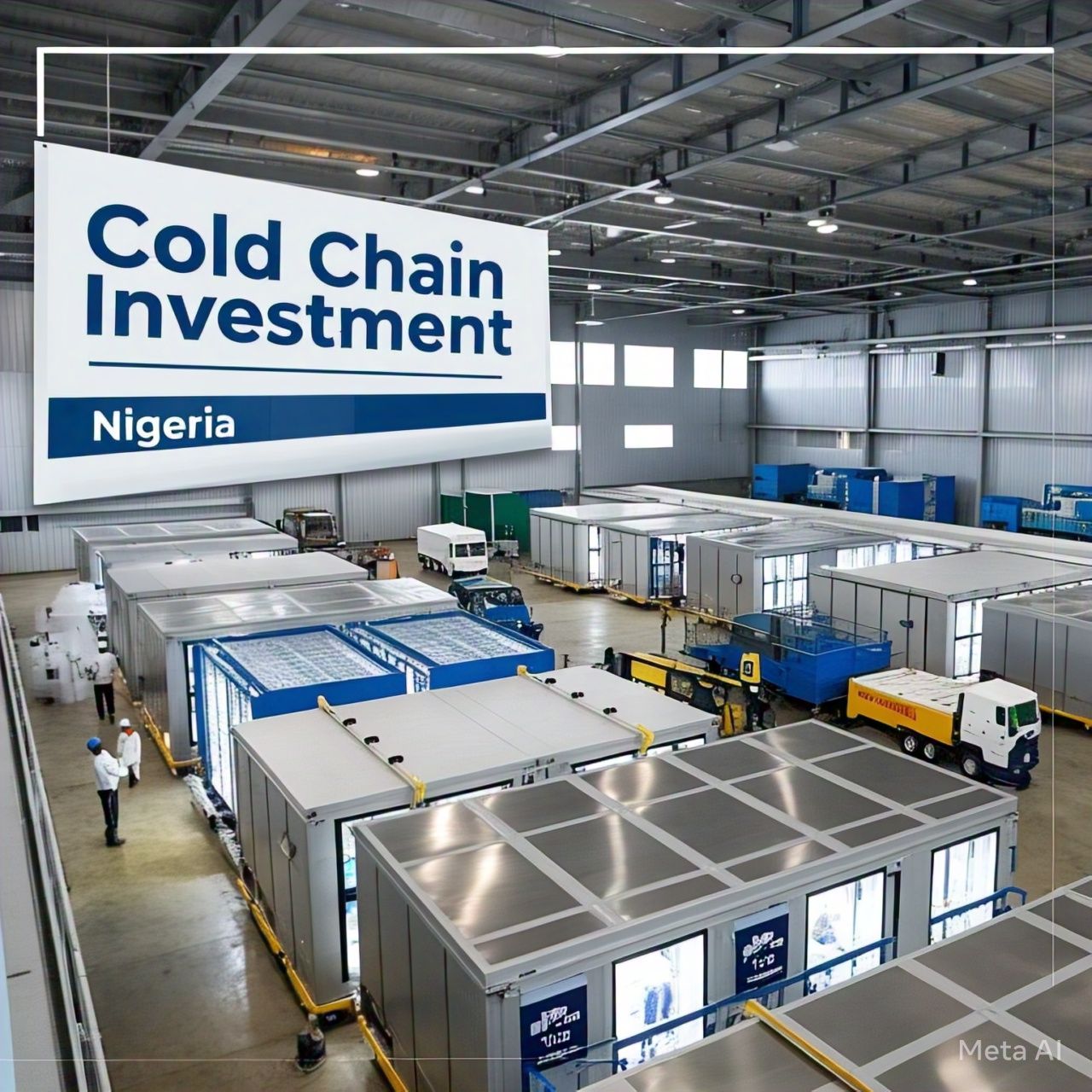
The lack of a robust cold chain infrastructure is allowing over 40 percent of produce to rot before it reaches consumers, translating to an estimated N2 trillion ( $4.8 billion) in annual losses for Nigeria, according to the Organisation for Technology Advancement of Cold Chain in West Africa (OTACCWA).
Alexander Isong, the OTACCWA president, who stated this at the seventh West Africa Cold Chain Summit and Exhibition in Lagos, recently, stressed that investing in temperature-controlled logistics is no longer a luxury but a critical imperative for reducing post-harvest losses, enhancing food safety, boosting exports, and ensuring the long-term sustainability of Nigeria’s food systems.
Highlighting the scale of the problem evident in the spoilage rates of key commodities, Isong noted that half of Nigeria’s tomato harvest, valued at around N75 billion ($180m) annually, is lost due to inadequate preservation. Similarly, over 30 percent of locally produced beef and dairy products succumb to decay before reaching consumers, resulting in economic losses estimated at N200 billion ($480m) each year, he noted.
Isong, who is also the CEO of Alyx Limited, a Nigerian cold chain logistics company that develops and rents solar-powered cold room trailers for storing and transporting farm products to markets, also pointed out that even Nigeria’s fisheries sector, despite the country’s reliance on imports, suffers significant losses. This, he explained, is as about 30 percent of locally caught fish is wasted due to the absence of proper storage facilities, costing the sector approximately N100 billion ($240m) annually.
“Without an efficient cold chain system,” warned Isong, “these losses will persist, perpetuating Nigeria’s dependence on imports and fundamentally undermining our national food security,” he stated
Global benchmarks and local shortcomings
According to analysts in the cold chain sector, Nigeria’s ambition to compete on the global stage hinges on its ability to meet stringent international cold chain standards. These include crucial frameworks such as Hazard Analysis and Critical Control Points (HACCP), the Food Safety Management System (ISO 22000), the Codex Alimentarius established by the Food and Agriculture Organization of the United Nations (FAO) and the World Health Organization (WHO), and the increasingly important Halal certification for meat exports.
Isong pointed out that the current reality falls far short of these benchmarks, as he disclosed that just 30 percent of Nigerian meat processing facilities currently meet export-grade standards. This deficiency, he explained, is a consequence of weak regulatory enforcement, a chronic lack of cold storage infrastructure, and outdated abattoir systems. This represents a missed economic opportunity, particularly considering the growing global halal meat market, which is valued at an estimated $2.1 trillion.
Isong also noted that achieving the necessary food safety compliance requires a more streamlined and harmonised regulatory environment. Thus, he called for the unification of the disparate cold chain regulations currently overseen by a multitude of agencies, including the National Agency for Food and Drug Administration and Control (NAFDAC), the Standards Organisation of Nigeria (SON), the Federal Ministry of Agriculture and Food Security (FMAFS), the Federal Ministry of Industry, Trade and Investment (FMITI), and the Economic Community of West African States (ECOWAS).
The goal, he stated, is to establish clear and standardised certification processes that cater to both domestic consumption and international export requirements.
Isong further presented compelling comparative data illustrating the scale of the challenge. He highlighted the fact that Nigeria has less than 100,000 metric tonnes of cold storage capacity, while Egypt boasts 600,000 metric tonnes and South Africa has over 800,000 metric tonnes.
He added that the situation is equally worrisome in refrigerated transport, as less than five per cent of Nigerian trucks used for transporting perishable goods are refrigerated, compared to 30 per cent in South Africa and 50 percent in Europe.
The cold chain expert asserted that addressing the infrastructure gap requires a concerted effort involving both the public and private sectors. To this end, he stated that OTACCWA is advocating for strategic interventions, including public-private partnerships (PPPs) and targeted investment in solar-powered cold storage hubs for rural farmers. This, Isong argued, would directly tackle the significant post-harvest losses that occur at the farm level. He also called for incentives to encourage the expansion of refrigerated truck fleets, which are essential for establishing efficient farm-to-market logistics. Furthermore, the development of multi-temperature warehouses to support the complex demands of both domestic and export supply chains was highlighted as a crucial necessity.
While acknowledging the federal government’s various initiatives aimed at boosting the agricultural sector, including the National Livestock Transformation Plan (NLTP), the Agricultural Promotion Policy (APP), the Animal Disease Control Act of 2022, and the National Food Safety Policy, Isong pointed to the lack of effective coordination among the numerous regulatory bodies with oversight over the food supply chain, which he described as a stumbling block.
According to the cold chain expert, investments in cold chain infrastructure are often slowed down by bureaucratic bottlenecks,creating a complex and often frustrating environment for businesses attempting to address and comply with a multitude of overlapping regulations. He noted that to overcome this impediment, OTACCWA has proposed a more streamlined and unified regulatory framework that clearly delineates the responsibilities of each key agency.
Isong explained that under this proposed structure, NAFDAC would take the lead in overseeing food safety compliance for processed meat and dairy products, ensuring adherence to international standards. The Standards Organisation of Nigeria (SON) would be responsible for enforcing quality and safety standards for cold chain equipment. The Federal Ministry of Agriculture and Food Security (FMAFS) would be tasked with providing targeted financial incentives to encourage the development of cold chain infrastructure within the broader agricultural sector. Similarly, the newly established Federal Ministry of Livestock and Dairy Development (FMLDD) would focus on incentivising cold chain investments specifically within the meat, dairy, and egg industries.
Isong firmly believes that the establishment of a comprehensive National Cold Chain Policy is essential to ensure that all relevant government agencies operate under a cohesive regulatory umbrella, as this unified approach would streamline processes, reduce bureaucratic hurdles, and create a more conducive environment for both domestic and foreign investment in this vital sector.
According to analysts and stakeholders in the cold chain sector, Investing in cold chain logistics is not merely an expenditure, as it represents a strategic economic imperative with the potential to unlock significant value and enhance food security across Nigeria. It is believed that by reducing the worrisome levels of post-harvest waste, improving the quality and safety of food products for domestic consumption, and enabling greater access to lucrative international markets, a well-developed cold chain infrastructure can catalyse a transformative shift in Nigeria’s agricultural sector and contribute substantially to its overall economic growth.
Moreso, the insights shared at the West Africa Cold Chain Summit and Exhibition serve as a timely and urgent call to action for policymakers, investors, and businesses alike. The stakeholders agreed that through strategic public-private partnerships, targeted investments in critical infrastructure, and the implementation of a unified and efficient regulatory framework, Nigeria has a tangible opportunity to move beyond its current state of chilling inefficiency towards a future where its agricultural abundance reaches its full potential, both domestically and on the global stage.
The projected $4.8 billion annual boost to the economy, as highlighted by OTACCWA, is considered not just a theoretical figure, but also represents a concrete economic opportunity waiting to be seized.