By Oluwadarasimi Omiyale
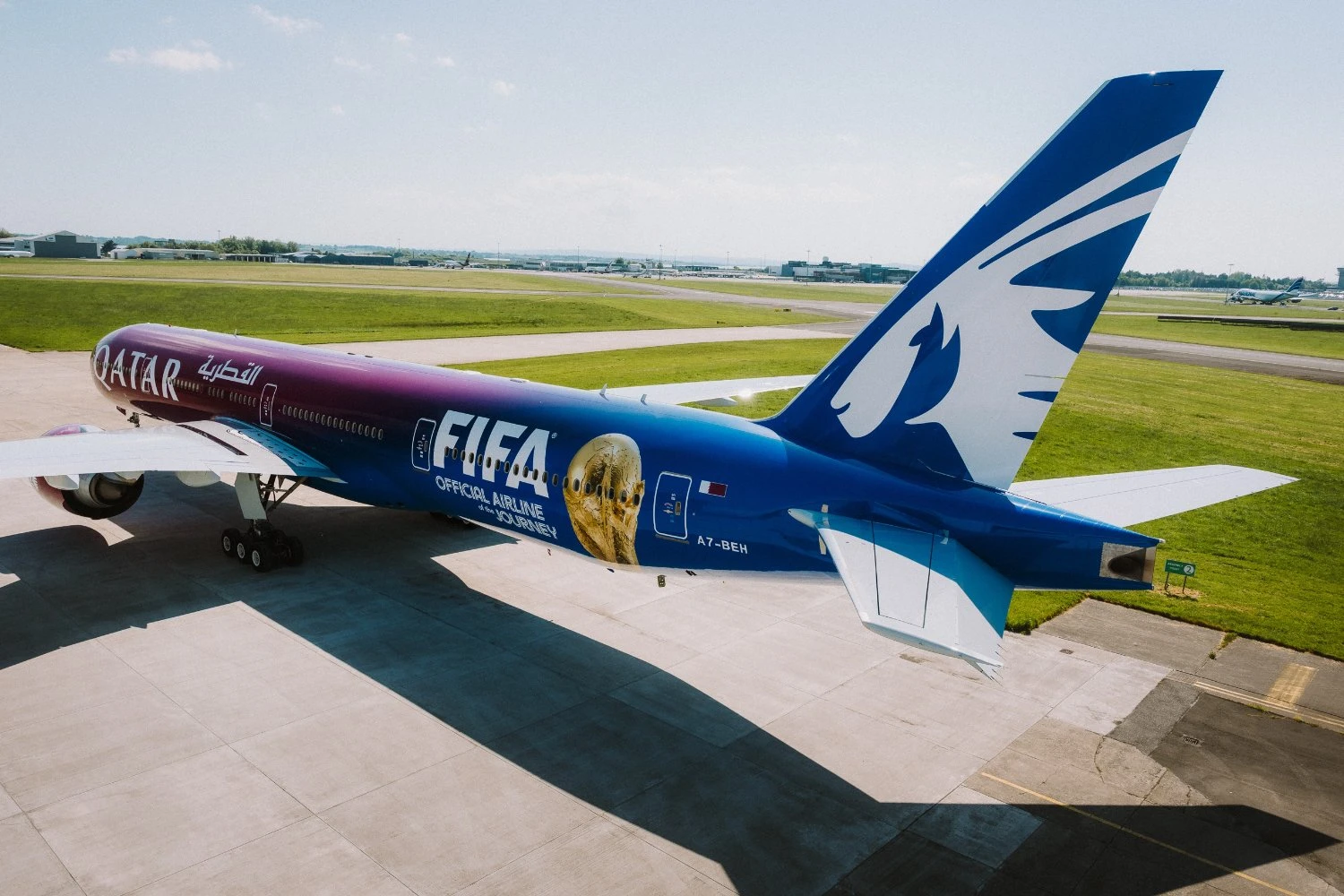
Qatar Airways has introduced a FIFA World Cup 2026-branded Boeing 777-300ER as global carriers begin positioning for expected increases in long-haul passenger demand ahead of the tournament in North America.
The aircraft, registered A7-BEH, features a special exterior livery and modified cabin branding tied to FIFA’s commercial partnership with the airline. It will continue operating on international routes as part of Qatar Airways’ long-haul fleet deployment.
The airline said the aircraft reflects its ongoing partnership with FIFA and its focus on global connectivity ahead of the tournament period.
The interior features bespoke cabin dressing inspired by the World Cup. Qatar Airways said in a statement that the aircraft will remain in service with the special branding following the event.
Aviation analytics data from Cirium indicates that the Boeing 777-300ER remains one of Qatar Airways’ core long-haul aircraft types, particularly on routes serving the United States, where demand is expected to rise ahead of the 2026 tournament.
Flight tracking data from Flightradar24 showed the aircraft was ferried to Shannon Airport for repainting and cabin modifications before returning to Doha after several weeks of maintenance work.
The development comes as airlines increasingly use major global sporting events to strengthen brand visibility and position capacity for anticipated spikes in international travel demand.
The 2026 FIFA World Cup, jointly hosted by the United States, Canada, and Mexico, is expected to generate significant cross-border passenger traffic across Europe, the Middle East, and Asia as fans, teams, corporate sponsors, and tourism operators move between host cities.
Qatar Airways, which holds an official airline partnership with FIFA, said the initiative underscores its role in “connecting fans, teams, and global football communities worldwide.”
Fleet data from Planespotters.net shows the carrier operates 57 Boeing 777-300ER aircraft with an average age of just over 13 years, forming a major part of its long-haul international network.
Industry analysts say airline partnerships with global sporting events are increasingly being used as commercial tools to support route demand, premium cabin bookings, and international connectivity during peak travel cycles.
The 2026 FIFA World Cup is widely expected to become one of the largest global aviation and tourism events of the decade, with airlines already adjusting marketing and capacity strategies ahead of the expected surge in transatlantic and intercontinental travel flows.