Onome Amuge
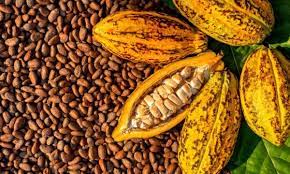
A combination of rising global cocoa prices and dwindling crude oil revenues is prompting Nigeria to reignite its ambition of becoming a major agricultural powerhouse. The nation is now intensely focused on revitalising its once-dominant cocoa sector, seeing it as a critical avenue for economic diversification.
Nigeria’s cocoa sector, which in 2006 produced 485,000 tonnes, currently lags behind its West African neighbours, Côte d’Ivoire and Ghana, which produced approximately 1.76 million tonnes and 531,000 tonnes respectively in the 2023/2024 marketing year.
According to the International Cocoa Organization (ICCO), Nigeria currently ranks as the world’s seventh-largest cocoa bean producer, behind Côte d’Ivoire, Ghana, Ecuador, Cameroon, Indonesia and Brazil. The dilapidated Cocoa House in Ibadan, once a symbol of Nigeria’s mid-20th-century prosperity in the cocoa trade, now stands as a reminder of the industry’s decline.
A renewed policy push for the brown gold
Despite the historical regression, there is a growing optimism within the sector. According to Adeola Adegoke, president of the Cocoa Farmers Association of Nigeria (CFAN), Nigeria can do better than its neighbours if it focuses on agriculture rather than oil.
This sentiment appears to be gaining traction at the highest levels of government. In a pivotal move in May, the President Bola Tinubu cabinet approved a draft bill for the creation of a National Cocoa Management Board. The proposed regulatory body, modelled after the successful frameworks in Côte d’Ivoire and Ghana, aims to provide government support, facilitate access to credit, and drive infrastructure upgrades, considered critical elements that have helped reduce losses and stabilise prices in competitor nations. Crucially, the new board is envisioned without the controversial price-fixing powers that made its predecessor, abolished in 1986, deeply unpopular among farmers.
The decision to establish a new board, nearly four decades after the demise of the cocoa marketing board, has been considered by some analysts as a strategic initiative. Agriculture Minister Abubakar Kyari, on May 5, emphasised that this new framework would enable Nigeria to compete directly with top global producers like Ghana and Côte d’Ivoire.
This renewed focus on cocoa comes at an opportune moment. Cocoa prices have witnessed an extraordinary increase, climbing 400 per cent in three years to reach a peak of $12,000 per tonne at their height. The value of cocoa exports from Nigeria jumped more than sevenfold between 2023 and 2024, reaching N2.7 trillion , driven by both strong demand and the depreciation of the Naira. This robust performance presents a reasonable argument for cocoa as a viable avenue for Nigeria to diversify its economy away from its traditional, but increasingly faltering, oil exports.
Oil’s diminishing returns and fiscal imperative
Nigeria’s heavy reliance on oil, which accounts for 90 per cent of its exports, places it at an economic crossroads. The Tinubu administration’s 2025 budget of N54.9 trillion was predicated on an ambitious daily oil output of 2.06 million barrels at an average price of $75 per barrel. However, the reality of oil production has fallen short. January 2025 saw production at 1.53 million barrels per day, a figure that has remained below the target in subsequent months, with prices hovering closer to $60 a barrel. Nigeria’s crude oil production slumped by an estimated 46.4 million barrels in the first four months of 2025, threatening the 2025 budget and resulting in an estimated revenue loss of $3 billion to the federal government. The shortfall in oil revenue has intensified the focus on non-oil sectors, particularly cocoa, as a potential engine for export earnings.
Challenges to revival: From farm to market
Despite the high-level policy shift and favourable global prices, the Nigerian cocoa sector is riddled with entrenched challenges. According to industry reports, between 87 per cent and 90 per cent of Nigeria’s cocoa is exported raw, with local factories primarily producing only butter and powder, hindering value addition.
The sector is also plagued by insecurity, including banditry and conflicts between farmers and herders, forcing many to abandon their lands and leading to contract violations. “Farmers are fleeing their lands and contracts are being violated,” Adegoke, the CFAN president lamented.
Moreso, high cocoa bean prices, while theoretically a boon, are often undercut by rampant smuggling to neighbouring countries and the impact of fixed futures prices, limiting actual profits for farmers.
Olasunkanmi Owoyemi, managing director of Sunbeth Global Concepts, which is currently building a processing plant in Ogun state, acknowledged the challenges but remains optimistic. “To catch up with our neighbours, we need research, roads, and credit for farmers,” he stated, asserting that the Nigerian cocoa industry is still alive and well and can do better.
Owoyemi stresses the immense potential, citing abundant farmland and a large population, but stressed the need for trained, empowered, and resourced individuals to drive the industry forward.
“The Nigerian cocoa industry cannot continue to be on autopilot,” stated Adegoke, underscoring the urgent need for a deliberate plan to reposition the sector and regain the lost glory of the cocoa economy.
Nigeria’s slip from its leadership position in cocoa production since the 1970s, when oil became the mainstay of the economy and agricultural exports were sidelined by successive governments, has created a legacy of inconsistent quality and variable industry standards. This has sometimes resulted in Nigerian-origin cocoa being sold at a discount, even as farmers have enjoyed the freedom to set prices. The new board aims to address these inconsistencies, ensuring better traceability and adherence to international quality standards.
Traceability, quality, and the EU mandate
One of the major drivers for the new regulatory framework is the growing global demand for sustainable and ethically sourced cocoa, particularly the stringent requirements of the European Union Deforestation Regulation (EUDR). Passed by the European Parliament in 2023, the EUDR mandates that all agricultural commodity exporters to the EU provide verifiable evidence that their products are grown sustainably and do not contribute to deforestation. This regulation necessitates that agricultural exports be fully traceable to their points of origin, making a central regulator indispensable.