Nigeria recorded the highest quarterly capital importation of $5.6 billion since 2020 during the first quarter 2025, according to the latest report of the National Bureau of Statistics (NBS). This figure is a jump of about 67 percent from the amount in the first quarter 2024, reflecting improving reform and structural attractions to investment in Nigerian assets.
Great as this performance appears, the gloomy kernel of the story is that a decomposition of the imported capital (in Q1, 25) shows that foreign direct investment (FDI) accounted for only a dismal $126 million; or, a minuscule 2.25 percent. On the other hand, foreign portfolio investment (FPI) accounted for $5.2 billion, approximately 92 percent of total capital inflow in the first quarter of 2025.
FPI stood at $3.9 billion in the last quarter 2024; a substantial increase from $2.1 billion in the first quarter 2024. But, while FPI has been rising substantially, FDI has kept nosediving: from $422 million in the last quarter 2024 to $126 million in the first quarter of 2025. This is a crash of about 70 percent!
These trends mean that foreign investments largely tilted towards short-term, high-yield instruments such as government bonds and treasury bills, while shunning long-term commitments in the real sectors of the Nigerian economy. These are some of the obvious outcomes of the Central Bank of Nigeria (CBN’s) tight monetary stance in the past two years or so.
Thus, within the FPI basket of $5.2 billion, money market instruments attracted the biggest chunk ($4.2 billion), representing almost 82 percent of the total FDI inflow. Inflows via the bond segment also surged; even as equity-related bond investments dropped. Again, these trends of rising interest of offshore investors in Nigeria’s fixed income market reflects high-yield opportunities engendered by the CBN’s policies.
In line with these trends, one of Nigeria’s foremost investment banking and financial advisory firms, Afrinvest (West Africa) Limited, has forecast that Nigeria’s capital importation would hit $19.3 billion by end-2025. That is, about 56 percent increase compared to the 2024 level of $8.6billion.
Afrinvest attributed these upbeat projections to what it termed “a favourable domestic interest rate environment, relative price and currency stability, shifting global investment sentiment amid ongoing trade tensions, and the possibility of a U.S. interest rate cut later in the year.” The firm noted, however, that while higher capital inflows can support currency stability and short-term economic growth, the underlying quality of capital remains a concern.
Thus, in Nigeria’s current worrisome scenario, FDI, the most stable and real-growth driving form of capital, inched up only six percent year-on-year to $126.3 million in the first quarter 2025, but slumped 70 percent quarter-on-quarter. FDI accounted for only 2.2 percent of total capital importation, down from 3.5 percent in the same period last year.
Afrinvest observed that this persistent decline in FDI reflects lingering structural challenges such as insecurity, weak institutions, bureaucratic red tape, and high corruption perception. These factors, combined with tepid investment in non-financial sectors including manufacturing, ICT, construction, oil & gas, and transportation, dampen the optimism surrounding the reported capital inflow figures.
Although the “hot money”, the FPI, can provide some immediate liquidity and foreign exchange (FX) support, they are highly sensitive to changes in domestic monetary policy, global risk sentiment, and macroeconomic shocks. No wonder, the current scenario in Nigeria appears to be presenting the government with a façade of rapid accretion to the nation’s foreign reserves, which, according to the CBN stood at $40.11 billion mid-July 2025.
In the face of the persisting paucity of FDI inflow, President Bola Ahmed Tinubu has been practically globetrotting, bringing home ‘bagful’ of investment promises and deals. A few months after his inauguration in 2023, Tinubu jetted to India in September in search of investments. Although a lot of promises and deals were reportedly sealed during this trip, not much of these has translated into any visible FDI, two years after.
During the visit, which was on the eve of a G-20 parley, President Tinubu, at a meeting, told Prakash Hinduja, the chairman and CEO of Hinduja Group of companies: “We are here for business. I am here to personally assure our friends and investors that there is no bottleneck that I will not break. Nigeria will become one of the most conducive places on earth to make good profits and create lasting jobs. With my support, there is nothing standing in your way of enjoying the unrivaled opportunities presented by our massive market, and the ingenious, and hardworking nature of the Nigerian people.”
If any DFI has resulted from this visit to India and so many similar trips to numerous places by President Tinubu, it is yet to be seen, even noticed. On the contrary, many conglomerates that have operated in Nigeria for many decades have either been whittling down their businesses or fully exiting the country for quite some time now. Each of the exiting companies has complained of mainly policy-induced hardship including FX-related challenges, weak consumer purchasing power, as well as deteriorating security situation.
At present, while the FPI-induced capital inflow serves as a placebo in the face of the diminishing (real) foreign investment into Nigeria, the macroeconomic environment remains highly volatile. So much dependency on FDI, as is now the case, presents a very dreary outlook. The Nigerian economy will continue its heavy dependence on external factors such as global economic trends, interest rates, and investor sentiments.
With rising FPI, Nigeria’s weak gross domestic product (GDP) growth rate (at only 3.13%, q1, 2025) is likely to remain flat or inch up minimally, going forward. This would be due to low productivity, weak or low consumer purchasing power, lingering high rate of inflation, and tight monetary climate.
As a sequel to all these, since FPI primarily focuses on short-term gains, the current trend will not lead to any significant job creation or long-term economic growth. The subsisting monetary and fiscal policy trajectory does not seem to carry the ‘seed’ for a true turnaround for the expedited and sustainable growth of the Nigerian economy.
There is yet the need to deepen structural reforms that attract more ‘patient’, sector-diverse investments to effectively pull Nigeria’s economy out of the thick woods. And now is the time to do so!

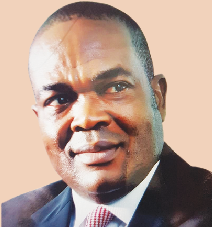
Marcel Okeke, a practising economist and consultant in Business Strategy & Sustainability based in Lagos, is a former Chief Economist at Zenith Bank Plc. He can be reached at: obioraokeke2000@yahoo.com; +2348033075697
(text only)